


Key Takeaways
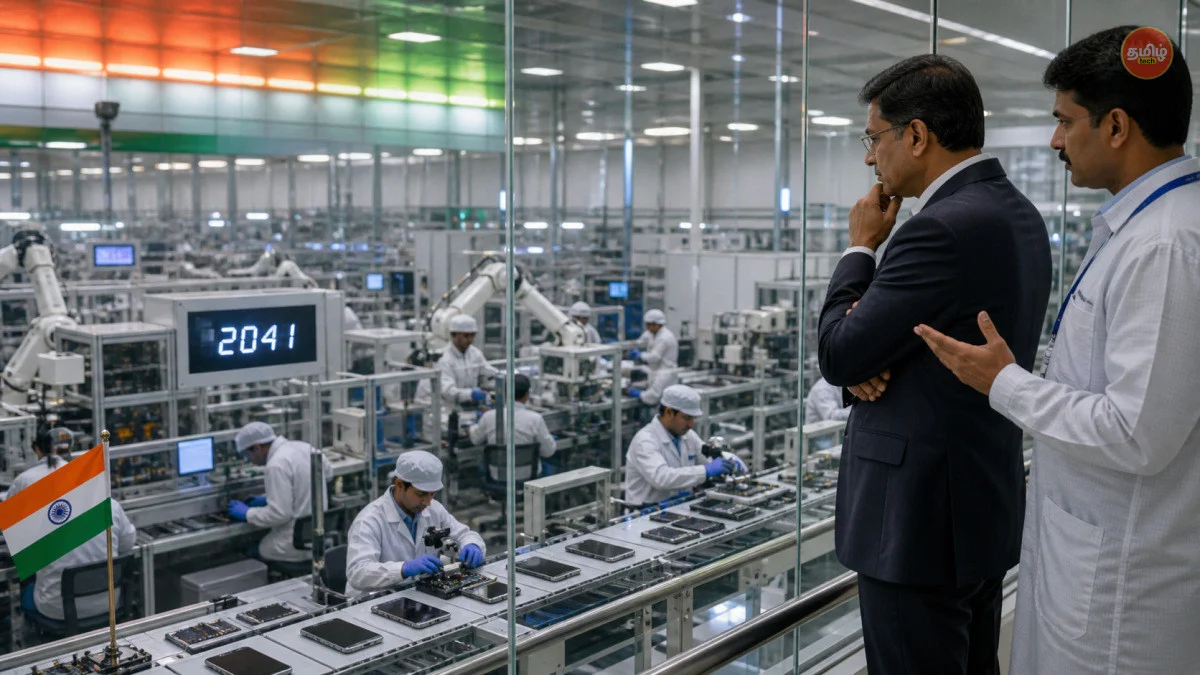
- The Indian government has officially extended tax incentives and production-linked benefits for electronics contract manufacturers until the year 2041.
- This move primarily benefits giants like Foxconn, Pegatron, and Tata (Wistron), who handle the bulk of Apple's iPhone production in India.
- The policy shift aims to provide a 15-year stable roadmap for global companies to move their entire supply chain, including high-end components, from China to India.
- For the average Indian consumer, this long-term stability could eventually lead to a 10-15% reduction in the retail price of locally manufactured premium devices as logistics costs drop.
- The bottom line: India is no longer just an assembly hub; this extension signals the intent to become the world's primary high-tech manufacturing floor for the next two decades.
The Big Move: Why 2041 Matters in 2026
So, here is the thing — the news we have been waiting for is finally here. Today, on August 4, 2026, the Indian government has taken a massive leap that will change the face of 'Make in India' forever. They have decided to extend the tax sops and incentive schemes for electronics contract manufacturers all the way until 2041. If you think this is just some boring policy update, think again. This is a direct signal to global giants like Apple, Samsung, and Google that India is ready to be their permanent home, not just a temporary backup plan to China.
I have been tracking these PLI (Production Linked Incentive) schemes since they first gained steam back in 2020. But back then, the timelines were short, usually 5 to 6 years. Companies were hesitant because setting up a multi-billion dollar semiconductor or display plant takes a decade to show real profit. By pushing the deadline to 2041, the government has given these companies a 15-year clear window. This kind of policy stability is exactly what a company like Apple needs to move its 'Pro' model manufacturing entirely to Indian soil. We are talking about long-term planning that goes beyond just assembling parts; we are talking about deep manufacturing.
How We Got Here: The Road From 2020 to 2026
To understand why this is a 'Win for Apple,' we need to look back at the last few years. In the early 2020s, India was mostly doing 'screwdriver assembly'—importing finished kits and just putting them together. But as we stand here in 2026, the landscape has shifted. We have seen the likes of Foxconn and Tata expanding their facilities in Tamil Nadu and Karnataka at a breakneck pace. The previous incentive structures were set to expire soon, which had many industry experts worried. Would these companies stay, or would they look at Vietnam or Mexico for their next phase of expansion?
This extension to 2041 puts those fears to rest. It shows that the Indian government is doubling down on the 'China Plus One' strategy. Over the last two years, we have already seen a significant chunk of iPhone 17 production (yes, the current 2026 lineup!) happening right here in India from day one. This was unheard of a few years ago when India-made iPhones would lag months behind the global launch. Now, with the 2041 extension, the government is essentially saying, 'We want you to build the iPhone 20, 25, and 30 here too.' It is a masterstroke in building investor confidence.
The Details: What Is Actually Changing?
Let’s get into the nitty-gritty of what these 'tax sops' actually mean. When we talk about contract manufacturers like Foxconn, Pegatron, or the Tata Group, they operate on razor-thin margins. They don't own the brand; they just build the product. For them, a 2% or 4% tax break is the difference between a billion-dollar profit and a massive loss. The extended scheme includes corporate tax benefits, customs duty exemptions on specialized machinery, and direct cash back based on incremental sales. By extending this to 2041, the government is ensuring that the cost of production in India remains competitive with, if not cheaper than, Shenzhen or Guangzhou.
Furthermore, the 2041 roadmap isn't just about the final product. It specifically targets the 'Component Ecosystem.' Right now, we still import a lot of the vibration motors, camera modules, and display panels. The new extension makes it financially viable for sub-suppliers—the companies that sell parts to Foxconn—to set up their own factories in India. If the main manufacturer is guaranteed to be here for 15 more years, the part-makers have the confidence to build their own billion-dollar plants next door. This is how you build a tech superpower, not just an assembly line.
India Impact: Will Your Next iPhone Be Cheaper?
This is the question everyone asks me: 'TamilTech, will the prices actually come down?' Here is the reality in 2026. Currently, even if an iPhone is 'Assembled in India,' we still pay a premium because many high-value components are imported, attracting various duties. However, with this 2041 extension, the goal is to reach 60-70% local value addition. When the glass, the battery, and the casing are all made in India, the logistics costs vanish. We are looking at a future where the 'India Price' could actually be lower than the 'US Price' for the first time in history.
Beyond just Apple, this is huge for the Indian job market. We are not just talking about factory floor jobs anymore. As these manufacturers settle in for the long haul, they are setting up R&D centers and quality control labs. This means thousands of high-paying engineering jobs for Indian graduates. For the local economy, this is a massive win. When a company like Foxconn commits to a 15-year plan, they also invest in local infrastructure, housing, and schools for their workers. The ripple effect is massive, and we are going to see the results in our GDP numbers over the next decade.
Step-by-Step: How India Becomes the Global Tech Hub
If you are wondering how this transition actually happens, here is the roadmap the government is following. Step one was the initial PLI scheme (2020-2025) which brought the big names to India. Step two, which we are in now (2026), is the 'Deepening Phase.' This is where the 2041 extension comes in. It forces companies to move from simple assembly to complex manufacturing. Step three will be the 'Export Phase.' By 2030, India isn't just making phones for Indians; it will be the primary source of electronics for Europe and the Middle East.
For a brand like Apple, this means they can finally reduce their 80% dependency on China. For the Indian consumer, it means better after-sales service, faster availability of new models, and a broader range of accessories that are also 'Made in India.' We are already seeing Tata Group taking a lead role here, becoming the first Indian company to manufacture iPhones from scratch. This 2041 extension is the fuel that Tata needs to compete on a global scale with the Taiwanese giants. It is a proud moment for Indian industry.
Pros and Cons: The Balanced View
While this is mostly great news, we have to look at both sides. On the 'Pro' side, the benefits are obvious: jobs, technological growth, and potential price drops. It also strengthens India's geopolitical position. On the 'Con' side, critics argue that the government is giving too many tax breaks to multi-billion dollar foreign corporations. There is a fear that if we don't build our own 'Indian Apple' or 'Indian Samsung,' we will always just be the factory for someone else. We need to ensure that this 15-year window is used to foster homegrown brands, not just support foreign ones.
Another concern is environmental. Massive manufacturing hubs require huge amounts of power and water. As we move towards 2041, the government and these companies must commit to green manufacturing. We don't want the tech boom to come at the cost of our environment. Thankfully, in 2026, most of these new factories in Tamil Nadu are already moving towards solar power and zero-liquid discharge systems. It is a challenge, but it is one that we are currently managing better than the previous generation of manufacturing hubs.
TamilTech's Take: What to Expect Next
Look, if you are planning to buy a flagship phone later this year or in 2027, this news is the best thing you could hear. It guarantees that the tech industry in India isn't a 'flash in the pan.' It is here to stay. We at TamilTech believe that this 2041 extension is the single most important policy decision for the electronics sector in this decade. It removes the 'uncertainty' factor that has always plagued Indian manufacturing. Companies can now sign 10-year leases and 15-year supply contracts without looking over their shoulders.
What should you expect next? Watch out for more 'Component' manufacturers announcing India entries in the next 6 months. We are talking about the companies that make the actual chips, the lenses, and the sophisticated sensors. Once they arrive, the 'Make in India' dream will be 100% complete. For now, celebrate the fact that your next gadget will likely be made right here, creating jobs for our people and eventually saving money for your pocket. The future of tech is looking very 'Indian,' and we are here for it!





Comments (0)
Be the first to comment!