
‹ Back to Home

Leonardo da Vinci's Charring Technique Predates Japanese Yakisugi Method

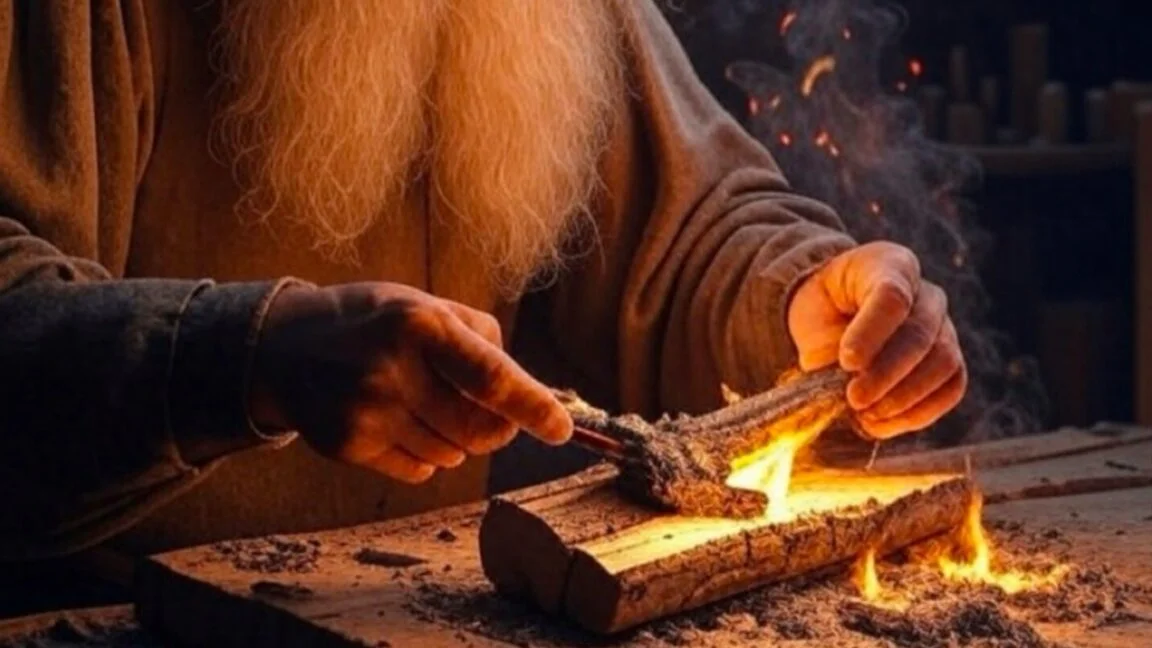
The Japanese wood charring technique known as Yakisugi, which creates a protective carbonized layer on wood surfaces, has been recognized for its benefits in bioarchitecture. However, a recent study indicates that Leonardo da Vinci documented similar protective qualities of charred wood more than a century prior to the formal documentation of Yakisugi in the 17th and 18th centuries.

Keerthika 2 min read 613
Follow on Google
Updated 5 months ago
Science Leonardo da Vinci's Charring Technique Predates Japanese Yakisugi Method 2 min left Follow on Google
Leonardo da Vinci's Charring Technique Predates Japanese Yakisugi Method

TamilTech AI summary

New research suggests Leonardo da Vinci described the protective benefits of charring wood more than a century before the Japanese Yakisugi method was formally documented in the 17th and 18th centuries. Yakisugi creates a carbonized layer that shields wood from water, insects, fungi, and even fire, which is why it has become popular again in modern bioarchitecture for making timber last much longer. Leonardo’s idea appears in his extensive notebooks, including the Codex Atlanticus from around 1490, which also contain sketches for flying machines, early bicycle concepts, engineering cranes, weapons, an unsinkable double-hulled ship, and even a telescope-like device for viewing the moon. In a separate find, researchers recreating formulas from his notes produced a hardened material similar to Bakelite, hinting he may have explored early synthetic plastic centuries ahead of its official invention. Overall, these details show Leonardo was thinking about durable materials and architectural protection long before later traditions and modern science caught up, which is useful context for anyone interested in historic building techniques or sustainable design.

  • What is Leonardo da Vinci's Charring Technique Predates Japanese Yakisugi Method about?
  • Why does this matter for tech users?
  • What are the key takeaways?

AI-assisted summary, checked by the TamilTech editorial team.

0:00
0:00
🔒 Listen is for subscribers. Subscribe

Yakisugi is a traditional Japanese method of charring wood that has gained prominence in modern bioarchitecture for its durability benefits. By forming a carbonized protective layer, Yakisugi helps shield wood from water, insects, fungi, and even fire, significantly extending its lifespan. Although the technique was formally documented in the 17th and 18th centuries, new research suggests that Leonardo da Vinci may have described the protective benefits of charring wood more than a century earlier, according to findings published in the Zenodo research archive.

📜 Unlocking Leonardo’s Notebooks

Leonardo da Vinci left behind an extraordinary legacy of innovation through more than 13,000 pages of notes, later compiled into multiple codices. Sadly, less than a third of these writings survive today. His notebooks reveal visionary ideas that anticipated future technologies, including:

  • Concepts for flying machines
  • Early bicycle designs
  • Cranes and engineering mechanisms
  • Missiles and machine guns
  • A double-hulled “unsinkable” ship
  • Devices to walk on water

Perhaps even more astonishing, in his Codex Atlanticus (1490), Leonardo imagined a telescope-like device, writing about “making glasses to see the moon enlarged” — nearly a century before telescopes were actually invented.

🧪 Leonardo and Early Synthetic Plastic?

In 2003, Alessandro Vezzosi, director of the Museo Ideale in Italy, discovered several intriguing mixture formulas within Leonardo’s notes. After recreating these recipes, he produced a hardened material remarkably similar to Bakelite, an early synthetic plastic that became widely used in the early 20th century. This surprising discovery has sparked speculation that Leonardo da Vinci may have pioneered the earliest form of man-made plastic centuries before its recognized invention.

Leonardo’s writings continue to prove that he was far ahead of his time — not only imagining future machines, but perhaps also influencing materials science and architectural innovation long before the modern world caught up.

Get tomorrow’s tech news on WhatsApp

One short update a day, free. Follow the TamilTech channel.

What do you think?

people reacted

Keerthika

TamilTech editorial team · 3,344 articles

Keerthika is an editor at TamilTech, the Tamil and English technology publication founded by Praveen Kumar S. She covers AI, smartphones, gadgets, EVs, startups and cybersecurity i...

More from Keerthika

Ask TamilTech on WhatsApp

Tech doubt? Ask in Tamil or English — our WhatsApp assistant answers from TamilTech articles in seconds.

Related stories

Comments (0)

| Supports **bold**, *italic*, `code`

Be the first to comment!

Next story Comet Meets Its End Near the Sun, Potomac River Faces Pollution Threat, and More Science Updates
Tamiltech

Tamiltech

Install app for faster access

Earn XP 🏆
WhatsApp
Notifications