


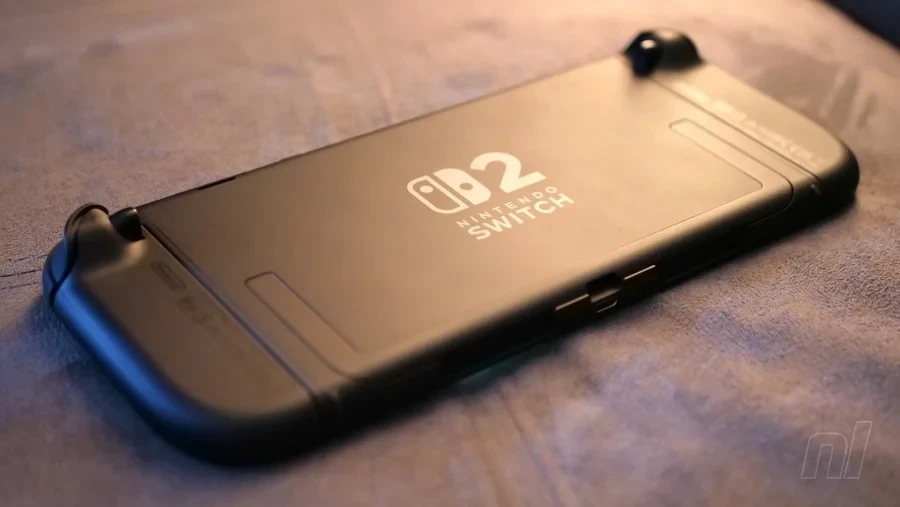
The EU just did what years of gamer complaints couldn't
Switch 2 owners have been complaining about battery life since day one. Nintendo didn't budge. Then the European Union passed a law — and suddenly Nintendo is redesigning the console.
Nintendo is working on a new Switch 2 model for Europe that will allow players to replace the battery themselves. The same change is coming to Joy-Con controllers. No sending the device to Nintendo service. No buying a replacement unit. Just swap the battery and keep playing.
This isn't Nintendo being generous. This is Nintendo complying with EU law before they face consequences for not doing so.
What the EU actually mandated
Two separate EU regulations are behind this change. The first is the EU's Right to Repair directive — a law that requires manufacturers to make their products repairable by ordinary users, not just authorized service centers. The second is the European Battery Regulation, which specifically requires that rechargeable batteries in consumer products be user-replaceable by 2027.
That 2027 deadline is the key number here. Nintendo doesn't have the luxury of delaying this indefinitely — they need a compliant product in EU markets before that date. So the redesign is happening now.
Right to Repair is a movement that has been growing in Europe and the US for years. The basic idea is simple: when you buy a product, you should be able to fix it. Manufacturers have historically resisted this fiercely — sealed batteries, proprietary screws, software locks that void warranties when you open a device. The EU decided to end that, at least within its borders.
What exactly is changing
Both the Switch 2 console itself and the Joy-Con controllers will get the battery replacement treatment. The current Switch 2 has a sealed battery — when it degrades after a few years of charging cycles, your options are to pay Nintendo for a repair service or buy a new console. That's the situation millions of Switch 2 owners are currently in.
The new EU-compliant model will let you open the device and replace the battery without voiding your warranty or needing specialized tools. The exact mechanism — whether it's a screwdriver-accessible panel, a tool-free design, or something else — hasn't been detailed yet. Nintendo hasn't given a specific launch date for the new model either.
The Joy-Con battery replacement is arguably just as important as the console itself. Joy-Cons are expensive — buying a new pair because the battery has degraded on a two-year-old controller feels genuinely wrong. A replaceable battery in Joy-Cons would significantly extend the usable lifespan of controllers that cost several thousand rupees to replace.
The battery life problem that started this conversation
When the Switch 2 launched in June 2025, battery life was immediately a point of frustration. Reviewers and players noted that the Switch 2's more powerful hardware — needed to run games at higher resolutions and frame rates — came at the cost of battery life that felt shorter than ideal for a handheld gaming device. Nintendo's own testing numbers were fine on paper, but real-world gaming sessions consistently left players hunting for a charger.
Over time, battery life degrades further — lithium-ion batteries lose capacity with each charge cycle. A Switch 2 that ships with acceptable battery life today will have noticeably worse battery life after two or three years of regular use. That's the physics of rechargeable batteries. A user-replaceable battery solves this problem cleanly: buy a fresh battery for a few hundred rupees, install it, and your device feels new again.
Will this come to India, the US, and Japan?
Here's where things get interesting for Indian gamers. Reports indicate that Nintendo is considering similar changes for the US and Japan — but only if consumer protection laws in those markets change to require it. There's no indication that Nintendo will voluntarily offer user-replaceable batteries in markets where they're not legally required to do so.
India currently has no equivalent of the EU's Right to Repair directive for consumer electronics at this scale. So Indian Switch 2 owners are likely looking at the same sealed device they've always had, unless Indian consumer protection regulations catch up to the EU standard.
That said — there's a realistic possibility that Nintendo produces one global version of the Switch 2 hardware that meets EU standards and sells it everywhere. Manufacturing two separate versions of the same console (one sealed, one with replaceable battery) adds cost and supply chain complexity. If the EU-compliant version is close enough in price to manufacture as the current model, Nintendo might simply standardize on it globally. This has happened before with other EU compliance changes that ended up benefiting consumers worldwide.
The broader Right to Repair picture
This Nintendo story is part of a much bigger shift happening in consumer electronics. Apple began offering self-repair programs for iPhones in select markets under similar regulatory pressure. Samsung has expanded repairability options for Galaxy phones in Europe. The EU has been the most aggressive in pushing manufacturers toward repairable, longer-lasting products — and manufacturers are following, even if reluctantly.
For Indian consumers, this matters even if Indian law doesn't currently require it. When global products become more repairable due to EU requirements, Indian users often benefit because the same hardware arrives here. The question is whether Indian manufacturers and regulators will push for similar standards domestically — for the millions of phones, tablets, laptops, and game consoles that get thrown away every year because a sealed battery failed.
TamilTech's take
Nintendo should have done this without being forced. The Switch 2 costs around ₹39,990 in India — that's serious money. When you spend that much on a gaming console, being told you can't replace the battery yourself when it degrades in year three feels like a consumer rights violation, not just an inconvenience.
The EU Right to Repair directive is doing something genuinely useful here: making expensive tech products last longer, reducing electronic waste, and putting some power back with consumers. The fact that it took a law to make Nintendo act is disappointing. The fact that the law exists and is working is genuinely good news.
Indian gamers: watch this space. If Nintendo ends up releasing a single globally-compliant Switch 2 hardware revision, Indian units might get the replaceable battery as well. No confirmation yet — but it's worth tracking.


Comments (0)
Be the first to comment!