


What happened?
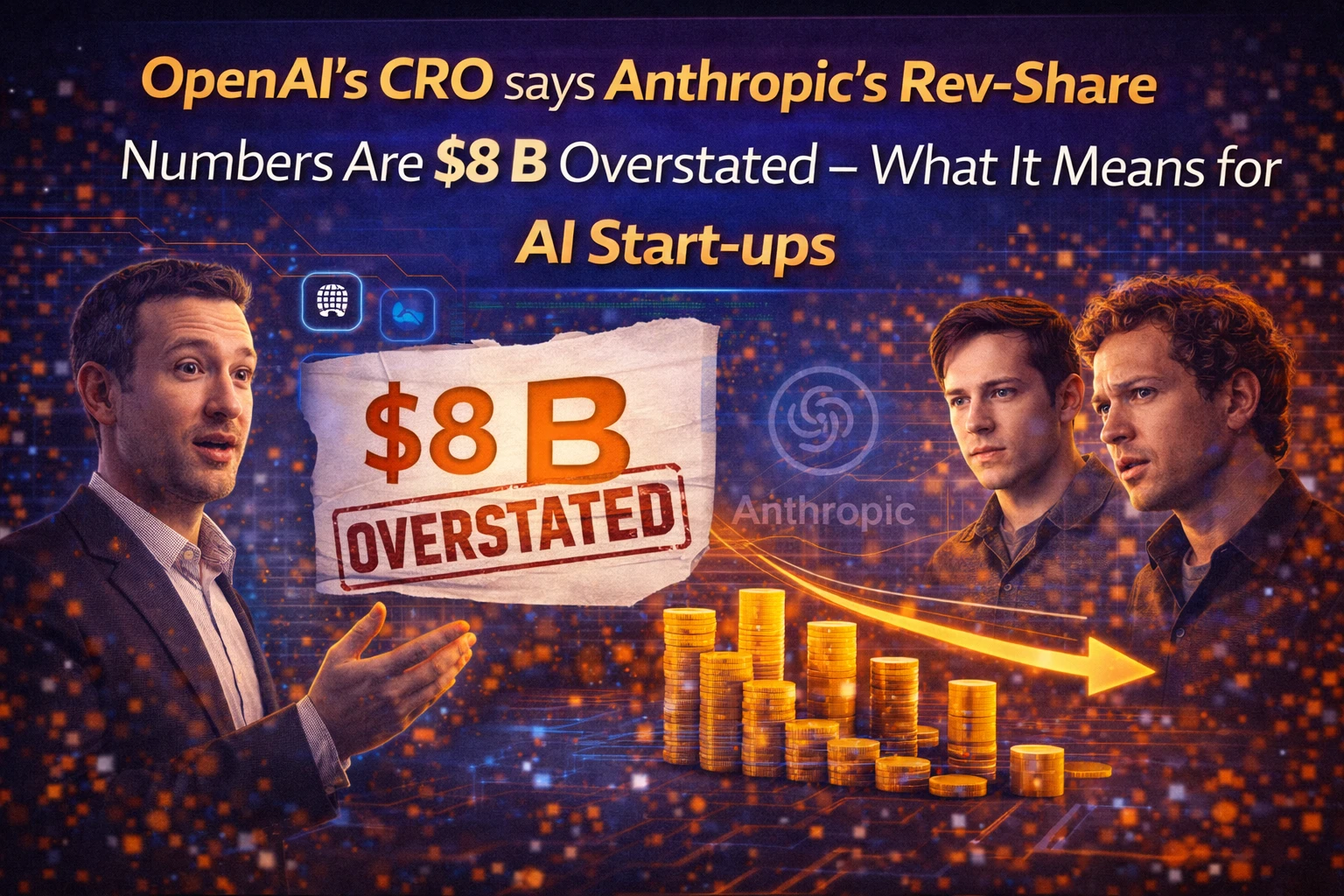
During a recent earnings call, OpenAI’s chief revenue officer (CRO) revealed that Anthropic, the ChatGPT rival backed by Amazon and Google, has been "grossing up" its revenue‑share numbers. In plain English, Anthropic’s public run‑rate – the amount of money it says it’s pulling in from its cloud partners – is about $8 billion higher than the real figure.
Why the confusion?
Anthropic’s business model is simple: it builds large language models (LLMs) and sells access via cloud credits from Amazon Web Services (AWS) and Google Cloud. The contracts stipulate a revenue‑share – a percentage of the cloud spend that goes back to Anthropic. What the CRO said is that Anthropic has been counting the full cloud spend, not just the share that actually lands in its pocket. That inflated the headline run‑rate.
Numbers in plain sight
- Anthropic claimed a $13 billion run‑rate from its cloud partners.
- The CRO says the real figure is closer to $5 billion after stripping out the non‑share portion.
- This $8 billion gap is roughly the size of the entire Indian startup ecosystem’s AI funding in 2023.
Impact on the AI market
When a high‑profile player like Anthropic appears to overstate its revenue, investors get jittery. Funding rounds may tighten, and valuation multiples could shrink. For Indian AI start‑ups, this is a double‑edged sword: on one hand, there’s less hype‑driven money chasing every AI buzzword; on the other, it forces founders to prove real‑world traction, not just lofty projections.
What does this mean for Indian users?
Most Indian developers and enterprises are still in the early adoption phase – they use OpenAI’s API, Google’s Vertex AI, or AWS Bedrock. If Anthropic’s numbers were a signal of a booming market, the correction could slow down price hikes on cloud‑based LLM services. In practice, you might see more competitive pricing from the big three, which is good news for anyone building chat‑bots, content‑generation tools, or internal knowledge bases.
TamilTech’s take – the Indian angle
We think the real story isn’t the $8 billion discrepancy but the message it sends to the Indian AI ecosystem:
- Revenue‑share contracts matter. If you’re negotiating with AWS or Google, make sure you understand the exact % that ends up in your account. Many Indian startups sign “gross‑up” clauses without realising the impact on reported revenue.
- Transparency wins. Investors are getting smarter. They’ll dig into the fine print of your cloud contracts before writing a check. Show them the net revenue, not the gross spend.
- Local cloud players can be allies. With the Indian government pushing for data‑sovereignty, startups can leverage local cloud providers like Tata Communications or JioCloud for more favourable rev‑share terms.
What to watch next
OpenAI’s CRO hinted that Anthropic might revisit its pricing with AWS and Google. Expect renegotiated contracts, possibly lower rev‑share percentages for Anthropic but better terms for downstream customers. Keep an eye on any announcements from the big cloud players about revised AI pricing for Indian regions – they often roll out localized discounts after a major partner renegotiates.
Bottom line
Anthropic’s $8 billion overstatement is a reminder that “run‑rate” can be a marketing term, not a hard financial metric. For Indian AI entrepreneurs, the lesson is clear: nail down the actual cash flow from cloud partners, stay transparent with investors, and leverage local cloud ecosystems to get the best rev‑share deals.
Stay tuned to TamilTech for more deep dives on how global AI moves affect the Indian market.



Comments (0)
Be the first to comment!