


Key takeaways
- Paytm shares jumped over 7% intraday after the government said a 0.4% fee will hit UPI merchant payments above Rs 2,000 from Oct 15.
- Pine Labs and One Mobikwik opened strong, then trimmed gains as traders rechecked the fee’s hit on payment volumes.
- First charge on UPI merchant transfers in nearly six years — the free-for-all era ends for big tickets only.
- Sub-Rs 2,000 UPI stays free. A Rs 10,000 pay now costs Rs 40 on the merchant side.
- Analysts tip QR-heavy acquiring networks to gain if merchants want the cost baked into a service bundle.
What just happened?
Tuesday, finance ministry dropped a notice few saw coming.
From Oct 15, any UPI transfer to a merchant above Rs 2,000 picks up a 0.4% fee. Peer-to-peer stays free. Small shop buys stay free. Only the big merchant tickets get tagged.
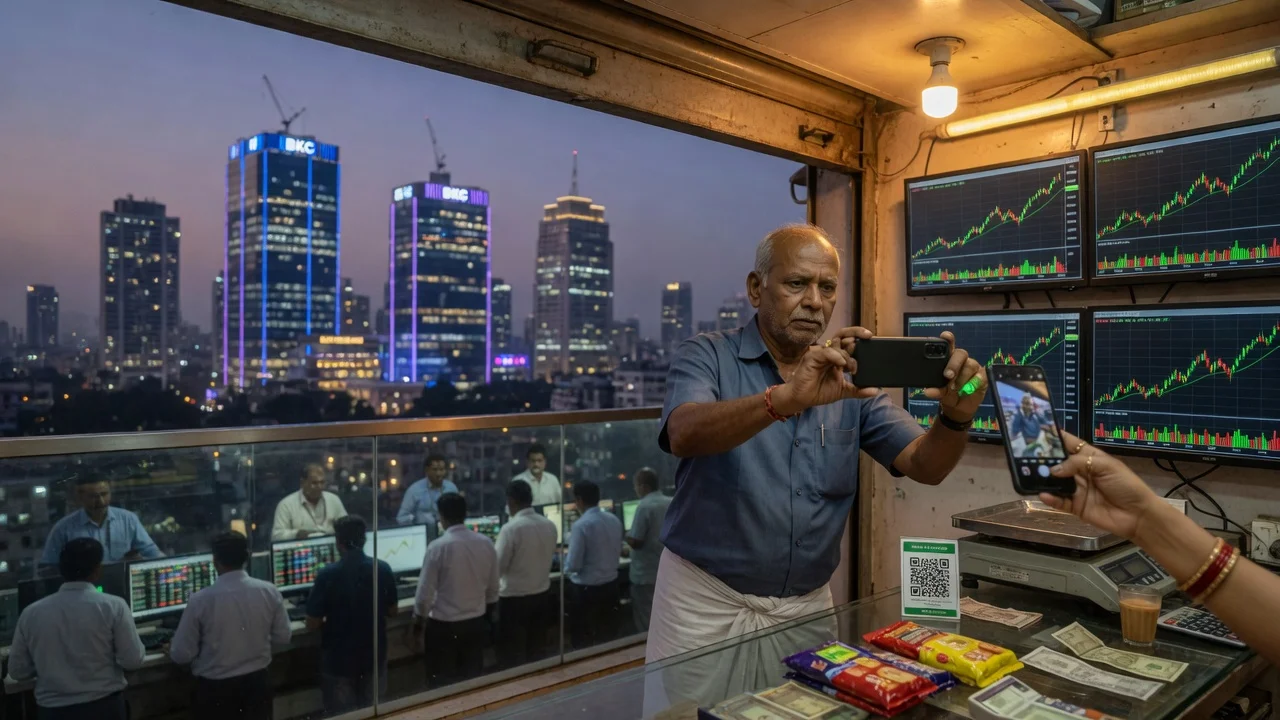
Markets moved in minutes. Paytm stock shot more than 7% on the NSE. The bet: a fat merchant base can swallow the fee or pass a slice without losing volume.
Pine Labs and One Mobikwik had opened the day green on higher ticket hopes. Those early gains got pared once traders priced a possible drag on gross merchandise value.
How does this actually work?
UPI launched in 2016 with one loud promise — digital money, zero cost. For years NPCI ate the infrastructure bill. Banks and apps ran zero-MDR merchant transfers. That stretch lasted almost six years.
Now the rule is simple. Cross Rs 2,000 to a merchant on UPI, and 0.4% kicks in. Stay under that line, nothing changes.
Say you clear a Rs 10,000 electronics order on UPI. Merchant side fee: Rs 40. Still softer than card MDR, which often sits between 1% and 2.5% by sector and card type.
The acquiring bank collects the charge and shares it with NPCI. Exact split isn’t public yet. Government line: recover some NPCI running costs, and nudge high-value settlements toward cheaper rails where it makes sense.
What changes for people in India?
Daily chai, auto, kirana under Rs 2,000? Same free UPI you already use. No drama.
Here’s the bit Flipkart-scale and furniture sellers will feel first. Large tickets — electronics, wholesale, big home buys — now carry a predictable cost layer. Rs 10,000 UPI = Rs 40. Manageable next to cards, but not zero anymore.
QR bundles where the merchant absorbs the fee inside a service pack could get hotter. That helps players with deep acquiring networks. Banks may hear louder asks for lower card MDR as merchants try to offset the new UPI line.
You as a customer? Unlikely to see a surcharge slapped on the screen. Competitive shops rarely pass this kind of fee straight to the buyer. Still, watch checkout pages after Oct 15.
Quick math from the trade floor: an online electronics seller averaging Rs 8,000 UPI orders pays Rs 32 a pop. On a 15% margin, that’s roughly 2.7% of profit — absorbable or renegotiable with partners. A textile wholesaler clearing Rs 50,000 invoices pays Rs 200 each; 200 such pays in a month = Rs 40,000 extra, still under a typical 1% card hit on the same pile.
What should you do now?
If you run a shop or D2C brand, pull last quarter’s UPI ticket sizes. Split under and over Rs 2,000. That’s your real exposure before Oct 15.
Talk to your acquiring bank early. Ask how the 0.4% will show on settlements, and whether a QR or bundled plan softens it.
Compare against your card MDR. For many big-ticket categories, UPI at 0.4% still wins on pure cost — just don’t assume free forever on those rails.
If you’re only paying as a customer, keep using UPI as usual under Rs 2,000. For fat purchases, check whether the merchant quietly shifts you to another rail or eats the fee. Most will eat it. A few might nudge.
Short version: free UPI isn’t dead. It’s now free for the everyday stuff, and lightly priced for the heavy merchant clears. Paytm’s spike shows the market likes scale in that world. Pine Labs and Mobikwik got a reality check on volume math. Oct 15 is when the till starts counting.

Comments (0)
Be the first to comment!