


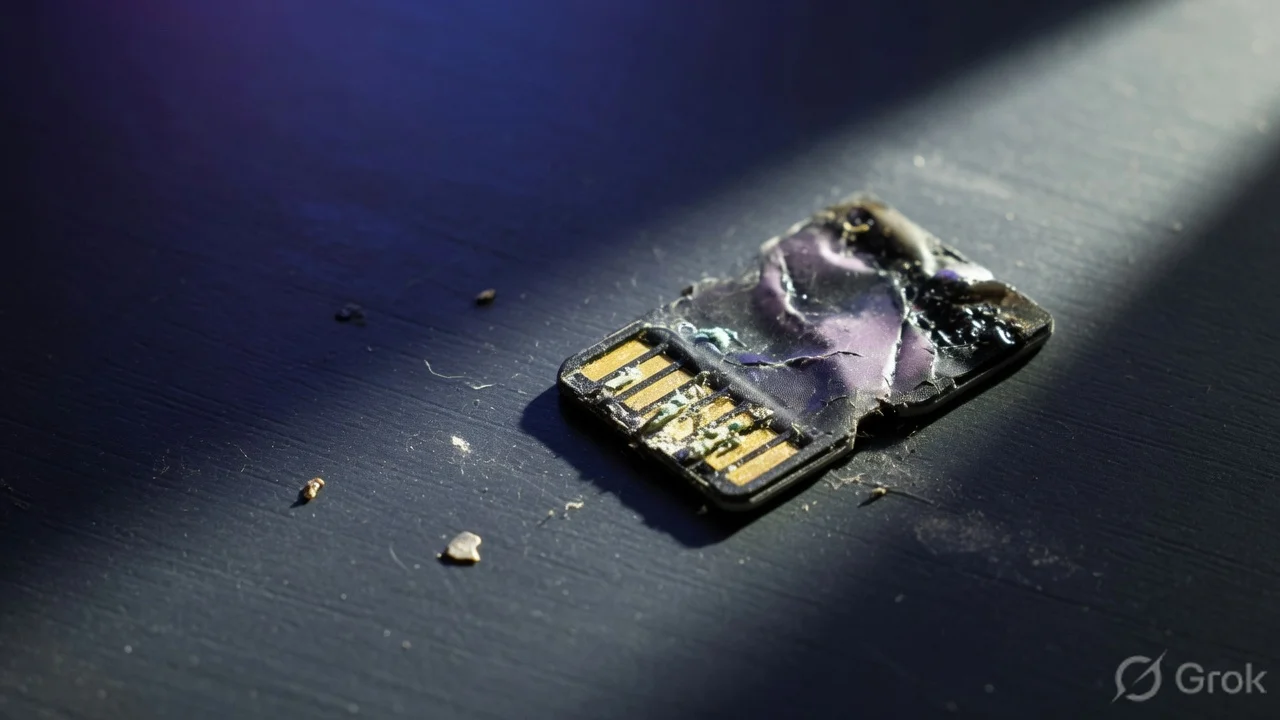
SD cards aren't vaults — they're consumables with a countdown timer
Most people treat SD cards like digital vaults. You stick them in your camera, your Nintendo Switch, your Raspberry Pi, and you assume that as long as the plastic casing doesn't crack, your data is safe. That assumption is wrong. SD cards have a fundamental design flaw that manufacturers don't talk about much: they're consumable items with a predetermined lifespan. They don't usually fail dramatically — no sudden "card corrupted" message, no catastrophic data loss notification. Instead, they rot from the inside out, gradually losing the ability to hold onto your data until one day, files start disappearing or becoming unreadable.
This isn't conspiracy or exaggeration. It's how NAND flash memory fundamentally works, and every consumer SD card uses it.
How NAND flash memory actually stores data
Unlike old hard drives with physical spinning platters, NAND flash storage doesn't use mechanical parts. Instead, it traps electrons inside microscopic cells. That sounds sophisticated, but here's the catch: the process of trapping and releasing those electrons — which happens every time you save or delete a file — physically damages the chemical structure of the cells.
Premium Content
How many times your SD card can really be written to, which types last longest, and why your old photos might vanish without warning — inside.
You've used 3 of 3 free articles today.
Subscribe NowAlready subscribed? Sign in




Comments (0)
Be the first to comment!