


Key Takeaways
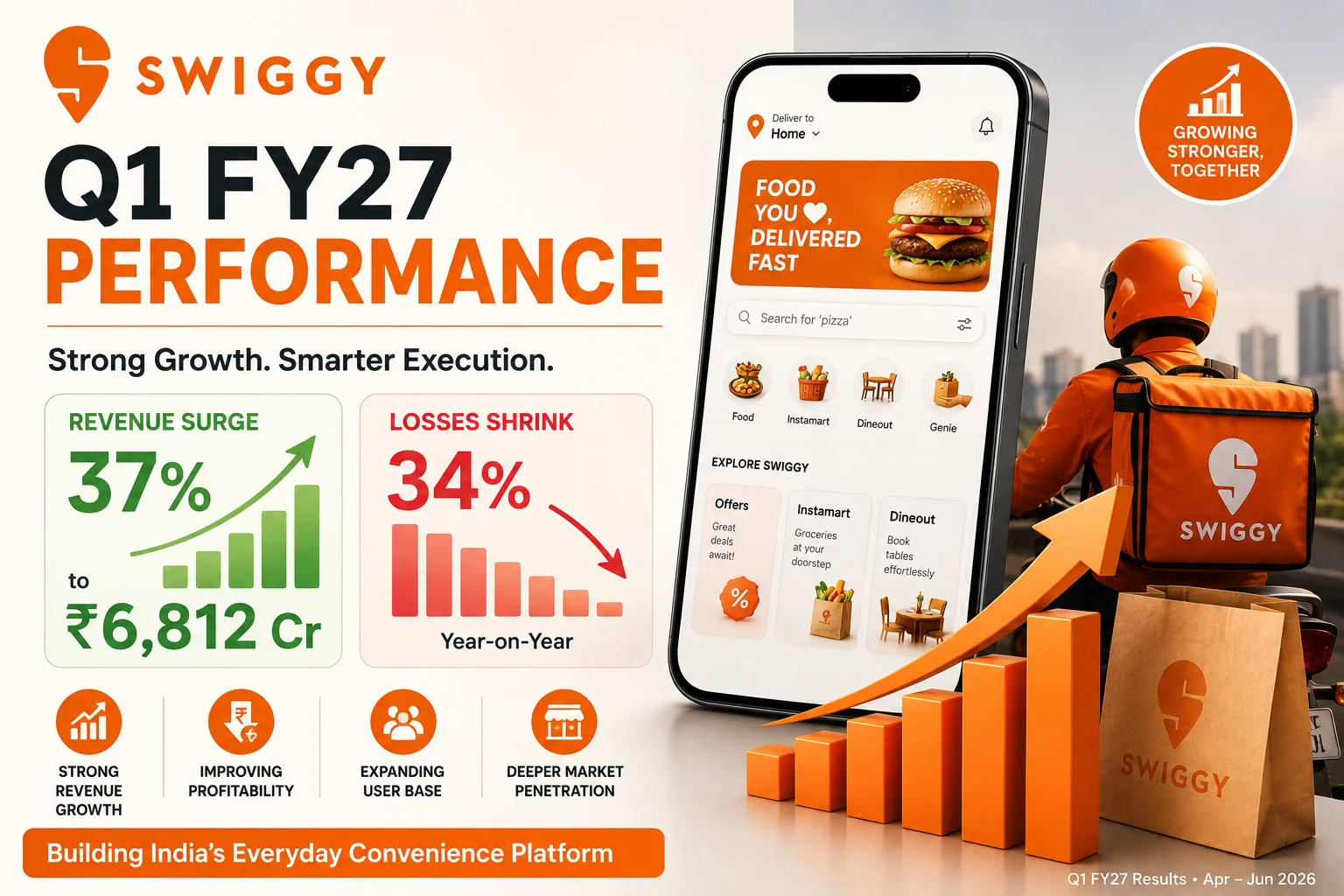
- Swiggy's revenue surged by 37% year-on-year to reach ₹6,812 Crore in Q1 FY27.
- The company successfully narrowed its net loss by 34%, showing a much leaner operating model compared to last year.
- Instamart remains the fastest-growing segment, contributing significantly to the overall top-line growth.
- Platform fees and higher advertising revenue from restaurant partners have played a crucial role in improving margins.
- Expect higher platform fees and more focus on 'Swiggy One' memberships as the company pushes for a profitable full year.
If you have been using Swiggy lately, you might have noticed the slight hike in platform fees or those tempting 'Instamart' deals popping up every few minutes. Well, those strategies are clearly working for the company. Swiggy has just dropped its Q1 FY27 financial results, and the numbers are honestly quite impressive. In a market where everyone is questioning the sustainability of food delivery and quick commerce, Swiggy has managed to grow its revenue to ₹6,812 Crore, which is a 37% jump compared to the same quarter last year. More importantly, they are finally getting their expenses under control, with losses dropping by 34%.
How Swiggy Turned the Tide in 2026
To understand where Swiggy is today, we have to look back at the chaotic period of 2024 and 2025. Back then, the company was burning cash like crazy to keep up with Zomato and the rising threat of Zepto. But as we move through 2026, the strategy has shifted from 'growth at any cost' to 'efficient growth.' The company has optimized its delivery routes using better AI and has significantly reduced the cost per delivery. They aren't just a food delivery company anymore; they are a logistics powerhouse. Whether it's a burger, a pack of milk from Instamart, or a forgotten key sent via Genie, Swiggy has integrated itself into the daily lives of urban Indians.
The narrowing of losses by 34% is the biggest headline here. For a long time, critics argued that food delivery in India could never be profitable because of low order values and high delivery costs. However, by increasing the platform fee (which is now hovering around ₹7 to ₹10 in major metros) and charging restaurants more for visibility (ad revenue), Swiggy is proving that the math can actually work. It’s not just about delivering food; it’s about the ecosystem they’ve built around it.
Instamart: The Real Hero of the Growth Story
While food delivery is the foundation, Instamart is the one doing the heavy lifting in terms of growth percentages. Quick commerce has exploded in India over the last two years. People aren't just ordering snacks anymore; they are buying electronics, clothes, and even small home appliances on Instamart. This shift has increased the average order value (AOV), which is a dream for any delivery business. When you deliver a ₹1,000 smartphone charger along with a ₹50 packet of chips, the margin on that delivery improves drastically.
In this quarter, Instamart’s contribution to the total revenue has seen a massive spike. By setting up more 'dark stores' (mini-warehouses) in tier-2 cities like Coimbatore, Madurai, and Lucknow, Swiggy has tapped into a market that was previously ignored. The efficiency of these dark stores has improved, meaning they are breaking even much faster than they used to in 2024. This is a huge win for the company’s path to overall profitability.
The India Impact: What This Means for You
So, what does this mean for the average user in India? Honestly, it’s a bit of a mixed bag. On one hand, the service is getting faster and more reliable. On the other hand, the days of 'free delivery' and 'heavy discounts' are mostly gone. Swiggy is now focusing on its 'Swiggy One' loyalty program. If you are a frequent user, they want you behind that paywall. By locking users into a subscription, they ensure a steady stream of revenue and higher order frequency.
We are also seeing a rise in 'Platform Fees.' You might think, "What's an extra ₹5 or ₹10?" but when you multiply that by millions of orders per day, it becomes a massive revenue stream that goes straight to the bottom line. For the delivery partners, however, the pressure remains high. While Swiggy claims to be improving partner payouts through better incentives, the reality on the ground is that delivery workers are having to work longer hours to make the same amount of money they did two years ago. This is a challenge Swiggy will have to address if they want to maintain this growth without facing labor strikes or regulatory hurdles.
TamilTech’s Honest Take: The Road Ahead
Here’s what we think at TamilTech. Swiggy is finally acting like a mature, listed company. They are no longer chasing vanity metrics; they are chasing real money. The 37% revenue jump is a sign that the Indian consumer is still hungry for convenience, despite rising prices. However, they are facing stiff competition from Zomato, which is also performing exceptionally well, and Zepto, which is nipping at their heels in the quick commerce space.
The real test for Swiggy will be the next two quarters. Festive seasons are coming up, and that’s when order volumes skyrocket. If they can maintain this 30%+ growth while keeping their losses shrinking, we might see Swiggy hitting a net-profit milestone by the end of FY27. For investors, this is a positive sign. For users, it’s time to get used to paying for convenience. The era of 'burning VC cash for our biryani' is officially over. What do you think about the rising platform fees? Is Swiggy still your go-to app, or have you shifted to alternatives? Let us know!


Comments (0)
Be the first to comment!