


Key Takeaways
- Swiggy shareholders have approved a 49.5% foreign ownership cap, a key requirement for the company to be recognized as an Indian-owned entity.
- This move is seen as a strategic step to secure IOCC (Indian-owned and controlled company) status, which offers significant advantages.
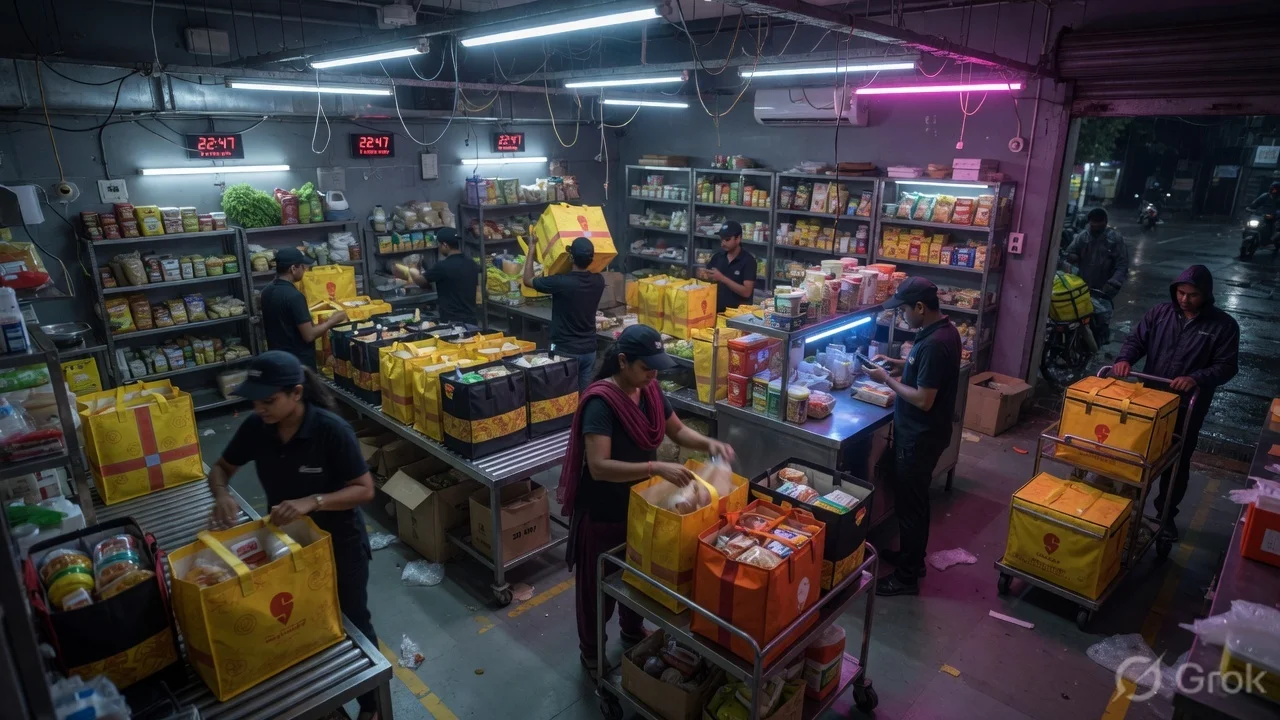
- The change clears the path for Instamart, Swiggy's quick commerce arm, to potentially shift from a marketplace model to a first-party inventory model.
- This could allow Instamart to have more control over its products, pricing, and delivery experience, directly competing with players like Blinkit and Zepto.
- The decision reflects a broader trend in India's tech sector, where companies are structuring themselves to comply with foreign investment regulations while scaling aggressively.
What's the news
In a significant corporate development, Swiggy's shareholders have approved a proposal to cap foreign ownership at 49.5%. This isn't just a routine corporate governance tweak; it's a strategic masterstroke that could reshape the company's most ambitious vertical, Instamart. The approval is a direct response to the government's tightening norms on foreign direct investment (FDI) in the digital space, particularly for entities that benefit from the 'Startup India' initiative or seek specific regulatory advantages.
The core of the issue lies in the definition of an 'Indian company'. To qualify, a company must have a majority of its equity held by resident Indians. By voluntarily bringing down the foreign stake to just under 50%, Swiggy is ensuring it meets this criterion. This move is particularly crucial for its Instamart business, which is in a high-stakes battle for market share in the quick commerce sector. The approval clears a major hurdle for Instamart to be classified as an Indian-owned and controlled company (IOCC), a status that comes with its own set of benefits.
Details
So, what does this mean in practice? The IOCC status is more than just a label. For one, it allows Instamart to operate under a more favorable regulatory framework, especially concerning data localization and cross-border data flows, which are becoming increasingly stringent. More importantly, it gives the company the green light to pivot its business model for Instamart.
Currently, Instamart operates primarily as a marketplace, connecting customers with local stores and Kirana shops. However, the new structure paves the way for a shift to a first-party inventory model. In this model, Swiggy would own the inventory, manage the supply chain directly, and then sell to the end consumer. This is the model that has made players like Blinkit and Zepto so successful, allowing them to control the entire customer experience from product selection to delivery speed.
The move also signals Swiggy's long-term confidence in the Indian market. By restructuring to comply with local norms, the company is signaling its commitment to being a homegrown champion, which could help it navigate future policy changes and build stronger relationships with local suppliers and partners. It's a classic case of adapting to the local playbook to win the local game.
India impact
This development has far-reaching implications for India's burgeoning tech and startup ecosystem. First, it sets a precedent for other startups that are heavily funded by foreign investors but want to scale within India's complex regulatory environment. It shows that with strategic corporate restructuring, it's possible to balance global capital with local compliance.
Second, it intensifies the quick commerce war. The first-party inventory model is capital-intensive, requiring massive investment in warehouses, supply chain logistics, and inventory management. By clearing the way for Instamart to adopt this model, Swiggy is signaling its intent to go all-in and compete directly with Blinkit (owned by Walmart-backed Flipkart) and Zepto. This will likely lead to more investment, more innovation, and ultimately, better services for the Indian consumer.
Finally, it highlights the government's influence on corporate strategy. The FDI rules in India are not static; they evolve based on the government's vision for the digital economy. Swiggy's move is a clear acknowledgment of this reality and a proactive step to stay ahead of the curve. It's a reminder that in India, playing by the local rules is just as important as having a great product.
Use cases
For a consumer, this change could mean a lot. If Instamart adopts the first-party model, users might see a wider and more consistent selection of products, especially in the quick commerce category. Pricing could become more competitive as Swiggy controls the supply chain and can optimize costs. Delivery times might also improve as the company invests in its own logistics network to ensure faster fulfillment.
For suppliers, this could be a double-edged sword. While the marketplace model gave them access to a massive customer base, the first-party model might mean they have to compete directly with Swiggy's own inventory. However, it could also open up opportunities for them to become official partners in Swiggy's supply chain, providing goods directly to its warehouses.
Honest take
While this is a smart move on paper, the real test will be execution. Shifting Instamart to a first-party model is a massive undertaking. It requires huge capital, a robust supply chain, and the ability to manage perishable inventory efficiently. The quick commerce space is already a bloodbath, with players burning billions of dollars to acquire and retain customers.
Swiggy has the financial muscle and the brand recognition to pull this off. But it will face stiff competition from Blinkit and Zepto, who have already perfected the first-party model to a large extent. The key differentiator for Swiggy will be its ability to leverage its existing network of delivery partners and its deep understanding of the Indian consumer.
Ultimately, this is a necessary evolution for Swiggy. To remain relevant and competitive in the long run, it cannot rely solely on its food delivery business. Quick commerce is the next frontier, and this move is Swiggy's declaration of intent to conquer it. It's a high-risk, high-reward strategy, and we'll be watching closely to see if it pays off.
FAQs
- Q: What is the IOCC status and why is it important for Swiggy?
A: IOCC stands for Indian-owned and controlled company. This status is important because it allows a company to comply with certain Indian regulations, particularly those related to data and foreign investment, and can provide access to government benefits and a more favorable operating environment. - Q: How does the first-party inventory model differ from the marketplace model?
A: In a marketplace model, the company (like Instamart currently) acts as a platform connecting buyers and sellers (local stores). In a first-party model, the company buys the inventory itself and then sells it directly to the customer, giving it more control over the product, price, and delivery experience. - Q: Who are Swiggy's main competitors in the quick commerce space?
A: Swiggy's primary competitors in the quick commerce sector are Blinkit (owned by Flipkart) and Zepto. Both companies currently operate on a first-party inventory model. - Q: What does this mean for the foreign investors in Swiggy?
A: This move means that foreign investors' stake in Swiggy will be capped at 49.5%. While this limits their potential upside, it's a necessary step for the company to operate smoothly within India's regulatory framework and unlock new growth opportunities. - Q: Is this a one-time change or a permanent shift in strategy?
A: This appears to be a strategic shift to align with Indian regulations and compete effectively in the quick commerce market. It's a long-term move that will shape how Instamart operates and competes in the Indian market for the foreseeable future.


Comments (0)
Be the first to comment!