


Key Takeaways
- China’s food delivery market is roughly 22 times larger than India’s, yet Zomato and Swiggy are already landing unit economics close to Meituan’s.
- Per-order contribution margins and delivery cost discipline in India now look far healthier than the cash-burn years of the late 2010s.
- UPI-led payments, dense metro clusters and tighter restaurant partnerships are helping Indian apps squeeze more efficiency from a smaller GMV base.
- Absolute profits still trail Chinese scale, but the path to sustainable food-delivery economics in India looks clearer in 2026 than ever.
- Quick commerce (Blinkit, Instamart) and higher average order values remain the next levers for both companies.
What's the news
India’s food delivery market is nowhere near China’s size. That part is not news. What is surprising is that Zomato and Swiggy have pushed their food delivery unit economics into a zone that sits close to Meituan — the Chinese giant that runs on a market nearly 22 times larger.
For years the story was simple: India burns cash because order density is low, ticket sizes are smaller, and fuel plus rider costs eat margins. The 2026 picture looks different. Both Indian platforms have tightened delivery radii, improved restaurant take rates where it makes sense, and cut wasteful promotions. The result is contribution margins per order that no longer look like a developing-market apology. They look competitive with a company that has far more scale to lean on.
This is not a claim that Zomato or Swiggy suddenly match Meituan’s absolute profits or GMV. They don’t. The point is narrower and more interesting: on a per-order economics basis, India’s two big food apps have closed a gap that many assumed would stay open for another decade.
Details
Unit economics in food delivery usually means contribution margin after delivery cost, packaging, payment fees and customer support — before corporate overhead and marketing. Meituan has long benefited from extreme density in Chinese cities, high order frequency and a massive merchant base. India’s cities are dense too, but the overall addressable market is much smaller and average order values historically sat lower.
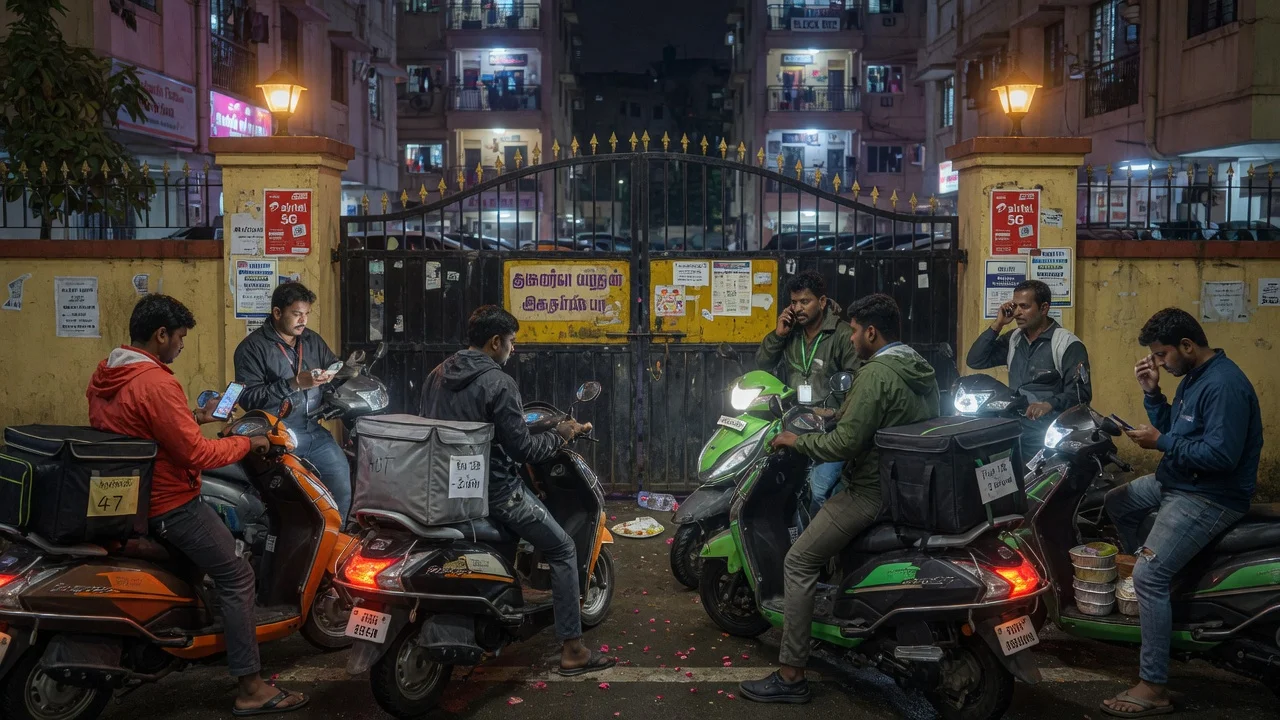
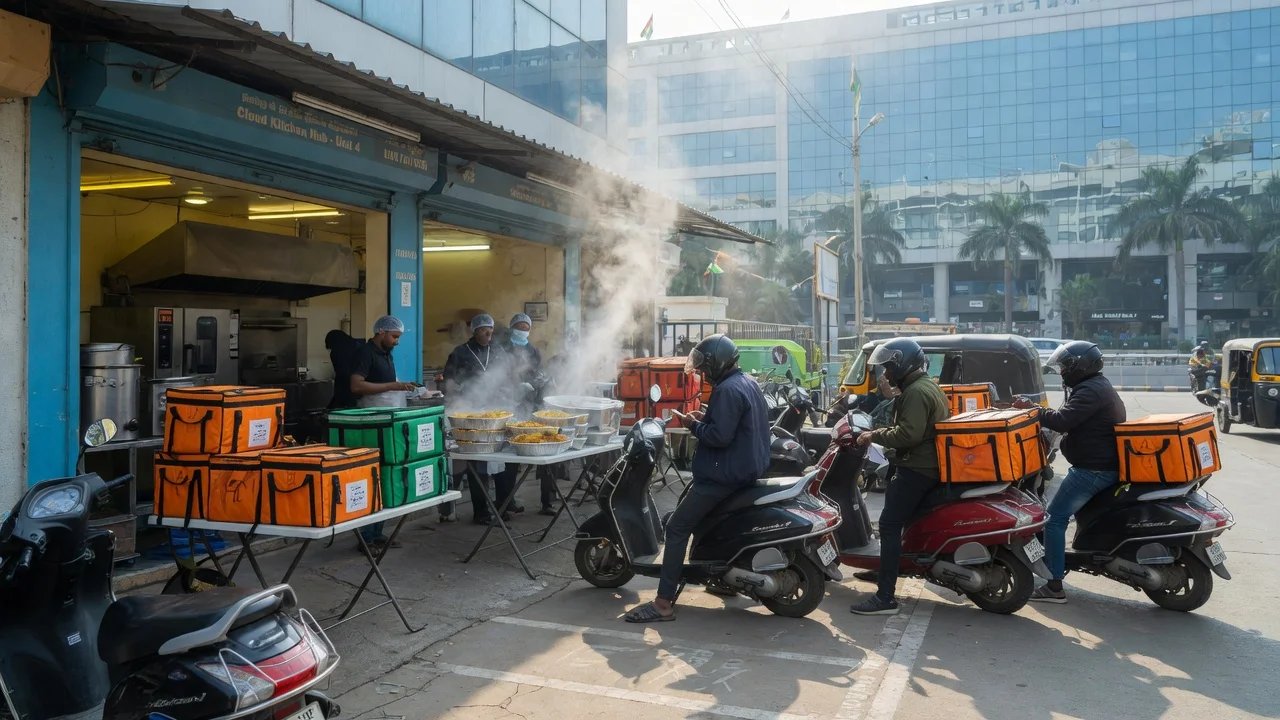
What changed for Zomato and Swiggy is a mix of operational discipline and market maturity. Delivery partners are better routed. Dark kitchens and cloud kitchens reduced some last-mile friction. Customers got used to paying realistic delivery fees instead of living on endless free-delivery coupons. UPI made payment collection cheap and reliable — no international card fees chewing into thin margins. Restaurant partners also pushed back on unsustainable commissions, forcing platforms to find efficiency elsewhere rather than simply raising take rates forever.
Scale still matters. China’s market size gives Meituan more room to amortise tech, ads and logistics networks. India’s smaller pie means every rupee of cost control shows up faster on the P&L. That is exactly why the “near-Meituan unit economics” claim lands as a genuine achievement rather than marketing fluff. Hitting similar per-order health while operating in a market 22X smaller is hard. It suggests the Indian model is not just a copy of China with worse numbers — it has found its own efficiency levers.
Both companies have also leaned into higher-margin adjacent bets. Quick commerce (Blinkit for Zomato, Instamart for Swiggy) lifts basket sizes and frequency. Advertising and restaurant SaaS-style tools add revenue that does not require another rider on a bike. Pure food delivery still has to stand on its own feet, and the latest read on unit economics says it largely does.
India impact
For Indian consumers the practical effect is less drama and more reliability. When platforms stop bleeding on every order, they stop yanking free delivery on and off every week. Pricing becomes more predictable. Delivery SLAs improve because the business can afford to keep riders engaged instead of constantly churning them with boom-bust incentives.
Restaurants feel it too. A platform that is not in permanent survival mode is less likely to squeeze merchants into impossible commission structures just to stay afloat. Better unit economics also support wider city coverage beyond the top metros — Tier-2 and Tier-3 expansion becomes less of a charity exercise and more of a calculated bet.
Investors and employees care for the obvious reason: food delivery in India finally looks like a business that can print cash without needing endless capital infusions. That matters in a funding climate that has been colder than the early unicorn years. It also matters for listed-company narratives. Cleaner contribution margins make it easier to argue that growth and profitability can coexist instead of trading off forever.
There is a broader India angle. Dense urban clusters, cheap digital payments via UPI, and a young population that already treats food delivery as normal infrastructure all help. Flipkart-style logistics lessons and Jio-driven smartphone penetration did the groundwork years ago. Food delivery is now harvesting that stack. The China comparison just makes the harvest look sharper than expected.
Use cases
Think of a mid-week dinner order in Bengaluru or Pune. Five years ago the platform might have subsidised half the delivery fee and still lost money after rider incentives. Today the same order can clear a healthy contribution margin because routing is tighter, the customer pays a transparent fee, and payment happens over UPI with almost no friction. That single order is the unit-economics story in miniature.
Restaurant partners in smaller cities see another use case. When core food delivery stops losing money, platforms can justify putting more riders and marketing into places that were previously “too thin.” A cloud kitchen in Coimbatore or Indore becomes viable earlier. Delivery partners get more consistent earning opportunities instead of feast-or-famine surge games.
Quick commerce sits on top of the same network. A grocery add-on or a late-night essentials run uses similar last-mile muscle. Better food-delivery unit economics free up capacity and cash to keep those 10-minute promises without destroying the P&L. Advertising inside the apps — sponsored restaurant slots, brand takeovers — becomes more valuable when the base delivery business is healthy rather than desperate for any revenue.
Even corporate meal programmes and bulk office orders benefit. Platforms that understand their true cost per drop can price B2B contracts sanely instead of undercutting themselves into another burn cycle.
Honest take
Let’s not oversell this. Near-Meituan unit economics on a per-order basis is impressive. Absolute scale is still a different sport. China’s market size gives Meituan a profit pool India will not match for a long time, if ever. Zomato and Swiggy can be excellent businesses and still look small next to Chinese GMV numbers. That is fine. India does not need to win a size contest to build durable companies.
Competition remains real. The two platforms still fight each other, plus a long tail of regional players and the ever-present option of customers just cooking at home. Quick commerce is capital intensive and can reintroduce burn if discipline slips. Regulatory attention on gig-worker conditions and platform commissions is not going away. Any celebration of unit economics has to stay honest about those open loops.
Still, the direction of travel is clear. The old joke that Indian food delivery would forever be a subsidy machine is aging badly. Hitting contribution metrics that sit close to a giant operating in a market 22 times larger is a quiet flex. It means the hard operational work of the last few years — fewer freebies, smarter routing, UPI-native payments, tighter city focus — actually worked. For users that should translate into stabler service. For the industry it means food delivery in India finally looks like a grown-up business instead of a perpetual startup experiment.
Keep watching the next set of numbers. If contribution margins hold while order volumes keep climbing, the Meituan comparison stops being a fun headline and becomes the new baseline. That would be the real win.


Comments (0)
Be the first to comment!