


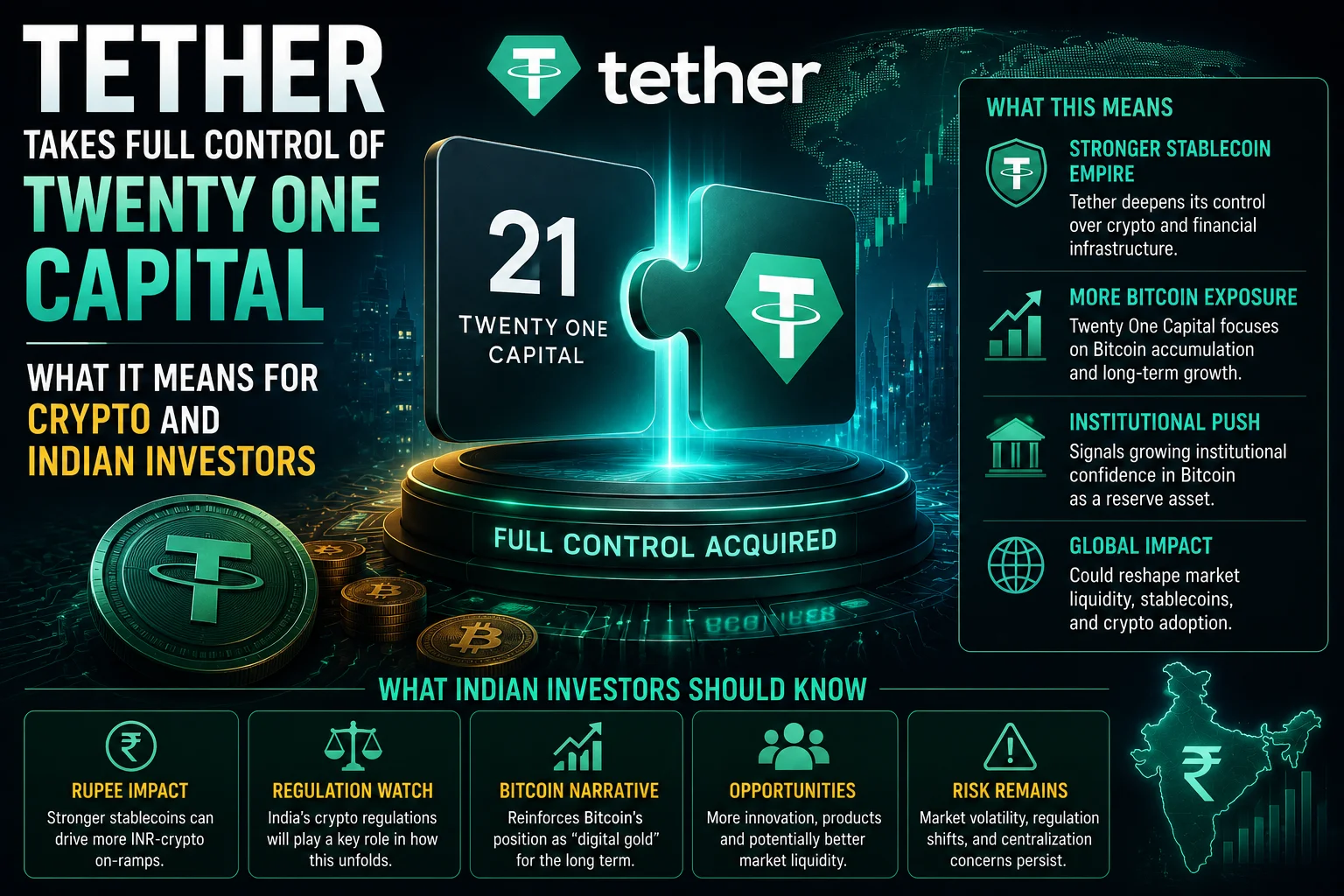
What just happened?
In a bold move, Tether – the company behind USDT stablecoin – has purchased SoftBank’s roughly 26% share in Twenty One Capital, the crypto‑treasury firm that holds a massive Bitcoin reserve for institutional clients. After the deal, Tether now owns about 71% of the company, while SoftBank’s stake, valued at roughly $679 million, exits the picture.
Why does this matter?
Twenty One Capital isn’t a typical crypto exchange. It’s a treasury‑management platform that lets big‑ticket investors park a chunk of their portfolio in Bitcoin without the hassle of direct custody. By taking a controlling stake, Tether can integrate its stablecoin ecosystem directly with the Bitcoin‑backed treasury product, potentially creating a seamless bridge between USDT liquidity and Bitcoin exposure.
Key numbers
- SoftBank’s original stake: ~26% (≈ $679 M)
- Tether’s new stake: ~71%
- Total Bitcoin held by Twenty One Capital: > $2 B (around 100,000 BTC)
How this could affect Indian crypto users
India’s crypto scene is still navigating regulatory clarity, but the demand for crypto‑backed financial products is rising. With Tether now steering the ship, we could see:
- More USDT‑linked treasury products. Institutional investors in India might get a new way to earn yield on USDT while staying exposed to Bitcoin.
- Potentially lower transaction costs. Tether’s massive liquidity could reduce fees for converting between USDT and BTC for treasury purposes.
- Greater regulatory scrutiny. Indian regulators have been wary of stablecoins; a bigger Tether footprint may attract closer watch.
What’s the strategy behind Tether’s move?
By owning a majority of a Bitcoin‑treasury firm, Tether can:
- Bundle USDT stability with Bitcoin’s store‑of‑value narrative.
- Offer bundled products to hedge funds, family offices, and even crypto‑savvy corporates.
- Strengthen its position against rivals like Circle (USDC) that are also eyeing institutional treasury solutions.
Our take – TamilTech‑ஓட கருத்து
Honestly, this is a clever play. Tether has often been criticized for being a “stablecoin” that lives off the back of the dollar. By tying its USDT to a real Bitcoin reserve via Twenty One Capital, it adds a layer of credibility – the Bitcoin vault acts like a safety net. For Indian investors, this could mean a new class of low‑volatility, high‑yield products that sit somewhere between a bank FD and a crypto investment.
But there’s a flip side. The Indian government’s stance on stablecoins is still evolving. If regulators tighten USDT rules, the whole ecosystem could face headwinds. Also, SoftBank’s exit might signal that even the Japanese tech giant sees the crypto‑treasury space as a risky bet.
What should you watch next?
Keep an eye on:
- Regulatory announcements from RBI and the Ministry of Finance regarding stablecoins.
- Any new product launches from Twenty One Capital that explicitly brand USDT‑linked yields.
- Market reaction – if institutional flow into USDT spikes, we’ll likely see more Indian funds allocating a slice of their portfolio here.
Bottom line
Tether’s takeover of Twenty One Capital is more than a simple equity shuffle; it’s a strategic push to blend the stability of USDT with the hard‑asset appeal of Bitcoin. For Indian investors craving crypto‑backed financial products, this could open doors – provided the regulatory environment stays friendly.




Comments (0)
Be the first to comment!