


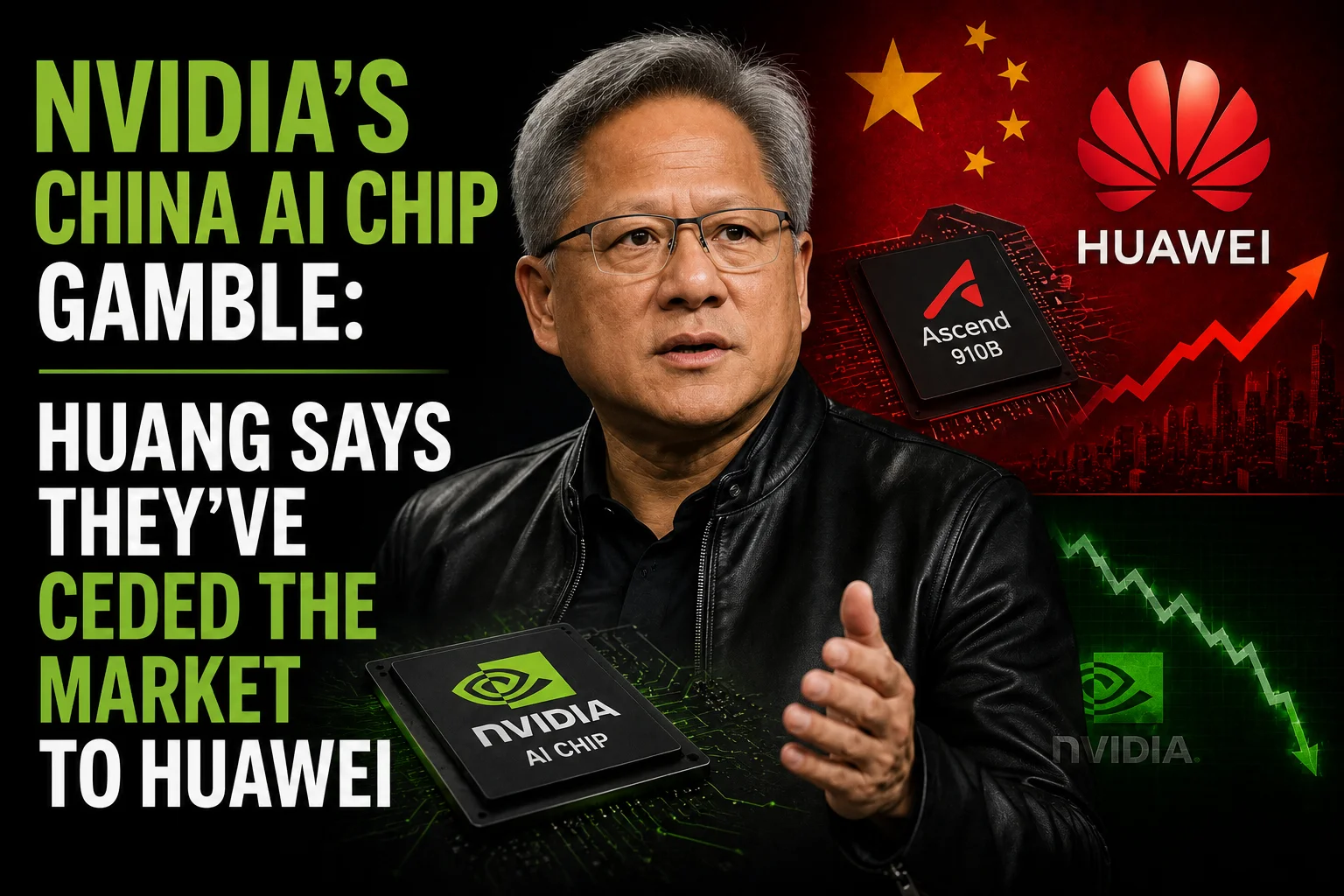
What just happened?
During a recent interview, Nvidia CEO Jensen Huang said the company has "largely conceded" the Chinese AI chip market to Huawei. In plain English – Nvidia’s hopes of selling its flagship H100 GPUs to Chinese data‑centres are basically dead. The US government’s export‑control rules have made getting a licence to ship high‑end AI silicon to China a near‑impossible task.
Why did Nvidia back off?
Two big forces are at play. First, the US Commerce Department tightened the so‑called "Entity List" rules in 2023, meaning any US‑origin chip that can accelerate large language models now needs a specific licence. Those licences are rarely granted when the end‑user is a Chinese tech giant. Second, Huawei has been quietly building its own AI‑accelerator ecosystem – the Ascend series – and has the backing of the Chinese government. When the odds of getting a licence are slim, Huang says Nvidia will "expect nothing" in terms of approvals.
Numbers that matter
Last year Nvidia sold roughly $2.5 billion worth of AI GPUs globally. China used to account for about 15 % of that – roughly $375 million. If those sales dry up, Nvidia could lose close to $300 million in the next 12‑months, according to internal estimates. Meanwhile, Huawei’s Ascend 910 has already been benchmarked at 200 TOPS (tera‑operations per second) – a figure that rivals the H100 in many workloads.
What does this mean for India?
India’s AI startup boom has been eye‑balling Nvidia GPUs as the default hardware. With China out of the picture, Nvidia might redirect inventory to the Indian market, but the price tag won’t change much – a single H100 still costs around ₹12 lakhs in the local market. For most Indian firms, the alternative is to look at cheaper options like AMD’s MI250 or even home‑grown accelerators from startups like Sanket Labs.
TamilTech’s take
We think this is a classic case of geopolitics shaping tech supply chains. Nvidia’s decision to bow out of China doesn’t just affect its bottom line; it reshapes the entire AI hardware map in Asia. Huawei will likely double‑down on its Ascend line, and we may see a new wave of China‑centric AI software stacks built around it. Indian players should watch the price ripple – if Nvidia shifts stock to India, we could see a marginal dip in GPU prices, but not enough to make H100 affordable for most startups.
What to expect next?
In the next six months, Nvidia will probably focus on expanding its partnership with Indian cloud providers like AWS, Azure, and Google Cloud – all of which are already offering Nvidia‑powered instances. At the same time, we expect the US to tighten export rules further, making a comeback in China even harder. For Indian developers, the smart move is to diversify – start testing workloads on AMD or Intel Xe‑HPC GPUs now, so you’re not locked into a single vendor.
Bottom line
China’s AI chip market is no longer a playground for Nvidia. Huawei is now the dominant player, and the US export regime is the gatekeeper. Indian tech firms should treat this as a warning sign and start planning for a multi‑vendor hardware strategy.




Comments (0)
Be the first to comment!