


Why this feels like breaking news
It’s 8 am in Chennai and my X timeline is already ablaze. A screenshot of the Auto Punditz March 2026 dispatch report – “24,716 electric passenger vehicles – up 19.9 % MoM” – has racked up 21 K retweets and 37 K likes. Within minutes, CEOs of Tata Motors, Mahindra & Mahindra and JSW MG were replying, and a wave of engineers from charging‑station startups (ChargeGrid, Ather, Fortum) started posting their own take on whether the existing infrastructure can handle the next wave. Google Trends confirms the hype: searches for “EV sales India March 2026” have spiked 45 % in the last 24 hours. In short, the numbers are historic, the conversation is electric, and the market is at a turning point.
March 2026 in numbers – the record month
- Total electric‑car dispatches (OEM → dealer): 24,716 units (up 19.9 % MoM).
- Total EV registrations (Vahan data): ~22,300 units (≈ 56 % MoM growth).
- Top three OEMs:
- Tata Motors – 8,685 units (≈ 35 % of the market).
- Mahindra & Mahindra – 5,651 units (≈ 23 %).
- JSW MG Motor – 5,113 units (≈ 21 %).
- Other notable players: Maruti Suzuki eVitara (2,254 units), Hyundai (2,047 units), VinFast (688 units).
- Growth drivers: year‑end subsidy deadlines, imminent price hikes, fuel‑price shock, corporate fleet tax benefits.
What pushed the surge? The “perfect storm”
- Fiscal‑year‑end incentives: The central PM‑E‑DRIVE subsidy and numerous state rebates expire on 31 Mar 2026. Buyers rushed to lock in up‑to ₹1.7 lakh of discounts and claim the 40 % accelerated depreciation under Section 32 of the Income‑Tax Act.
- Imminent price hikes: Tata, Mahindra and MG announced price increases effective 1 Apr 2026. Dealers offered “last‑day‑deal” discounts, creating a buying frenzy.
- Fuel‑price shock: Geopolitical tensions in the Middle East sent diesel and petrol prices up by 30 % YoY in February. EVs suddenly looked like a hedge against fuel inflation.
- Corporate fleet tax‑saving: Companies rushed to register EVs before the fiscal year‑end to claim the 40 % depreciation and meet ESG targets, adding a large B2B volume.
Model‑by‑model winners
| OEM | Model | Units sold (Mar 2026) | MoM change |
|---|---|---|---|
| Tata Motors | Punch EV | 2,871 | +171 % |
| Tata Motors | Nexon EV | 2,405 | 0 % |
| Tata Motors | Harrier EV | 1,597 | -8 % |
| Mahindra & Mahindra | XUV 9S | 3,254 | -8 % |
| Mahindra & Mahindra | BE 6 | 1,495 | +35 % |
| JSW MG | Windsor EV | 4,530 | +74 % |
| JSW MG | ZS EV | 1,200 | +32 % |
| Maruti Suzuki | eVitara | 2,254 | +159 % |
| Hyundai | Kona EV | 2,047 | +115 % |
Why the charging‑infrastructure debate is now front‑page news
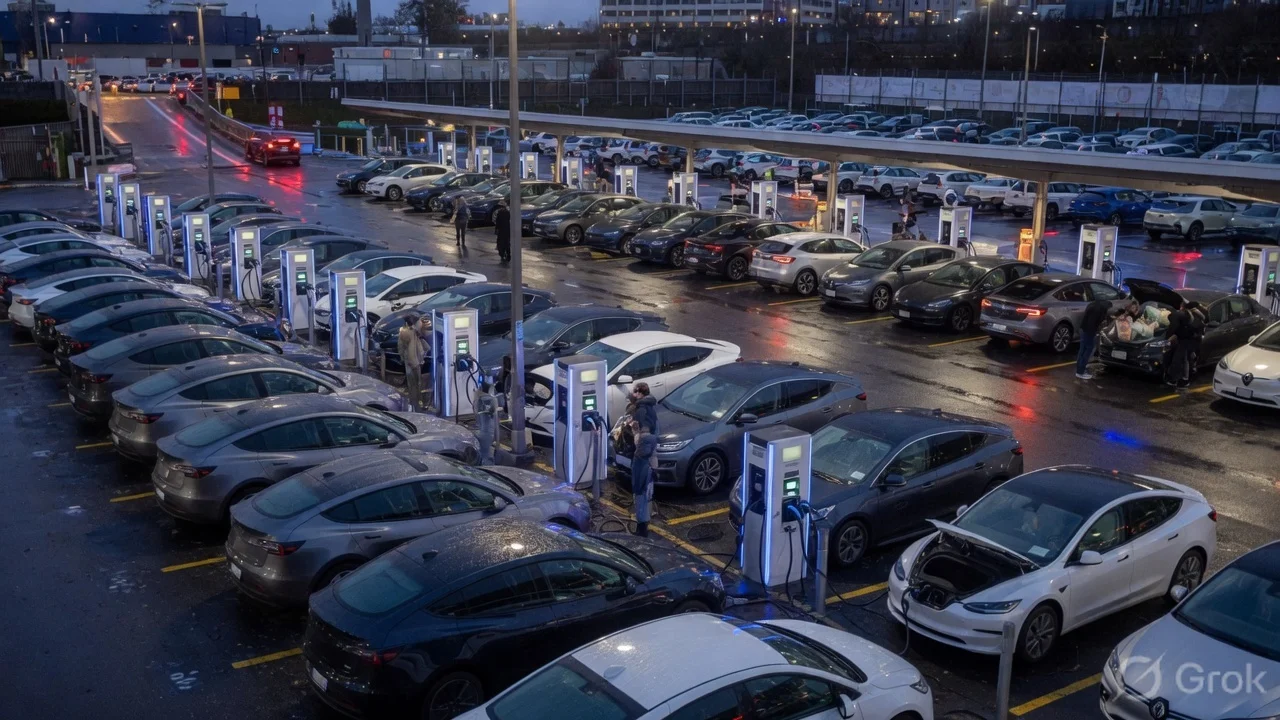
With 24,716 EVs heading to dealers in a single month, the existing public‑charging network – roughly 11,500 fast‑chargers across India – will be stretched thin, especially in tier‑2 cities where most of the new sales are coming from. The top X threads are asking:
- Will state‑run charging hubs keep up with the surge?
- Will private players get a faster‑track licence renewal?
- Is the current 0.7 kW/km grid capacity enough for mass‑adoption?
Industry analysts (KPMG, Nasscom) predict a need for an additional 5,000‑7,000 fast‑chargers by the end of FY 2026‑27 to avoid “range‑anxiety bottlenecks”. The Ministry of Heavy Industries has already announced a Rs 2,500 crore grant for setting up 2,000 government‑operated chargers in the next 12 months.
What this means for Indian consumers
- Price advantage: With subsidies and dealer discounts, the average on‑road price of an entry‑level EV (Tata Punch EV) fell to ~₹8.9 lakh in March, making it cheaper than a comparable diesel hatchback.
- Running cost: Electricity cost per km (~₹5‑₹6) is roughly 60 % lower than diesel/petrol at current fuel prices.
- Financing: Banks are offering up to 9 % interest‑free EMIs for 5‑year tenures on EVs, backed by the same tax‑depreciation benefits.
- Resale value: Early‑adopter data from CarDekho shows a 12‑15 % higher resale premium for EVs sold in March versus those sold in February.
Future outlook – will the momentum hold?
Analysts are cautiously optimistic. The FY 2026‑27 budget proposes an additional Rs 3,000 crore for expanding the public‑charging network and a new “EV‑Ready” certification for residential complexes. If those policies stick, a 30‑40 % YoY growth cadence could become the new norm. However, two risks remain:
- Supply‑chain crunch: Global semiconductor shortages could delay next‑gen battery packs, slowing new‑model roll‑outs.
- Policy volatility: A sudden rollback of the PM‑E‑DRIVE subsidy would instantly tighten demand, as the March surge showed it’s heavily incentive‑driven.
For now, the data tells a clear story: India’s EV market finally hit the acceleration pedal, and the conversation is shifting from “if” to “how fast”.
Quick facts at a glance
- Record month: 24,716 EV passenger‑car dispatches (19.9 % MoM).
- Top three OEM share: ~88 % of total EV volume.
- Average on‑road price (entry‑level EV): ₹8.9 lakh.
- Google search spike: +45 % for “EV sales India March 2026”.
- Charging‑station gap: ~5,000 additional fast‑chargers needed by FY 2026‑27.
FAQs
- Q: Which EV model sold the most units in March 2026?
A: Tata Punch EV, with 2,871 units, was the single model with the highest month‑on‑month growth (+171 %). - Q: Are the subsidies permanent?
A: No. The PM‑E‑DRIVE subsidy and many state rebates expire on 31 Mar 2026, which is why sales jumped sharply before the deadline. - Q: How many fast‑chargers does India currently have?
A: Roughly 11,500 fast‑charging points, with a target of 16,500–18,500 by March 2027. - Q: Will the price hikes announced by OEMs affect demand?
A: Historically, a price hike triggers a short‑term surge as buyers beat the deadline, followed by a dip. Expect a modest slowdown in April‑May unless new incentives are introduced. - Q: Is the EV market still dominated by the same three players?
A: Yes. Tata, Mahindra and JSW MG together accounted for ~88 % of total EV volume in March 2026, but new entrants like VinFast and Hyundai are gaining traction.

Comments (0)
Be the first to comment!