


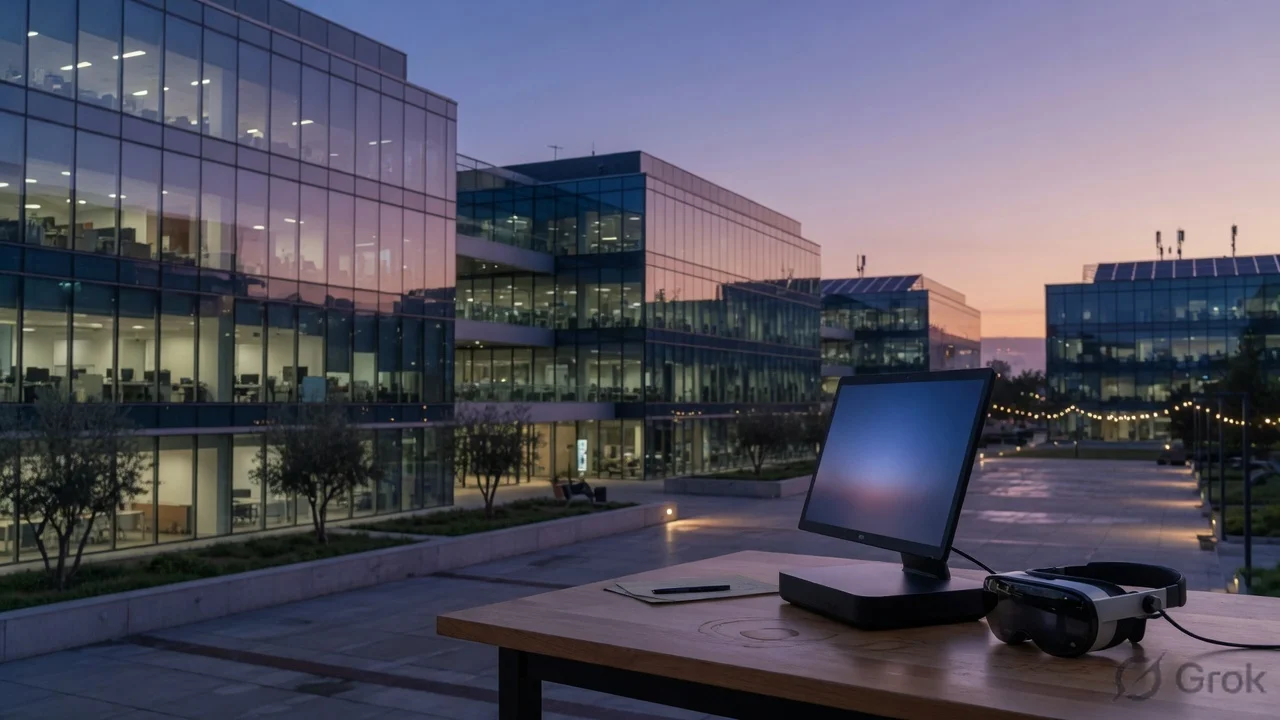
Key Takeaways
- Tim Cook became Apple's CEO in August 2011 after Steve Jobs stepped down, eventually guiding the company to a market valuation that every public company now dreams of crossing.
- Apple Silicon (M-series) marked the end of Intel's x86 dominance in the Mac, delivering a new era of battery life and performance through ARM-based chips.
- Wearables such as the Apple Watch and AirPods grew into multi-billion-dollar product lines, making Apple a health and audio lifestyle brand.
- Privacy initiatives like App Tracking Transparency protected user data but triggered antitrust battles with Meta, Google, and regulators across the United States, Europe, and India.
- Under Cook, Apple launched Vision Pro for spatial computing, shelved the Apple Car project, and is now investing heavily in on-device AI and ecosystem lock-in.
What's the news
As September 1, 2026 begins, Tim Cook is exactly halfway through a second fifteen-year term as Apple's chief executive. When he took the helm in 2011, critics asked whether Apple could innovate without its co-founder, but the answer has been: by acquiring and refining rather than inventing.
Cook inherited a company already flush with iPhone cash, but he bet the farm on three new pillars: custom silicon, wearables, and tightening the services noose. Customers got M1 and M-series MacBooks that ran for days on a charge. They got an Apple Watch that now functions as a basic medical device. And they got an App Store that quietly generates massive monthly recurring revenue.
By August 2018, Apple became the first U.S. company to reach a one trillion dollar market valuation. That moment validated Cook's financial strategy: return billions to shareholders through dividends and buybacks while steering the company toward new frontiers.
Yet validation invites scrutiny. Every App Store policy change becomes a global news event. Every privacy banner angers advertisers. Cook's Apple is simply too large to hide from regulators.
Now in 2026, the focus has shifted to AI and spatial computing. The Apple Car project has largely disappeared from roadmaps, while Vision Pro and Apple Intelligence occupy boardrooms and living rooms. It is the quiet hand-off of an empire from one era of computing to the next.
Details
The silicon wager is the technical crown jewel of Cook's tenure. By abandoning Intel for ARM-based Apple Silicon, Apple turned the predictable x86 roadmap on its head. The M1 and M3 chips delivered a step change in single-thread performance that outpaced most laptop competitors. Battery life extended into all-day territory, and fans vanished from simple browsing tasks.
Wearables were the cultural pivot. The Apple Watch launched to skepticism in 2015. By 2026, it is mainstream enough that leading Indian hospitals use it for basic ECG triage, and school sports days in tier-two cities see kids wearing them for fitness tracking. AirPods redefined wireless audio by hacking the ecosystem: open the case, and the AirPods instantly pair with an iPhone, the Beats Pro button feels premium, and the ``Spatial Audio'' feature feels like magic.
Cook's Services division quietly became the company's growth engine. Apple Music subscriptions, iCloud storage, AppleCare, and the App Store itself produce a financial baseline that hardware alone could never match.
Privacy became both philosophy and litigation magnet. App Tracking Transparency, introduced in 2021, lets users block cross-app tracking. This move won fan loyalty in India, where digital privacy is a hot consumer concern, but it dried up ad-revenue sharing for Meta and Google. In response, both launched lobbying blitzes and painted Apple as a monopolist using privacy as a weapon.
The App Store wars reached their peak with Epic Games' years-long campaign in U.S. courts. In 2024, the EU's Digital Markets Act forced Apple to open iMessage to competing messaging clients. In India, the Competition Commission of India probed whether Apple's fifteen to thirty percent App Store commission stifled local developers and prevented alternative in-app payment methods from challenging UPI.
AI is Cook's latest gamble. In late 2024 and throughout 2025, Apple integrated large language models into iOS and macOS. The emphasis was on on-device intelligence to preserve privacy, with cloud fallback for heavier tasks. Vision Pro acted as an AI workspace, using eye-tracking and hand gestures to navigate LLMs in a three-dimensional space.
Trump's trade war with China, beginning in 2018 during his first term, proved a catalyst for India's manufacturing ambitions. Apple shifted more assembly to Tamil Nadu and Gujarat, leveraging production-linked incentive-type schemes. Although Trump is now a former President, his tariff legacy reshaped how Apple thinks about China risk.
India impact
Apple's relationship with India under Cook is a tale of two coins: manufacturing triumphs and regulatory tensions.
On the manufacturing front, Foxconn, Pegatron, and Wistron built iPhone assembly lines across Tamil Nadu, Karnataka, and Uttar Pradesh. iPhones sold in India now carry an Indian-made label. Local suppliers like Symphony and Dixon Technologies feed the supply chain. Job creation is real, and import substitution has reduced the trade deficit.
Regulators, however, remain wary. India's Digital Personal Data Protection Act means Apple must justify health data from the Watch and location metadata from the OS. The Competition Commission of India has questioned whether Apple's control over the App Store and inability to side-load apps hurts local developers compared to rivals on Android.
Price is another friction point. iPhone pricing in INR terms has historically lagged USD parity. Local consumer groups argue that high import duties and Apple's pricing strategy keep Indian buyers dependent on older models.
Vision Pro is irrelevant to the average Indian buyer. At a premium price point, it will not replace the iPhone or even the Apple Watch as a mass device in the near term. Yet the underlying mixed-reality technology might eventually filter down to AR navigation tools or remote work setups for India's growing tech workforce by the late 2020s.
AI accessibility matters too. Apple Intelligence requires the latest silicon. Given that most Indian users upgrade every three to four years, on-device AI features will slowly permeate the installed base, especially among premium buyers in metro cities.
Use cases
Health: The Apple Watch functions as an ECG monitor, blood pressure tracker, and menstrual health assistant, and it is increasingly accepted in Indian clinics.
Spatial computing: Lawyers, architects, and designers in Bangalore and Mumbai use Vision Pro to visualize 3D models without needing physical prototypes.
Automotive software: After shelving the car project, Apple now sells underlying autopilot and sensor software to startups in Japan and South Korea rather than building a car.
Finance: Apple Pay is not yet widespread in India, but Apple Card models in the U.S. show Cook's interest in reducing Apple's role as a hardware-only brand.
AI workflows: Students, teachers, and professionals use on-device summarization and writing tools across macOS and iOS to reduce cloud exposure.
Honest take
Tim Cook's fifteen years are not a story of invention but of fortification. He did not invent the smartwatch, the AR headset, or the integrated AI assistant. He perfected existing categories and, more importantly, engineered an ecosystem so sticky that leaving it feels expensive.
This is Apple's defining strength. The consumer who enters the Apple ecosystem with an iPhone, remains because of the Apple Watch, continues because of iCloud, and stays because of continuity across devices.
But strength breeds vulnerability. When every user update brings a smaller Siri improvement or the next iPhone launch, the magic fades. In India, cheap Android phones, local apps, and competitive fintechs like those backed by Reliance Jio and Walmart-owned Flipkart show that ecosystems can be disrupted.
Apple Car is dead, Vision Pro is a niche, and Apple's AI advantage remains unproven against Google and Microsoft. Cook's real achievement is designing a company that can print money from existing hardware by selling services and accessories.
Whether that model survives the next decade depends on whether AI becomes a commodity that undermines the lock-in, or an opportunity to renew it.


Comments (0)
Be the first to comment!