


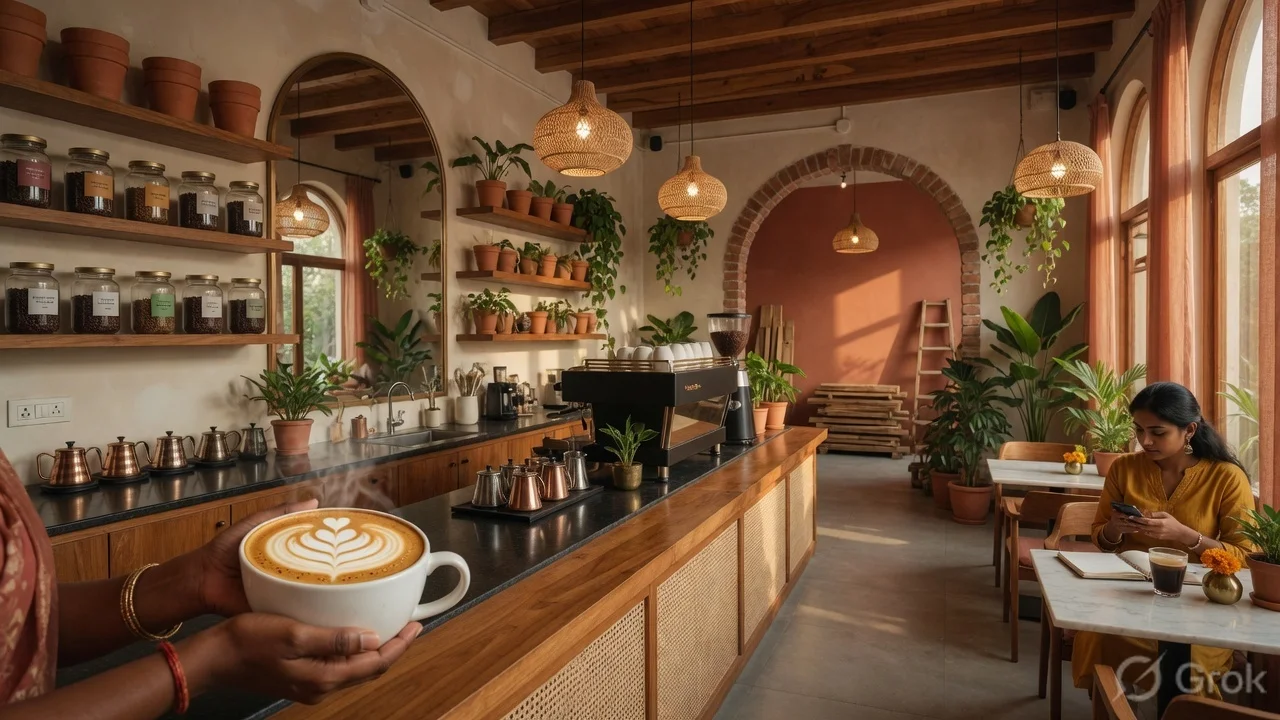
Key Takeaways
- Third Wave Coffee has raised ₹408 crore (approx. $43 million) in a fresh funding round.
- The funding will be used to expand its cafe network and launch a new dessert business.
- The round was led by an undisclosed lead investor, signalling strong confidence in the premium coffee segment.
- This move positions Third Wave Coffee as a major challenger in India's competitive QSR and specialty coffee market.
- The expansion strategy focuses on both standalone cafes and potentially new formats like drive-thrus.
What's the News
Indian specialty coffee chain Third Wave Coffee is on a major growth spree. The company has successfully closed a significant funding round, raising ₹408 crore. This fresh injection of capital is earmarked for a two-pronged strategy: aggressively expanding its physical cafe network across the country and venturing into a dedicated dessert business. The move comes as India's premium coffee market continues to heat up, with consumers increasingly willing to pay a premium for high-quality coffee experiences and artisanal food offerings.
Details
The ₹408 crore funding round is a testament to the strong investor appetite for India's organized retail and QSR (Quick Service Restaurant) sector. While the specific lead investor's name was not disclosed in the public posts, the size of the round indicates a robust valuation and confidence in Third Wave Coffee's business model. The company, which has carved a niche for itself with its focus on single-origin beans, expert brewing methods, and a minimalist, cafe-culture aesthetic, plans to use the funds to accelerate its store rollout. The goal is to significantly increase its presence in key metropolitan areas and expand into Tier-1 and Tier-2 cities where the appetite for premium experiences is growing. Alongside the cafe expansion, a portion of the capital will be dedicated to building out a new dessert business. This strategic diversification aims to increase the average transaction value and create a more comprehensive 'third place' experience for customers, encouraging them to spend more time and money at their locations.
India Impact
This development has several implications for the Indian market. Firstly, it validates the premium coffee segment as a viable and scalable business opportunity in India, moving beyond the traditional chai and filter coffee dominance. Secondly, the focus on a dessert business could tap into the burgeoning demand for artisanal sweets and Western-style patisseries, a segment that is still largely unorganized. For the broader QSR industry, Third Wave Coffee's expansion adds another player to the premium segment, potentially intensifying competition and pushing other players to innovate. The influx of capital also signals that investors see long-term potential in building homegrown brands that can compete with global coffee giants. This could lead to more job creation, both in direct roles within the cafes and indirectly in supply chains, including coffee bean sourcing, roasting, and food production for the new dessert line.
Use Cases
For consumers, this means more access to high-quality, specialty coffee experiences closer to home. The expansion will likely lead to more Third Wave Coffee outlets in new neighborhoods, offering a consistent and premium alternative to local cafes and global chains. The new dessert business could introduce Indians to a range of new products, from gourmet cakes and pastries to innovative coffee-infused desserts. For investors and other startups, Third Wave Coffee's success story serves as a case study in building a premium brand in a value-conscious market. It demonstrates the potential for niche, experience-driven businesses to scale with the right capital and strategy. The company's model could also inspire other categories, like specialty tea, craft beer, or artisanal food, to pursue similar expansion and diversification paths.
Honest Take
While the ₹408 crore funding is a significant milestone, the road ahead is challenging. The Indian QSR market is notoriously competitive, with established players like Starbucks, Cafe Coffee Day (though facing its own challenges), and numerous local chains. Third Wave Coffee's success will depend on its ability to maintain its quality standards, manage rapid expansion without diluting its brand identity, and successfully launch its dessert business. The dessert venture is particularly interesting; it's a high-margin category but also one with a short shelf life and intense competition from established bakeries and patisseries. If executed well, this could be a game-changer for their business model, creating a sticky ecosystem where customers come for the coffee and stay for the dessert. However, any misstep in execution or quality control could be costly. The real test will be how they translate this funding into tangible growth and a sustainable competitive advantage in the crowded Indian cafe market.
Frequently Asked Questions (FAQs)
Q1: What is Third Wave Coffee known for?
A1: Third Wave Coffee is known for its focus on specialty coffee, using single-origin beans, precise brewing methods like pour-over and AeroPress, and creating a minimalist, experience-focused cafe environment.
Q2: How will the new dessert business work?
A2: The specifics aren't detailed, but the plan is to launch a dedicated dessert business. This likely means introducing a curated menu of artisanal cakes, pastries, and other sweets, possibly developed in-house or through partnerships, to complement their coffee offerings.
Q3: Who are Third Wave Coffee's main competitors?
A3: Their main competitors include global giant Starbucks, domestic chains like Cafe Coffee Day (CCD), and a growing number of independent specialty coffee roasters and cafes across India.
Q4: What cities will see new Third Wave Coffee outlets?
A4: While specific cities haven't been announced, the funding is aimed at expanding across key metropolitan areas and into emerging Tier-1 and Tier-2 cities where the premium lifestyle market is growing.
Q5: Is this funding a Series A, B, or C round?
A5: The specific round (e.g., Series A, B, C) was not mentioned in the available information, but the significant amount of ₹408 crore suggests it's a later-stage funding round aimed at scaling a proven business model.





Comments (0)
Be the first to comment!