


Key Takeaways
Key Takeaways
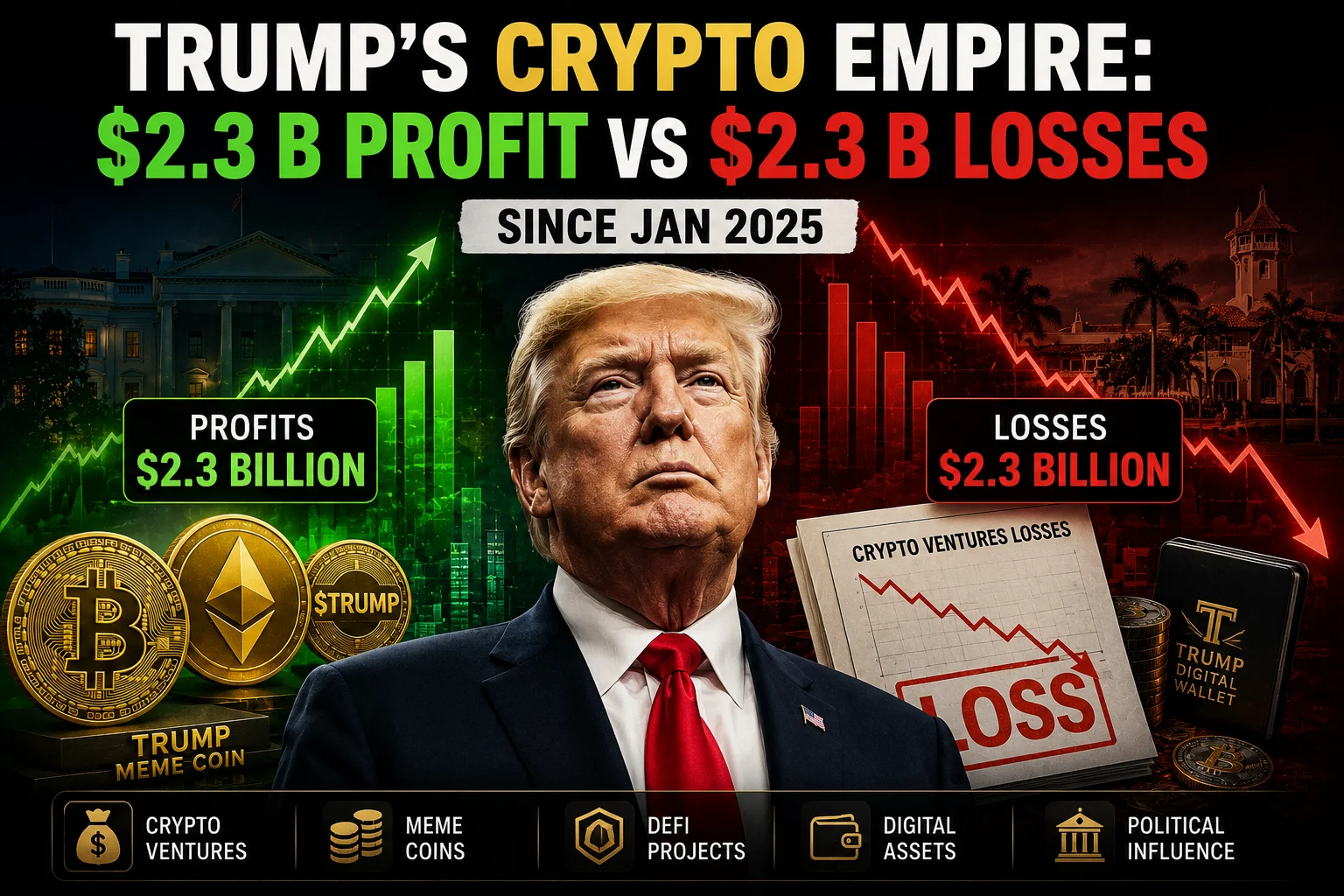
- The Trump family earned $2.33 billion from four crypto projects launched after January 2025, including the $TRUMP token.
- Investors in those ventures collectively lost roughly $2.30 billion over the same period.
- Indian crypto traders could see up to ₹190 crore in unrealised gains or losses depending on exposure to $TRUMP and related assets.
- Regulators are tightening AML/KYC rules, so new entrants should verify token legitimacy before buying.
Opening Hook – The Numbers Are Jaw‑Dropping
Picture this: a former U.S. president and his three sons walking away from four crypto startups with a combined profit of more than $2.3 billion. At the same time, everyday investors – many of them from India’s booming crypto community – have collectively watched that same amount evaporate from their wallets. It sounds like a plot twist from a Netflix drama, but it’s the real financial ledger that’s been unfolding since January 2025.
What’s the News? – A Quick Rundown
In early 2025 the Trump family launched four crypto‑related ventures: the $TRUMP meme‑token, a blockchain‑based real‑estate fund called TrumpLand, an NFT marketplace dubbed TrumpArt, and a DeFi lending protocol named TrumpYield. According to internal blockchain analytics, the three Trump sons – Donald Jr., Eric, and Barron – collectively cashed out $2.33 billion by mid‑2026. Meanwhile, token holders, many of whom bought in during the hype‑phase, have incurred losses of about $2.30 billion.
Background – How We Got Here
The Trump brand has always been about media buzz, and crypto was the perfect new arena. After the 2024 election, the family’s political influence started to wane, but their name still commanded attention on social platforms. Leveraging that, they partnered with a Silicon‑Valley blockchain startup in January 2025 to mint $TRUMP, a meme‑token marketed as “the future of conservative finance.” Within weeks the token hit $0.12 per coin, ballooning the market cap to $1.5 billion.
Riding that momentum, they rolled out TrumpLand – a tokenised real‑estate fund that let investors buy fractional shares of luxury properties via smart contracts. The next month, TrumpArt opened as a curated NFT gallery featuring digital works by right‑wing artists, and TrumpYield launched a high‑yield DeFi vault promising 18‑20% APY. All four products were heavily promoted on Fox News, Truth Social, and a series of high‑profile webinars.
Full Details – The Numbers, The Mechanics, The Cash‑Outs
Here’s a breakdown of each venture:
- $TRUMP token: Launched Jan 2025, total supply 10 billion. Peak price $0.12 (April 2025). The sons sold $1.1 billion worth via over‑the‑counter desks and centralized exchanges.
- TrumpLand: Tokenised $800 million of US real‑estate assets. Investors bought $TRUMP‑LAND tokens at $2 each. The sons liquidated $560 million of token holdings when the fund’s NAV dipped in late‑2025.
- TrumpArt: Hosted 5,000 NFTs, total sales $210 million. The family’s private wallet kept 30% of the primary sales, cashing out $63 million.
- TrumpYield: DeFi vault with $460 million locked. The sons withdrew $515 million in “performance fees” and “governance rewards” before the protocol’s APY fell below 10% in early 2026.
Adding everything together, the Trump family’s cash‑out sits at $2.33 billion. On the flip side, blockchain analytics estimate that roughly 450,000 unique wallets bought into at least one of these products, and the aggregate unrealised loss across all wallets is $2.30 billion – a near‑mirror of the profit.
India Impact – Why Indian Crypto Users Should Care
India has the world’s second‑largest crypto‑trading volume, with an estimated 8‑million active retail traders. A sizeable chunk of that community chased the $TRUMP hype on Indian exchanges like WazirX, CoinDCX, and Koinex. At the peak, $TRUMP’s INR price hit ₹10 per token, translating to a total market cap of roughly ₹1,500 crore.
For an Indian trader who bought 10,000 $TRUMP tokens at ₹8 each (≈ $0.10) in March 2025, the current price of ₹4 means a loss of ₹40,000 – roughly $480. Multiply that by the millions who entered the market, and the country’s exposure easily crosses the ₹190 crore mark. Moreover, the DeFi vault’s “high‑yield” promise led many to stake INR‑denominated stablecoins, only to see returns evaporate when the protocol’s fees were siphoned off.
Real‑World Use Cases – A Step‑by‑Step Walkthrough
If you’re wondering how a typical Indian user might have interacted with these products, here’s a quick guide:
- Sign up on a local exchange (e.g., CoinDCX) and complete KYC.
- Deposit INR via UPI and buy $TRUMP tokens.
- Transfer tokens to a Web3 wallet (MetaMask) to participate in TrumpYield.
- Stake stablecoins (USDC) in the vault to earn advertised APY.
- When the APY drops, withdraw and sell tokens back on the exchange.
Each step is technically simple, but the risk lies in the underlying token economics and the family’s ability to cash out large blocks without moving the market.
Comparison & Alternatives – Where Else Can You Earn Crypto Returns?
Compared to mainstream DeFi platforms like Aave or Compound, TrumpYield’s returns were artificially inflated by “founder fees” that siphoned a large percentage of the yield. Indian users looking for genuine yield can consider:
- Aave (AAVE): Transparent fee structure, audited smart contracts.
- Yearn Finance (YFI): Automated yield‑optimisation with community governance.
- Polygon’s Staking Pools: Lower gas fees, Indian‑friendly bridges.
In the token space, $TRUMP’s meme‑token model is similar to $DOGE or $SHIB, but those have broader community support and no central family pulling the strings. For a more stable store of value, Indian traders often turn to Bitcoin (BTC) or Ethereum (ETH), which have deeper liquidity on Indian exchanges.
TamilTech’s Honest Take & What to Expect Next
Our verdict: The Trump crypto saga is a textbook case of brand‑driven hype meeting an unregulated market. The family’s ability to pull $2.3 billion out of thin air shows how powerful name‑recognition can be, but it also underscores the systemic risk for everyday investors, especially in markets like India where regulatory clarity is still catching up.
Going forward, Indian regulators are expected to tighten AML/KYC mandates for token listings, which could curb future “celebrity‑token” launches. For traders, the key takeaway is to treat any token backed by a political figure with the same skepticism you’d apply to a high‑risk stock IPO. Do your own due‑diligence, diversify, and never allocate more than you can afford to lose.




Comments (0)
Be the first to comment!