


What happened?
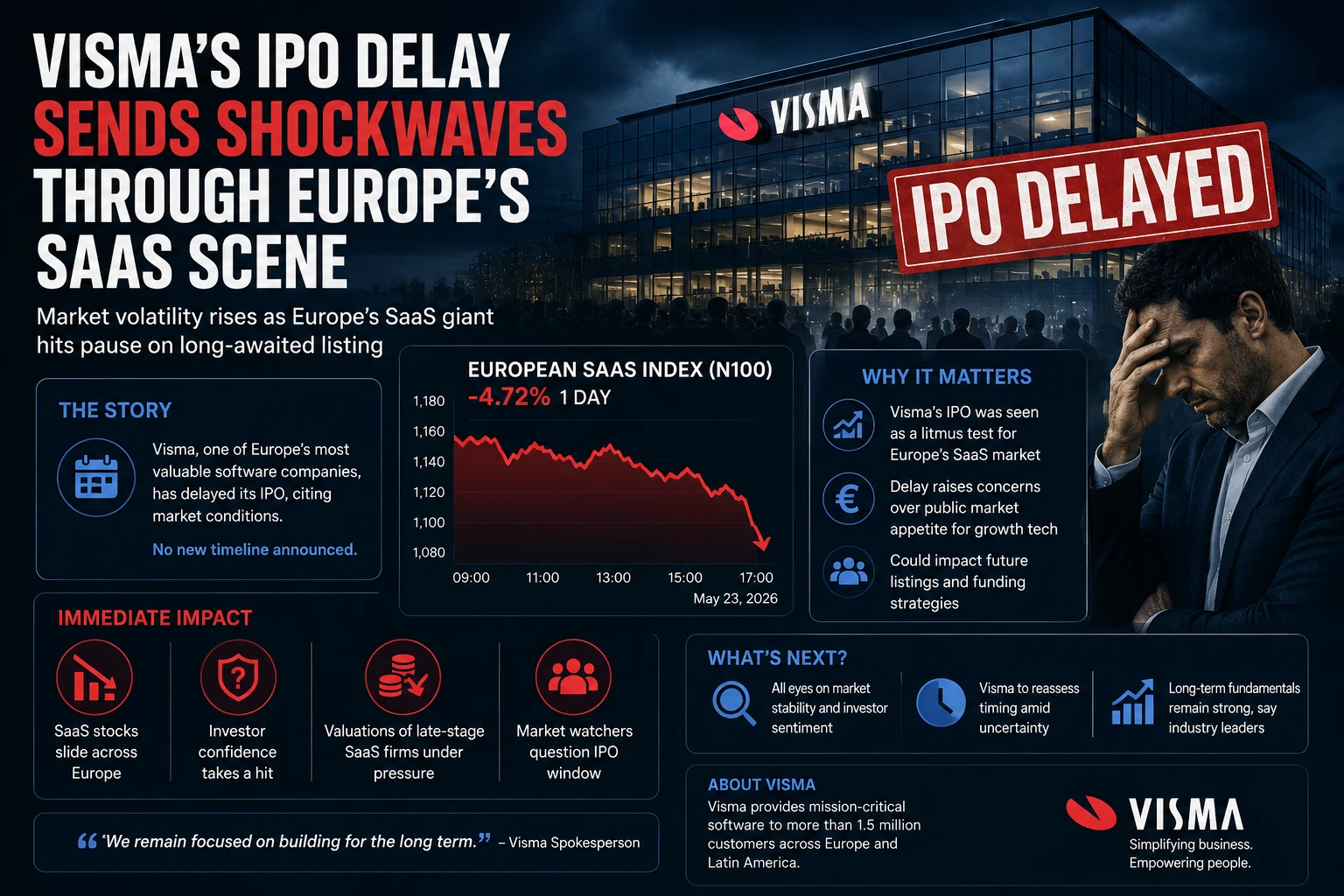
Visma, a Scandinavian cloud‑based accounting and payroll platform valued at roughly €19 billion, pulled the plug on its planned initial public offering. The company had been gearing up for a June listing on the Oslo Stock Exchange, but regulators and market conditions forced a delay.
The move comes at a time when investors are jittery about the so‑called “SaaSpocalypse” – a wave of valuations dropping for software‑as‑a‑service firms after a string of high‑profile earnings misses.
Why does it matter?
Visma isn’t just another SaaS player. With over 1 million customers across Europe – from small businesses to large enterprises – its suite of finance, HR and invoicing tools powers a huge chunk of the continent’s back‑office operations. A public listing was expected to set a benchmark for other European fintechs looking to go public.
More importantly, the delay hits Hg, the UK‑based private‑equity firm that owns Visma. Hg raised a massive €10 billion fund in 2022, betting heavily on software buyouts. Visma was the crown‑jewel of that strategy. A postponed IPO means a longer hold period, delayed returns for limited partners, and a dent in Hg’s track record at a time when its own fundraising pipeline is tightening.
Numbers and timeline
- Visma’s last funding round: €4.5 billion in 2021.
- Projected IPO valuation: €19 billion (≈ $20.5 billion).
- Current revenue (FY 2023): €3.3 billion, with a 20% YoY growth.
- Hg’s stake: ~45% of Visma’s equity.
Regulators asked for more clarity on Visma’s revenue recognition and its exposure to the volatile European SME market. The company said it will take “additional time to address the concerns and to ensure a smooth pricing process.”
India angle – why Indian readers should care
India’s SaaS ecosystem is booming, with companies like Zoho, Freshworks and Chargebee eyeing overseas listings. Visma’s setback is a cautionary tale: even well‑funded, mature players can stumble when market sentiment turns sour.
If you’re an Indian founder thinking of a U.S. or European IPO, consider these takeaways:
- Regulatory diligence matters. European exchanges scrutinise revenue models more strictly than Indian ones.
- Market timing is key. A global slowdown or a series of earnings misses can quickly sour investor appetite.
- Private‑equity backing is a double‑edged sword. While it brings capital, it also creates pressure for quick exits.
For investors, Visma’s delay could open a window for secondary market purchases at a discount, but it also signals higher risk for similar SaaS listings.
TamilTech’s take
We think the biggest story isn’t the postponed date – it’s the signal to the whole European SaaS corridor. The “SaaSpocalypse” narrative is gaining traction because growth rates are normalising and profit margins are under pressure. Visma’s delay adds fuel to that fire.
From a PE perspective, Hg now has to manage a larger, longer‑term exposure. Their next move will be watched closely – will they push for a private sale, or double‑down on a later IPO? Either way, limited partners will be asking tough questions about fund performance.
For Indian SaaS founders, the lesson is clear: focus on sustainable profitability before chasing a headline IPO. The market is no longer forgiving “growth at any cost.”
What’s next?
Visma has said it will re‑file its prospectus in the next quarter. In the meantime, analysts expect a modest dip in its share‑price once it finally lists, reflecting the broader market correction.
Hg will likely lean on its other portfolio companies – such as big‑data firm ThoughtSpot and cybersecurity player Sophos – to showcase a balanced performance story to its investors.
Keep an eye on the European SaaS index; the next few months will reveal whether the sector can rebound or if the “apocalypse” narrative will stick.



Comments (0)
Be the first to comment!