


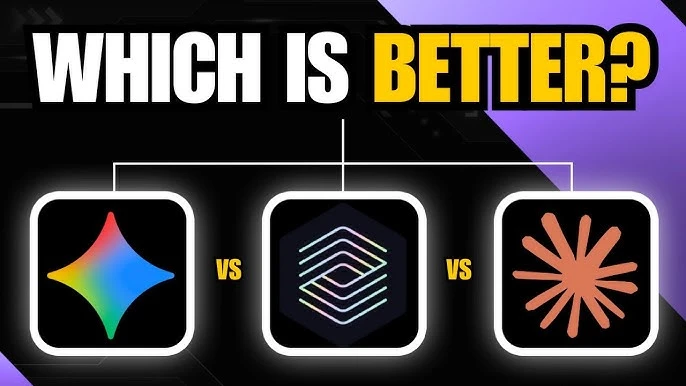
UPDATE (March 2026): Since the article’s original publication, all four AI‑coding assistants have received significant upgrades and market shifts.
Claude Code 2.2.0 (Anthropic) launched in early March with a 1 M‑token context window, built‑in “/simplify”, “/batch” and “/loop” skills, and HTTP‑hook integration for remote automation. The new Opus 4.6 fast mode and Claude Sonnet 4.6 support mean faster reasoning on larger codebases, and enterprise admins can now enforce policy via macOS plist or Windows Registry settings.
GPT‑5.2 Codex (OpenAI) introduced the “Codex‑Mini” off‑shoot, delivering four‑times more usage per ChatGPT subscription and adding native IDE plugins for VS Code, JetBrains and Xcode. A security‑focused update improves detection of vulnerable code patterns, and pricing for the Codex‑Mini tier was reduced by 20 % for Indian developers under the new “AI for Education” program.
Gemini Code Assist (Google) rolled out Gemini 4 with a 1 M‑token context window and a new “Jules Agent” that orchestrates multi‑step workflows across Google Cloud services. The Gemini CLI now offers the highest daily request limits for AI Ultra subscribers, and a tighter integration with Android Studio makes it the go‑to tool for mobile developers.
DeepSeek V4 Coder has cemented its position with a permanent 75 % price cut on the V4‑Pro API (now $0.0035–$0.83 per million tokens) and added open‑weight fine‑tuning for privacy‑focused teams. DeepSeek also announced a new “Lite” variant optimized for consumer GPUs, expanding its appeal beyond enterprise users.
Overall, the competitive landscape has tightened: Anthropic’s new skills and larger context give Claude Code a clear edge for large projects, OpenAI’s pricing incentives boost Codexcompleted
2026 is shaping up to be the year AI fundamentally changes how software is built. Every major AI provider has released significant coding tools, and the competition is fierce.
Claude Code 2.1.0 (Anthropic)
Anthropic's latest update to Claude Code includes 1,096 commits:
- Agent Lifecycle: Better control over autonomous coding agents
- Skill Development: Enhanced framework for teaching Claude project-specific patterns
- Session Portability: Move coding sessions across devices seamlessly
- Multilingual Output: Better code generation in non-English contexts
- Apple Xcode Integration: Claude now works directly inside Xcode 26.3
- Strength: Deep understanding of full project context, excellent at refactoring
GPT-5.2-Codex (OpenAI)
OpenAI's most advanced agentic coding model:
- Context Compaction: Handles long-horizon coding tasks efficiently
- Cybersecurity: Enhanced security-aware code generation
- Codex-Mini: 4x more usage per ChatGPT subscription
- IDE Support: Available in CLI and IDE extensions
- Strength: Best at generating code from natural language descriptions
Gemini Code Assist (Google)
Google's coding assistant powered by Gemini 3:
- Gemini CLI: Command-line interface with highest daily request limits for AI Ultra subscribers
- Jules Agent: Multi-agent workflows at scale (AI Ultra exclusive)
- File Search API: Ground code suggestions in your codebase
- Strength: Best integration with Google Cloud and Android development
DeepSeek V4 Coder (DeepSeek)
The open-source challenger:
- 1M+ Token Context: Process entire codebases in a single prompt
- Consumer GPU: Run locally on RTX 4090/5090
- 40% Cost: Fraction of inference cost vs competitors
- Open Weights: Fine-tune for your specific codebase
- Strength: Best for privacy-conscious teams who want local AI coding
Comparison at a Glance
| Feature | Claude Code | GPT-5.2 Codex | Gemini Code | DeepSeek V4 |
|---|---|---|---|---|
| Context Window | 200K | 128K | 1M+ | 1M+ |
| Local Deployment | No | No | No | Yes |
| IDE Integration | VS Code, Xcode | VS Code, CLI | VS Code, Cloud | Community |
| Agentic Coding | Strong | Strongest | Good | Good |
| Open Source | No | No | No | Yes |
| Best For | Refactoring | Greenfield | Google Stack | Local/Privacy |
The Verdict
There's no single winner – each tool excels in different areas. The best choice depends on your workflow, privacy needs, and ecosystem preferences. Many professional developers are using 2-3 tools in combination.



Comments (0)
Be the first to comment!