


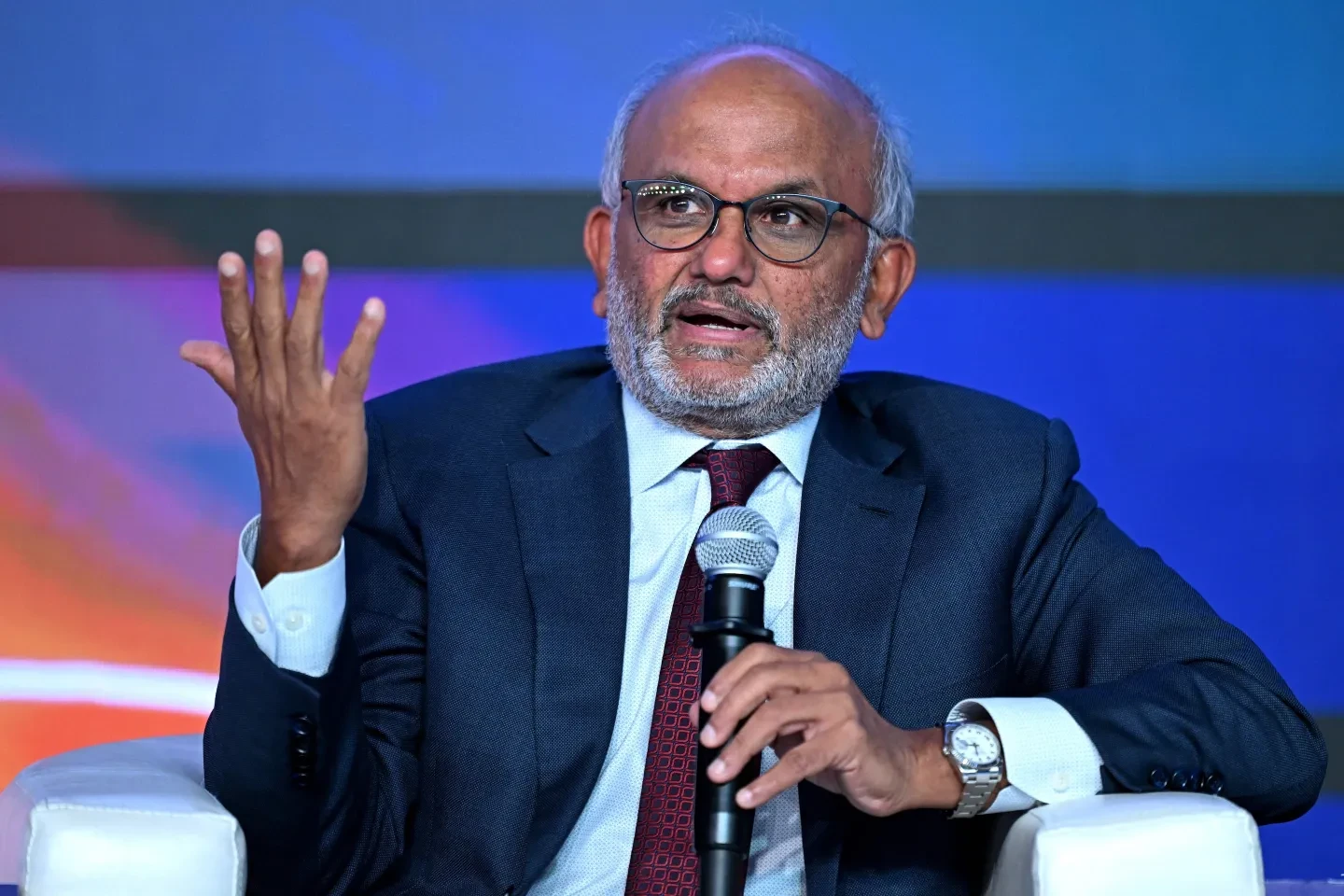
AI Prompts Software Leadership Shake-Up: Adobe CEO Shantanu Narayen Steps Down After 18 Years
It's not often that a CEO leaves a company with nearly $24 billion in annual revenue at the peak of its stock performance, citing not failure — but transformation. On March 12, 2026, Adobe announced that Shantanu Narayen, who has led the company since 2007, will step down as CEO after 18 years at the helm. The timing was unmistakably deliberate: the announcement came alongside Adobe's record-breaking Q1 FY2026 financial results.
Narayen's parting words said everything about why: "The next era of creativity is being written right now — shaped by AI, by new workflows and by entirely new forms of expression. Adobe has never waited for the future to arrive. We've anticipated it. We've built it. And we've led it."
The message was clear. Adobe is pivoting its entire identity around artificial intelligence — and that pivot demands a different kind of leadership for the next chapter. Narayen's departure is not an isolated event. It is part of a broader, accelerating pattern reshaping the corner offices of the world's biggest software companies.
The Adobe AI Story: 29 Billion Firefly Generations and Counting
To understand the leadership transition, you need to understand what Adobe has been building. Over the past two years, Adobe has transformed from a creative software vendor into an AI platform company. The numbers tell the story:
- 29+ billion AI generations through Adobe Firefly to date
- 99% of Fortune 100 companies now use Adobe's AI tools to transform their workflows
- Record Q1 FY2026 revenue — announced on the same day as the CEO transition
- Firefly generative AI deeply embedded into Photoshop, Illustrator, Premiere Pro, and Express
Adobe's Firefly platform — its commercially safe, ethically trained generative AI for images, video, and vectors — has become the centrepiece of the company's competitive strategy. Unlike Midjourney or DALL·E, Firefly is trained exclusively on Adobe Stock and licensed content, making it legally defensible for enterprise use — a critical differentiator that Narayen's team built deliberately.
The transition at the top signals that Adobe's board believes the next phase of this AI transformation requires fresh leadership — someone who can take the infrastructure Narayen built and aggressively scale it in an era where AI competition from OpenAI, Google, and emerging startups is intensifying by the month.
Why AI Is Forcing Leadership Changes Across Software
Adobe's CEO transition is not happening in a vacuum. Across the software industry, AI is acting as a forcing function that is accelerating leadership change at an unprecedented pace. Here's why:
1. The Speed Mismatch
Enterprise software used to operate on annual release cycles. AI moves on weekly deployment cycles. Leaders who built their careers on careful, deliberate product roadmaps are finding that the AI era demands a different tempo — faster decisions, higher risk tolerance, and the ability to cannibalise existing revenue streams before competitors do.
2. The Business Model Disruption
Adobe's shift to Creative Cloud subscriptions was Narayen's most transformative move — he took a company that sold perpetual licences and turned it into a $24 billion recurring revenue machine. But AI is forcing another business model reinvention. When AI can generate images, edit video, and design logos autonomously, the value proposition of a per-seat subscription shifts fundamentally. Leaders who built the subscription model now need to reinvent it for an AI generation era.
3. The Talent and Culture Reset
AI-first companies run differently. They require ML engineers, data scientists, and AI product managers at the core — not as support functions. Traditional software leaders built organisations around developers and designers. The AI era demands a different org structure, a different hiring philosophy, and a different leadership culture.
4. Investor Pressure
Markets are rewarding companies that move aggressively on AI and punishing those that don't. Adobe's stock performance has been volatile amid questions about whether Firefly is monetising fast enough versus the threat from generative AI disrupting its core products. Leadership transitions often happen when boards want to send a clear signal to investors about strategic direction.
The Wider Pattern: AI-Driven CEO Transitions in Tech
Narayen's exit is part of a broader wave of leadership transitions across the software industry linked directly to AI disruption:
| Company | Change | AI Connection |
|---|---|---|
| Adobe | Narayen stepping down (March 2026) | AI era transition, Firefly scaling |
| Salesforce | Marc Benioff doubling down on "Agentforce" AI | AI agents replacing traditional CRM workflows |
| IBM | Restructuring around AI and consulting | Watsonx AI platform repositioning |
| SAP | Massive AI-driven transformation | Joule AI copilot across all products |
| Intuit | GenAI-first product overhaul | AI replacing tax prep and accounting roles |
The common thread: legacy software companies are all navigating the same fundamental challenge. Their core products — the things that generated billions in recurring revenue — are being threatened and transformed by AI. Leadership that built the old model must either adapt rapidly or make way for those who can build the new one.
What Adobe's AI Transformation Means for Creatives
For the millions of designers, photographers, video editors, and marketers who use Adobe tools — including a large and passionate community in India — the leadership transition is both a signal and a question.
The signal: Adobe is doubling down on AI. Firefly will not be a side feature — it will be the core of every product. The "Generate" button in Photoshop, the AI-powered background removal in Express, the automatic caption generation in Premiere — these are just the beginning.
The question: will Adobe's AI enhancements empower its existing users, or will they eventually displace them? A designer who previously needed 10 hours to complete a project that now takes 2 hours with AI assistance is more productive — but also potentially less billable. The creative economy is being restructured, and Adobe's next CEO will need to navigate that tension with considerable care.
Firefly's Indian Moment
India represents one of Adobe's fastest-growing markets. With Creative Cloud adoption surging among Indian designers, advertising agencies, film production houses, and digital marketers, the India opportunity for Adobe's AI products is enormous. Firefly's ability to generate culturally specific imagery, Premiere's AI dubbing capabilities, and Express's AI design tools could unlock massive productivity gains for India's creative economy — estimated at over $25 billion annually.
The Broader Lesson: AI as CEO-Maker and CEO-Breaker
What Adobe's transition illustrates is a paradox at the heart of the AI era: the leaders who successfully built the foundations for AI transformation are not always the right leaders to scale it. Narayen's decision to invest heavily in Firefly, to make Adobe's AI commercially safe, and to integrate it deeply into the Creative Cloud — these were the right calls. But executing the next phase — competing with OpenAI's Sora, Google's Veo, Midjourney, and a dozen AI-native creative startups — may require a different strategic posture.
The broader implication for India's tech industry is clear. As AI reshapes every software vertical — from ERP to creative tools to fintech — the question is not whether leadership will change, but how fast. Indian IT giants like TCS, Infosys, and Wipro, and SaaS companies like Zoho and Freshworks, are all navigating their own versions of this challenge: how do you transform an organisation built around human labour and consulting into one that competes in an AI-first world?
What to Watch Next at Adobe
- Who becomes the next CEO — and whether they come from inside Adobe or are an AI-native outsider
- Whether Adobe accelerates its Firefly monetisation strategy (currently bundled into subscriptions) or launches standalone AI pricing
- How Adobe competes with OpenAI's Sora and Google Veo in the AI video generation space
- Whether Adobe's enterprise AI contracts (99% Fortune 100 penetration) translate into accelerating revenue growth
- How Indian designers and creative professionals adapt to an AI-first Adobe experience
One thing is clear: when a CEO steps down at a moment of peak performance, citing AI as the reason, it's not a farewell. It's a forecast. The next era of creativity — and software leadership — is being written right now.
Frequently Asked Questions
1. Why is Adobe CEO Shantanu Narayen stepping down?
Narayen announced his departure citing the AI transformation of the creative industry. In his statement, he positioned the transition as the right time to hand leadership to someone who can drive Adobe through its next phase — a full AI-first era shaped by tools like Firefly. He steps down after 18 years and multiple transformative achievements including the Creative Cloud transition.
2. What is Adobe Firefly and why does it matter?
Adobe Firefly is Adobe's generative AI platform trained on licensed and Adobe Stock content — making it commercially safe for enterprise use unlike competitors trained on scraped internet data. With 29+ billion generations to date, Firefly is embedded across Photoshop, Illustrator, Premiere Pro, and Adobe Express. It's Adobe's primary AI competitive moat.
3. How does AI-driven leadership change affect Indian Adobe users?
For Indian creatives and businesses — among Adobe's fastest-growing markets — the transition signals deeper AI integration into tools they already use. AI features in Premiere (dubbing, captioning), Photoshop (generative fill, background removal), and Express (AI design) will become more central. Indian creative professionals will need to adapt workflows to leverage AI capabilities or risk falling behind in productivity.
4. Is Adobe's core business threatened by AI?
Yes and no. AI tools like Midjourney, DALL·E, and Sora threaten the entry-level segments of Adobe's market. But Adobe's enterprise positioning, proprietary Firefly model, deep integration with Creative Cloud workflows, and 99% Fortune 100 penetration make it highly defensible at the professional and enterprise tier. The biggest risk is slower monetisation of AI versus accelerating competitive pressure.
5. What broader trend does this represent for software companies?
Adobe's CEO transition is part of a wave of AI-driven leadership change across the software industry. Companies built on pre-AI business models — subscription software, professional services, content tools — are all navigating the same challenge: how to transform their products, business models, and leadership culture for an AI-first world. Leaders who built the old model are increasingly making way for those who can build the new one.




Comments (0)
Be the first to comment!