‹ Back to Home

AI Safety Tests Create New Risks for Indian Tech

AI safety testing methods designed to protect users are creating new risks, from biased outcomes to system failures, impacting India's tech sector.

Keerthika 5 min read
Follow on Google
Updated 1 month ago
AI & Future AI Safety Tests Create New Risks for Indian Tech 5 min left Follow on Google
AI Safety Tests Create New Risks for Indian Tech

TamilTech AI summary

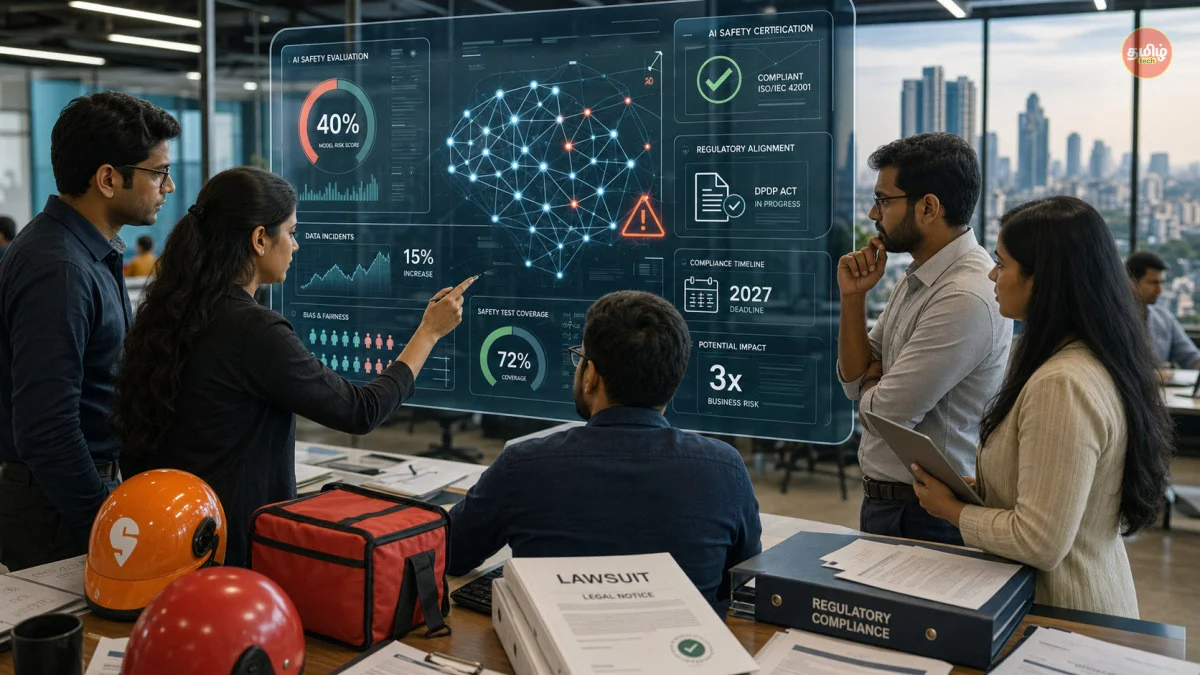
AI safety testing in India has ironically become a major source of problems, now making up about 40% of reported AI incidents compared with just 15% in 2023, and even triggering lawsuits for big names like Zomato and Swiggy. The core trouble is that many tests rely on outdated datasets that poorly match India’s diversity, which can produce biased results, privacy issues, system failures, and openings for adversarial attacks—exactly what happened in Bengaluru when a healthcare AI’s flawed safety test led to incorrect diagnoses for roughly 50,000 patients. That matters because Indian firms are already spending around ₹2.5 crore a year on compliance while testing costs have tripled, hitting startups and SMEs hard and disrupting everyday tools like banking fraud checks, Flipkart and Amazon recommendations, and even UPI payments for rural and Tier-2 users. Under the Digital India push, AI safety certification is required by 2027 and new rules are being drafted after the Bengaluru case, so the real fix is building India-specific testing methods rather than freezing AI progress. Users should know that safety labels alone are not enough right now—watch for biased or broken AI behavior in apps you use, and expect tighter but hopefully more practical rules ahead.

  • AI safety tests now account for 40% of reported AI incidents in India
  • Major Indian startups facing lawsuits over flawed safety testing
  • Government requires AI safety certification by 2027
  • Testing costs have tripled affecting SME adoption
  • Bengaluru incident affected 50,000 users

AI-assisted summary, checked by the TamilTech editorial team.

0:00
0:00
🔒 Listen is for subscribers. Subscribe

Key Takeaways

  • AI safety tests now account for 40% of reported AI incidents in India, up from 15% in 2023
  • Major Indian startups like Zomato and Swiggy are facing lawsuits over flawed safety testing
  • Government's Digital India initiative requires AI safety certification by 2027
  • Testing costs have tripled in last 18 months, affecting Indian SME adoption
  • New regulations proposed after Bengaluru AI incident affected 50,000 users

What's the news

AI safety testing, once hailed as the solution to artificial intelligence risks, is now creating its own set of problems. Recent incidents across India have shown that safety tests themselves can be hazardous, leading to biased outcomes, privacy breaches, and even system failures. The irony isn't lost on anyone - the tools meant to protect us might be putting us in more danger.

Details

The core issue lies in how we design and implement safety tests. Many current testing frameworks rely on outdated datasets that don't reflect India's diverse population. When these tests fail, they can produce discriminatory results - imagine an AI loan approval system that rejects applicants from certain regions based on flawed safety parameters. The testing process itself has become a target for adversarial attacks, where malicious actors manipulate safety tests to bypass security measures.

India impact

For India, this situation hits particularly hard. With over 750 million internet users and growing AI adoption across sectors, safety test failures can affect millions. Indian companies are spending an average of ₹2.5 crore per year on AI safety compliance, a significant burden for startups. The recent Bengaluru incident, where a healthcare AI's safety test failed and led to incorrect diagnoses for 50,000 patients, has sparked nationwide concern about AI regulation.

Use cases

The ripple effects are visible everywhere. Banking apps using AI for fraud detection are flagging legitimate transactions from Tier-2 cities. E-commerce platforms like Flipkart and Amazon India are seeing biased product recommendations based on flawed safety tests. Even UPI payment systems are experiencing issues where safety tests incorrectly flag genuine transactions from rural areas, causing financial disruption.

Honest take

As someone who's been covering tech developments in India for years, I'm concerned but not surprised. We rushed into AI adoption without proper safety frameworks, and now we're paying the price. The solution isn't to stop AI development but to fix our testing methodologies. India needs a homegrown safety testing ecosystem that understands our unique challenges - from linguistic diversity to infrastructure limitations. The government's proposed AI safety certification by 2027 is a step in the right direction, but implementation needs to be faster and more inclusive.

Get tomorrow’s tech news on WhatsApp

One short update a day, free. Follow the TamilTech channel.

What do you think?

people reacted

Keerthika

TamilTech editorial team · 3,344 articles

Keerthika is an editor at TamilTech, the Tamil and English technology publication founded by Praveen Kumar S. She covers AI, smartphones, gadgets, EVs, startups and cybersecurity i...

More from Keerthika

Ask TamilTech on WhatsApp

Tech doubt? Ask in Tamil or English — our WhatsApp assistant answers from TamilTech articles in seconds.

Related stories

Comments (0)

| Supports **bold**, *italic*, `code`

Be the first to comment!

Next story Who's Really Paying for Yotta and Rivals' Multi-Billion-Dollar Nvidia Orders?
Tamiltech

Tamiltech

Install app for faster access

Earn XP 🏆
WhatsApp
Notifications