


Key Takeaways
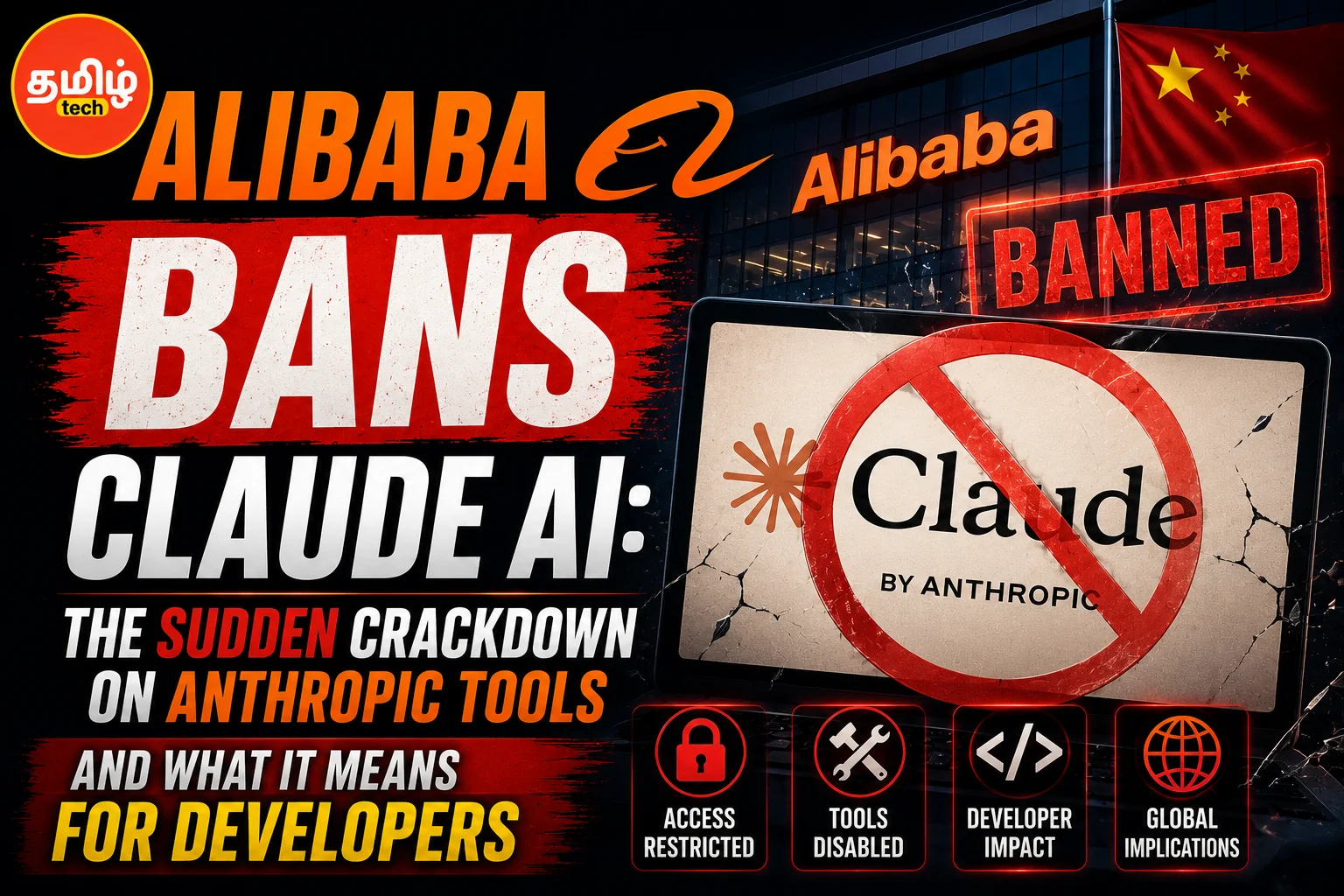
- Alibaba has issued an internal mandate requiring all employees to uninstall Claude models and stop using the Claude Code CLI tool immediately.
- The company cited high-level security concerns regarding intellectual property (IP) leakage and data being processed on external US-based servers.
- This move affects thousands of developers who were using Claude for automated coding, debugging, and software architecture.
- In India, this raises questions for major tech firms like Zoho and Freshworks about their reliance on third-party AI models for internal proprietary code.
- The bottom line: Tech giants are increasingly prioritizing 'Sovereign AI' and local models over convenient but risky third-party cloud tools in 2026.
Wait, what? Alibaba just hit the panic button on Claude. If you’ve been following the AI space this year in 2026, you know that Claude, developed by Anthropic, has become the go-to tool for developers. Its 'Claude Code' feature is honestly a beast when it comes to writing complex scripts and fixing bugs. But Alibaba, the Chinese tech titan, isn't having any of it. They’ve just dropped a bombshell internal memo: every single employee must wipe Claude from their work machines. No exceptions, no excuses.
Now, why would a company that lives and breathes technology ban one of the most advanced AI tools on the planet? It’s not about the performance—Claude is brilliant. It’s about the 'secret sauce.' When a developer at Alibaba uses Claude Code to refactor a piece of proprietary software, that code snippet often travels to Anthropic’s servers for processing. In the high-stakes world of 2026 tech, letting your competitor’s neighbor (or a foreign entity) see your raw code is like leaving your vault open and putting up a 'Welcome' sign. Alibaba is making it clear: if they didn't build the AI, they don't trust it with their data.
The Deep Dive: What Exactly Is Claude Code and Why Is Alibaba Scared?
To understand the ban, you have to understand the tool. Claude Code is a terminal-based interface that allows AI to directly interact with a developer's local file system. It can read files, write code, run tests, and even execute terminal commands. It’s like having a senior engineer sitting inside your computer. While this makes productivity skyrocket, it also creates a massive security hole. If the AI tool has permission to 'read' your entire repository to provide context, it is essentially scanning your company’s most valuable assets.
Alibaba’s internal security audit reportedly found that sensitive API keys, internal architectural diagrams, and even unreleased product logic were being 'shared' with the model during routine coding sessions. Even though Anthropic claims they don't use Enterprise data to train their models, the mere risk of a data breach or a 'hallucination' leaking one company's code to another is too much for Alibaba to stomach. In 2026, the 'Zero Trust' policy isn't just for people; it’s for AI agents too. They aren't just banning the app; they are banning the entire ecosystem of Anthropic models from their corporate network.
The Geopolitical Angle: US AI vs. Chinese Infrastructure
We can't ignore the elephant in the room. This is 2026, and the tech cold war between the US and China is at an all-time high. Alibaba is a cornerstone of Chinese infrastructure. Relying on a US-based AI company like Anthropic (which has massive backing from Google and Amazon) is seen as a strategic vulnerability. If the US government decides to put Claude behind a 'digital curtain' or if Anthropic changes its terms of service, Alibaba could find its entire development workflow crippled overnight.
By banning Claude, Alibaba is also clearing the path for its own homegrown AI, Qwen. Alibaba has been pouring billions into the Qwen LLM series, and they want their engineers to eat their own 'dog food.' Why use a foreign model when you can fine-tune your own internal model to understand your specific coding standards and security protocols? This isn't just a ban; it’s a forced migration to internal, sovereign AI systems that stay behind the company firewall.
What This Means for the Indian Tech Scene
Now, let’s bring this home to India. Our tech landscape is heavily dependent on tools like Claude and GitHub Copilot. From startups in Bengaluru to giants like TCS and Infosys, Claude Code has become a staple for speeding up project timelines. But Alibaba's move should be a wake-up call for Indian CTOs. If a company with the resources of Alibaba is worried about IP theft via AI, shouldn't we be too? We are seeing a lot of Indian firms dealing with sensitive banking and healthcare data. One wrong 'prompt' could lead to a massive compliance nightmare.
We might see a shift in India towards 'Local LLMs.' Instead of using the cloud-based Claude, companies might start running Llama 4 or other open-source models on their own private servers. This keeps the data within the building while still giving developers the AI boost they need. If you're a developer working for a high-security firm in India, don't be surprised if your company issues a similar 'uninstall' order soon. Security is the new currency, and 2026 is the year where 'convenience' is losing out to 'control.'
TamilTech's Honest Take: Is This Overkill?
So, what do we think at TamilTech? Honestly, it’s a bit of both. On one hand, Claude is an incredible tool that makes developers 2x or 3x more efficient. Banning it feels like taking a calculator away from a mathematician. But on the other hand, Alibaba is right to be paranoid. In the world of software, your code is everything. Once it leaves your server, you lose control. We’ve seen enough 'leaks' in 2025 to know that no cloud service is 100% bulletproof.
Our advice? If you are a freelancer or working on open-source projects, keep using Claude—it's phenomenal. But if you are working on a 'Next Big Thing' or a secret startup project, be very careful about what you paste into that chat box. The AI is learning, and you don't want it learning from your hard-earned secrets. Expect more companies to follow Alibaba’s lead, focusing on private, locally-hosted AI models that don't need an internet connection to help you code. The era of 'Wild West AI' is ending, and the era of 'Regulated AI' is officially here.




Comments (0)
Be the first to comment!