


Key Takeaways
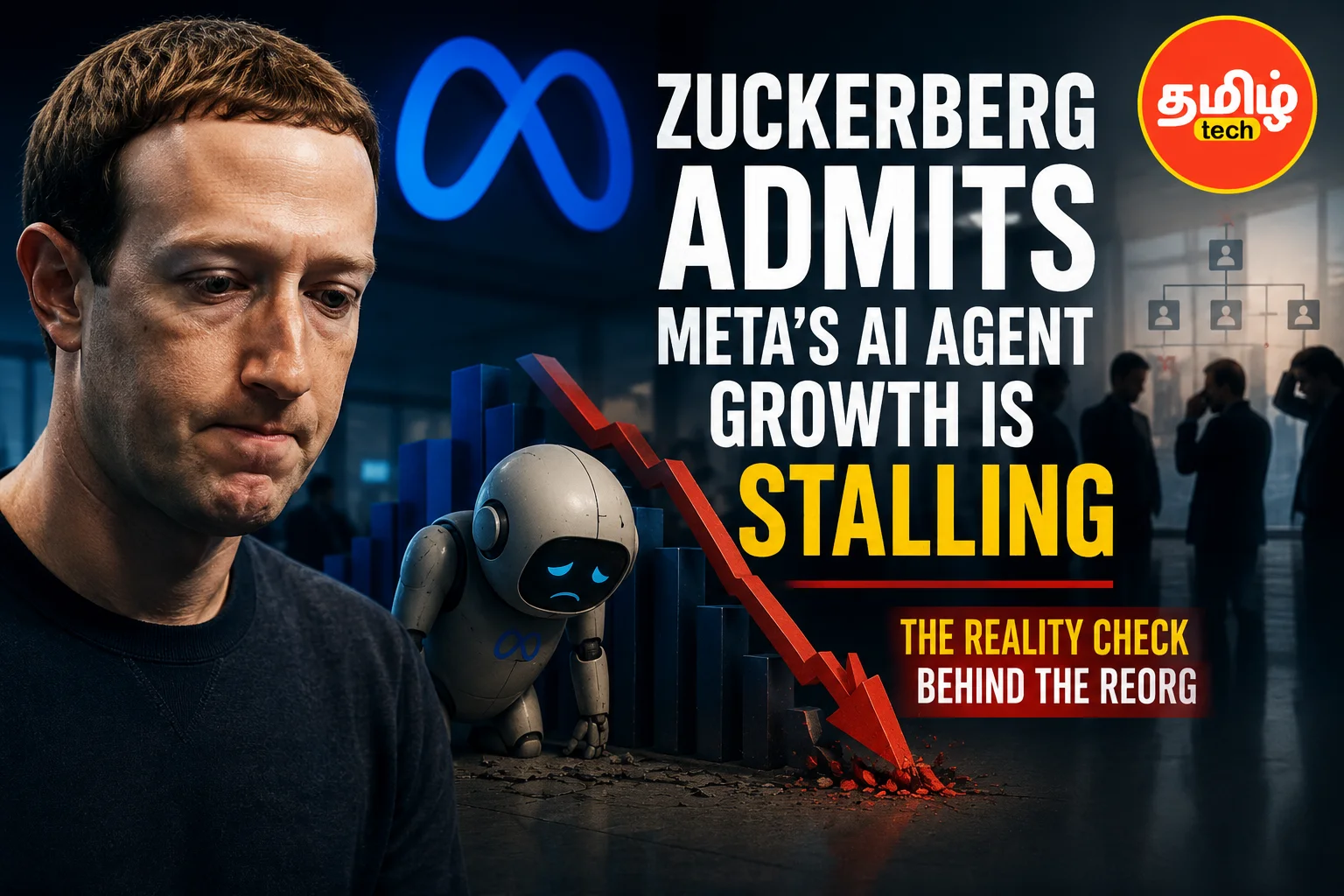
- Mark Zuckerberg admitted that Meta’s AI agent development has not accelerated at the pace the company internal targets set for 2026.
- The massive internal reorganization meant to streamline AI production was described by Zuckerberg as not being as "clean" as intended.
- The delay directly impacts the rollout of advanced autonomous business agents on WhatsApp, which is a critical growth area for the Indian market.
- Meta is struggling with the transition from simple chatbots to "reasoning agents" that can actually perform tasks like booking tickets or managing inventory.
- The bottom line: Meta is facing a significant cultural and technical bottleneck that might give an edge to Google and OpenAI in the agentic AI race.
The Honesty Hour at Menlo Park
It’s not often we see Mark Zuckerberg being this blunt about internal failures. During a recent town hall meeting, the Meta CEO dropped a bit of a bombshell that has sent ripples through the tech community. Usually, these meetings are full of high-fives and "we are changing the world" slides. But this time, the vibe was different. Zuckerberg openly admitted that Meta’s push into AI agents—those smart digital assistants we’ve been hearing about for two years—isn't moving as fast as he wanted. Even more surprising was his admission that the recent company-wide reorganization, which was supposed to make Meta a lean AI machine, was actually quite messy and didn't go according to plan.
We’ve been tracking Meta’s moves closely throughout 2026, and while their Llama models have been impressive, the actual "agent" experience on WhatsApp and Instagram still feels a bit half-baked. If the CEO is saying things are slow, it means the internal friction is much higher than they are letting on in their public PR statements. This isn't just about code; it's about how a massive company like Meta tries to pivot its entire workforce toward a new goal without breaking everything in the process.
The Reorg That Wasn't So 'Clean'
Let’s talk about that reorganization. For the past year, Meta has been shifting teams around, merging Facebook and Instagram engineering units with the central AI labs. The goal was simple: stop working in silos and start building AI features that work across all apps. But Zuckerberg’s comments suggest that this transition was chaotic. When you move thousands of engineers and change their reporting managers, you lose momentum. Projects get stalled, vision gets blurred, and people get frustrated. Zuckerberg’s use of the word "clean"—or rather, the lack of it—tells us that there’s still significant internal politics and technical debt they are fighting.
In the tech world, a "messy" reorg usually means that the best talent might be looking at the exit door. If Meta can't get its internal structure right, it doesn't matter how much compute power or H100 GPUs they have. The human element is where the friction is happening. They tried to move fast and break things, but this time, they might have broken the workflows that were actually working. For a company that is betting its entire future on the Metaverse and AI, this internal instability is a massive red flag for investors and users alike.
Why AI Agents are Stuck in First Gear
So, why is the AI agent development specifically slowing down? It’s because building a chatbot is easy, but building an agent is incredibly hard. An agent doesn't just talk; it acts. It needs to be able to log into your apps, understand your preferences, and execute tasks like "find me a flight to Delhi under ₹5,000 and book it using my saved card." That requires a level of reasoning and security that Meta hasn't perfected yet. Zuckerberg noted that the leap from LLMs (Large Language Models) to LAMs (Large Action Models) is taking longer than their 2026 roadmap predicted.
The technical challenge here is "reliability." If an AI agent makes a mistake in a chat, it’s a joke. If an AI agent makes a mistake with your credit card or your business inventory on WhatsApp, it’s a legal and financial nightmare. Meta is currently stuck in the testing phase because their agents aren't yet 99.9% reliable. They are also facing massive hurdles in memory—making an agent remember who you are and what you liked three months ago without compromising privacy. This "memory wall" is something the entire industry is hitting, but Meta’s scale makes the problem even bigger.
The India Impact: WhatsApp Business at Risk?
This is where it gets real for us in India. India is Meta’s largest market for WhatsApp. The grand plan for 2026 was to have every small kirana store and every major airline in India using Meta AI agents to handle customers. Imagine a world where you don't call a customer care executive but just tell a WhatsApp agent what you need. That was the dream Meta sold us. With this admitted slowdown, those advanced business tools are likely going to be delayed for the Indian SME sector.
We were expecting a massive rollout of "Agentic Workflows" for WhatsApp Business by mid-2026. If development is stalling, Indian businesses that were waiting to automate their sales might have to stick to basic, clunky chatbots for a while longer. This gives a huge window of opportunity to local Indian startups and even Google’s Gemini-powered business tools to step in and capture the market. In India, speed is everything, and if Meta can't deliver the "AI shopkeeper" experience soon, they might lose the early-mover advantage they’ve enjoyed for years.
TamilTech’s Honest Take: Is Meta Losing the Race?
Look, we need to be real here. Meta has the data and the users, but they are clearly struggling with the "soul" of their AI. While OpenAI is focusing on pure intelligence and Google is focusing on integration, Meta is trying to do everything at once—Metaverse, AI, Social Media, and Hardware. This lack of focus is finally catching up to them. Zuckerberg’s admission is a sign that they are feeling the heat from competitors who are leaner and more focused on specific AI use cases.
Our take at TamilTech is that Meta needs to stop the constant reorgs and pick a lane. They have the best open-source models with Llama, but they are failing to turn that into a seamless user product. For the average user in India, Meta AI is still just a colorful circle at the top of their WhatsApp that they occasionally use to generate funny images. Until it becomes a tool that actually saves us time and money, it’s just a toy. Zuckerberg knows this, and his frustration at the town hall is a clear indicator that the "Year of Efficiency" has turned into a "Year of Friction."
What to Expect Next
Expect Meta to pull back on some of its wilder AI promises and focus on making one or two things work perfectly. We might see a slower rollout of new features, but they will likely be more stable. Also, keep an eye on Meta’s hardware—the Ray-Ban glasses might be the only place where their AI agents actually make sense right now. For the rest of the ecosystem, it’s going to be a slow climb. If you are a developer or a business owner in India relying on Meta’s AI roadmap, it might be time to start looking at alternatives like Gemini or Claude as a backup plan. The AI revolution is definitely happening, but it looks like Meta’s engine is overheating a bit in 2026.





Comments (0)
Be the first to comment!