‹ Back to Home

Revolutionary 3D AI Chip Breaks Performance Bottleneck

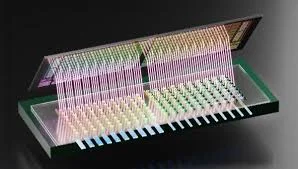
Researchers have created a groundbreaking 3D computer chip that stacks memory and computing elements vertically, dramatically speeding up AI data processing.

Keerthika 1 min read 535
Follow on Google
Updated 2 weeks ago
AI & Future Revolutionary 3D AI Chip Breaks Performance Bottleneck 1 min left Follow on Google
Revolutionary 3D AI Chip Breaks Performance Bottleneck

TamilTech AI summary

Researchers have unveiled a new 3D computer chip that stacks memory layers directly on top of processing cores instead of keeping them side by side on a flat design. This vertical setup shrinks the distance data has to travel from millimeters down to nanometers, which cuts latency, boosts memory bandwidth about 10x, and can slash data-movement energy by up to 85 percent. Early prototypes already run several times faster than comparable traditional chips while using less power for AI inference and managing heat better through built-in cooling channels. The big deal is that it tackles the classic “memory wall” that slows modern AI systems when data can’t move quickly enough between storage and compute. Users should know this could speed up real-time edge AI, large language models, autonomous vehicles, and data-center efficiency, with commercial chips possibly arriving in roughly three to five years once manufacturing matures.

  • What is the new 3D AI chip?
  • How does the 3D AI chip improve performance?
  • What are the potential applications of this 3D AI chip?
  • When will the 3D AI chip be commercially available?

AI-assisted summary, checked by the TamilTech editorial team.

0:00
0:00
🔒 Listen is for subscribers. Subscribe

A team of researchers has unveiled a revolutionary 3D computer chip that could transform how AI systems process data, potentially eliminating one of the biggest bottlenecks in modern computing.

The Breakthrough

Unlike traditional flat chip designs, this new approach stacks memory and computing elements vertically, dramatically reducing the distance data needs to travel between storage and processing units.

Key Innovations

  • Vertical Integration: Memory layers stacked directly on top of processing cores
  • Reduced Latency: Data travels nanometers instead of millimeters
  • Energy Efficiency: Up to 85% reduction in data movement energy
  • Bandwidth: 10x improvement in memory bandwidth

Performance Results

The prototype chip has already demonstrated remarkable performance improvements:

  • Several times faster than comparable traditional chips
  • Significantly lower power consumption for AI inference
  • Better thermal management through advanced cooling channels

Why This Matters for AI

Modern AI systems are increasingly limited by the memory wall - the speed at which data can move between memory and processors. This 3D architecture directly addresses this fundamental challenge.

Future Applications

  • Real-time AI inference at the edge
  • Large language model acceleration
  • Autonomous vehicle processing
  • Data center efficiency improvements

Commercial production is expected within 3-5 years as manufacturing techniques mature.

Get tomorrow’s tech news on WhatsApp

One short update a day, free. Follow the TamilTech channel.

What do you think?

people reacted

Keerthika

TamilTech editorial team · 3,346 articles

Keerthika is an editor at TamilTech, the Tamil and English technology publication founded by Praveen Kumar S. She covers AI, smartphones, gadgets, EVs, startups and cybersecurity i...

More from Keerthika

Ask TamilTech on WhatsApp

Tech doubt? Ask in Tamil or English — our WhatsApp assistant answers from TamilTech articles in seconds.

Related stories

Comments (0)

| Supports **bold**, *italic*, `code`

Be the first to comment!

Next story Who's Really Paying for Yotta and Rivals' Multi-Billion-Dollar Nvidia Orders?
Tamiltech

Tamiltech

Install app for faster access

Earn XP 🏆
WhatsApp
Notifications