


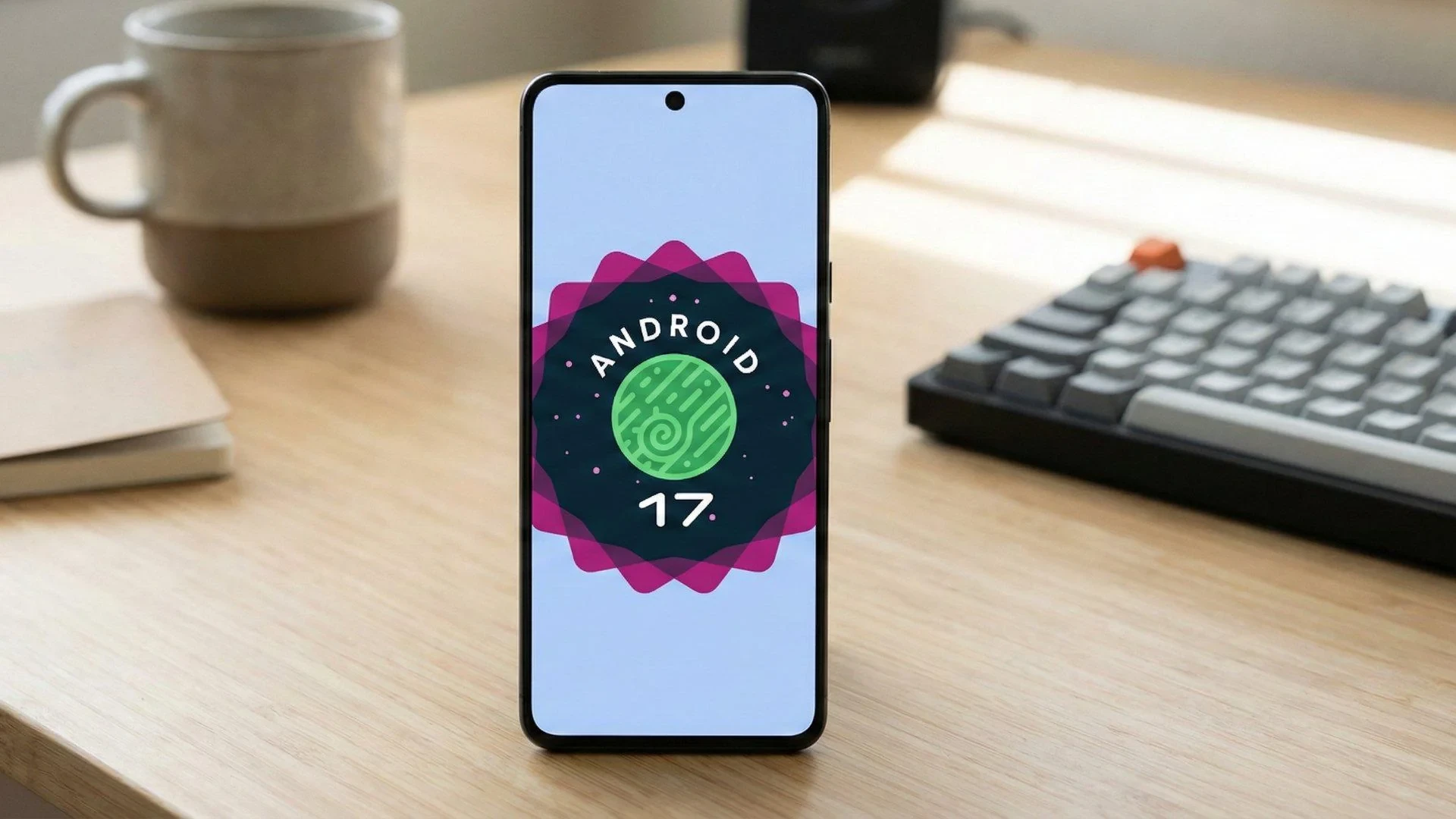
Android 17 Is Being Built to Survive Quantum Hackers — Here's How
Here's a scenario worth thinking about: a government spy agency intercepts your encrypted WhatsApp messages today, stores them, and waits. Five years from now, when quantum computers are powerful enough to break today's encryption, they decrypt everything they collected. This is called a "harvest now, decrypt later" attack — and it's real, it's happening, and your Android phone is about to get protection against it.
Google has revealed that Android 17, expected to release in June 2026, will integrate post-quantum cryptography (PQC) deep into the platform — not as a feature you toggle, but as part of the operating system's core security architecture.
First, What Is Quantum Computing and Why Should You Care?
Today's computers process information in bits — 0s and 1s. Quantum computers use qubits that can be 0, 1, or both simultaneously (superposition). This allows them to solve certain math problems — like factoring enormous numbers — exponentially faster than classical computers.
The problem? Today's encryption (the kind protecting your banking app, WhatsApp, and email) is based on exactly those kinds of math problems. RSA encryption, which secures most of the internet, can theoretically be broken by a sufficiently powerful quantum computer in hours. Current best estimate: capable quantum computers could be 10-15 years away. But "harvest now, decrypt later" attacks mean adversaries are collecting data today.
That's why Google is acting now, not in 2035.
What Android 17 Actually Changes
1. Android Verified Boot Gets Quantum-Resistant Signatures
Every time your Android phone starts up, it goes through a process called Verified Boot — checking that the software loaded is legitimate and hasn't been tampered with. This uses digital signatures to verify integrity.
Android 17 upgrades these signatures to use ML-DSA (Module-Lattice-Based Digital Signature Algorithm) — one of the algorithms recently standardized by NIST (the US National Institute of Standards and Technology) specifically for the post-quantum era. Lattice-based cryptography is believed to be resistant to quantum attacks even with powerful future quantum computers.
In plain terms: even if someone has a quantum computer, they can't fake a signature to make malicious software look legitimate on your boot sequence.
2. Remote Attestation Goes Fully Quantum-Safe
Remote Attestation is the process by which apps and services verify that your device is genuine and unmodified. Banking apps use this to confirm you're on a legitimate Android phone, not a compromised device. Android 17 migrates Remote Attestation to a fully PQC-compliant architecture — meaning even quantum-powered attackers can't spoof a device's attestation.
3. Android Keystore Gets ML-DSA Support
Android Keystore is the secure hardware vault where cryptographic keys are stored on your device. Android 17 will natively support ML-DSA in Keystore, meaning apps can now generate and use quantum-safe signing keys protected by your phone's secure hardware. This is available for developers to implement in their apps via the Play Store's new signing infrastructure.
4. Play App Signing Goes Quantum-Safe
When Google signs an app on the Play Store, it uses cryptographic signatures to prove the app is authentic. Android 17 extends quantum-safe ML-DSA to Play App Signing — meaning the entire app distribution chain, from Google's servers to your phone, will eventually be quantum-resistant.
What's Already Protected: Chrome and WebView
Chrome and Android WebView (the browser engine used inside apps) have already implemented hybrid post-quantum key exchange for encrypted traffic since late 2024. If you've been using Chrome on Android, your browser connections have had a layer of quantum protection for over a year. Android 17 extends this protection to the operating system level.
NIST Standards: The Foundation
Google isn't inventing these algorithms — it's implementing standards finalized by NIST in 2024 after nearly a decade of international cryptographic review. ML-DSA (FIPS 204) and related algorithms represent the global consensus on post-quantum cryptographic standards. Android 17 bakes these standards into the platform itself.
What This Means for Indian Android Users
India has over 600 million Android users — the largest Android market in the world. Why this Android 17 security update matters for India specifically:
- UPI and banking apps — Financial transactions need long-term security. Quantum-resistant attestation means your banking app's device verification stays valid even in a quantum-computing future
- Government and Aadhaar systems — India's digital identity infrastructure will eventually need quantum-resistant security
- Corporate espionage — Indian IT companies and government agencies are targets. Quantum-resistant encryption makes intercepted data worthless
- Long-lived data — Medical records, legal documents, and financial histories need to stay secure for decades
When Will This Reach Your Phone?
Android 17's stable release is expected around June 2026. The PQC features will roll out in the beta first, then the stable release. For most Indians: Pixel phones will get it first, followed by Samsung Galaxy flagships, then other Android OEMs. Budget phones running older Android versions may not get these specific features for years — another argument for timely OS updates.
Pros and Cons
✅ Pros
- Proactive protection against a real future threat — "harvest now, decrypt later" attacks are already happening
- Based on NIST-standardized algorithms with global cryptographic peer review
- Platform-level integration means you don't need to do anything — it's automatic
- Extends to the entire app ecosystem via Play Store signing
❌ Cons
- Quantum computers capable of breaking current encryption may still be 10+ years away — this is very future-proofing
- Performance overhead from lattice-based cryptography (though Google says it's minimal)
- Budget Android phones may not receive Android 17 updates, leaving them unprotected
- Hybrid approach (classical + PQC) during transition creates complexity for developers
The Bigger Picture
Google started its post-quantum cryptography transition in 2016 — a decade-long project that's now reaching the end-user device layer. Android 17 represents a major milestone: the most widely used mobile operating system on the planet adding quantum-resistant security at the OS level. It won't matter to most users today, but in a world of state-level adversaries collecting encrypted data for future decryption, it matters enormously.





Comments (0)
Be the first to comment!