


What’s the big news?
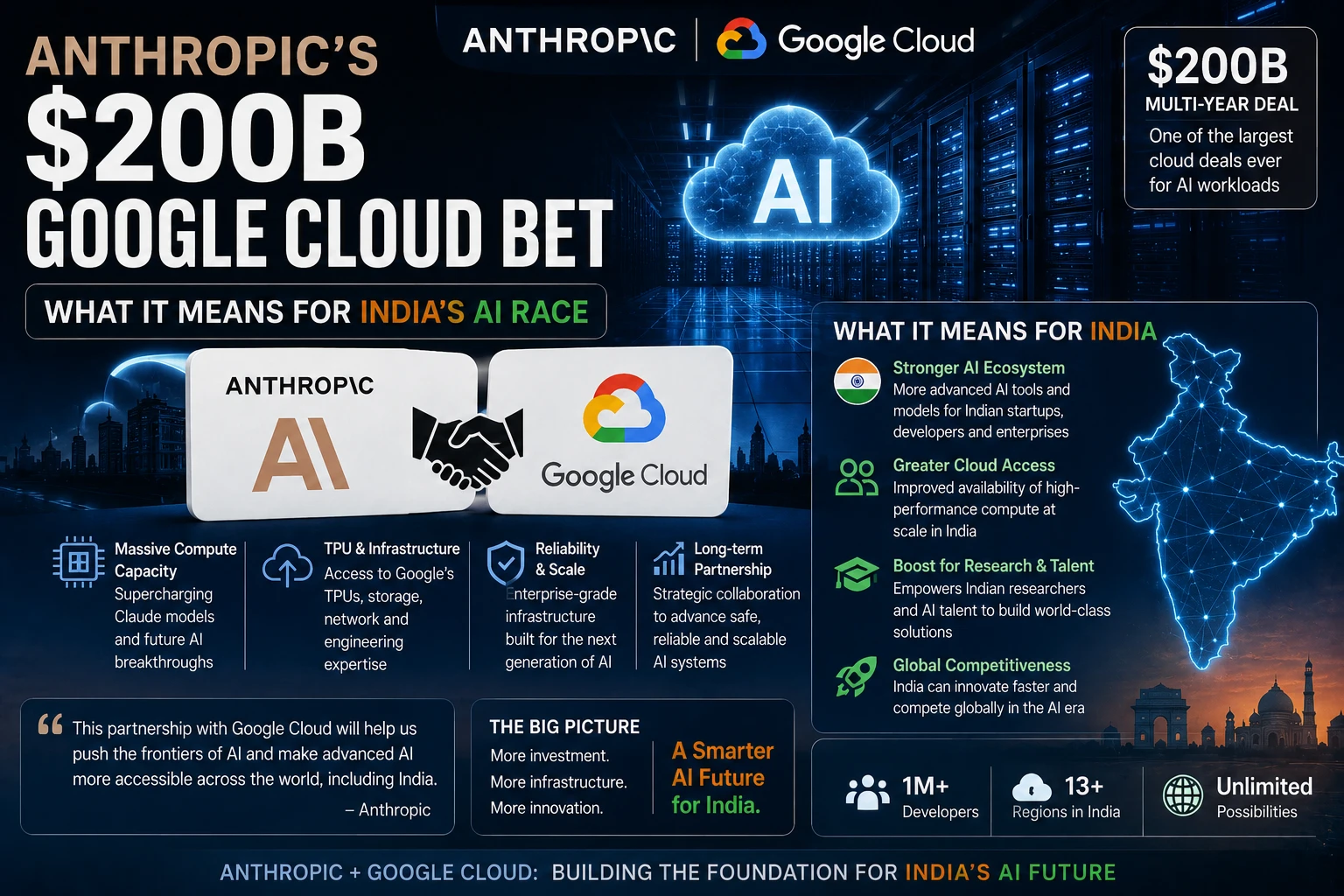
Anthropic, the startup behind Claude, has announced a multi‑year spend of roughly $200 billion on Google’s Cloud platform and its next‑gen AI chips. That’s more than 40% of the revenue backlog Google disclosed last week. In plain English: Anthropic will be a massive, long‑term customer of Google’s data‑center services, and Google will be betting big on Anthropic’s models to fill its AI‑cloud slots.
Why $200 B matters
First, the number itself is eye‑watering. $200 B over five years translates to $40 B a year – roughly the same as Google’s entire advertising revenue in India last fiscal year. Second, it pushes Google’s AI‑cloud revenue into the same league as Microsoft’s Azure‑OpenAI partnership, which is already a favourite among Indian enterprises.
How the deal is structured
Anthropic will use a mix of Google Cloud’s TPU v5p and the upcoming TPU v6 silicon, plus a slice of Google’s custom AI accelerator called Tensor Streaming Processor. The spend covers compute, storage, networking and the software stack that lets Anthropic run its Claude‑3 model at scale. In return, Google gets a guaranteed cash flow that helps fund its own chip design roadmap.
Impact on Indian AI startups
India’s AI ecosystem is still watching the US‑China AI arms race from the sidelines. A $200 B deal signals two things for Indian founders:
- Pricing pressure: Google will likely offer volume‑discounts to keep Anthropic happy. Those discounts could trickle down to Indian companies that sign up for the same TPU‑based services, making high‑end AI compute cheaper than today’s Nvidia‑A100 rates.
- Talent magnet: Google will need more engineers to support Anthropic’s workloads. Expect hiring pushes in Bangalore, Hyderabad and Pune, creating more AI‑chip expertise locally. That could help bridge the talent gap that many Indian AI startups complain about.
What it means for Indian cloud users
If you’re running a generative‑AI service on GCP, you’ll likely see a new “Claude‑Optimized” tier in the console. The tier will bundle TPU compute with Anthropic‑tuned models, priced in INR. Early estimates put the cost at around ₹0.90 per thousand token generations – a noticeable dip from the current ₹1.30‑₹1.50 range for comparable Nvidia‑based setups.
Google’s revenue backlog – why 40% is huge
Google’s latest earnings call mentioned a “revenue backlog” of about $500 B, which includes all future commitments from advertisers, cloud customers and hardware deals. Anthropic’s $200 B share is the single largest chunk of that backlog, meaning Google’s future cash flow is now heavily tied to the AI‑cloud market.
Risks and caveats
Even with the massive spend, Anthropic is still a startup that depends on venture funding. If their next funding round stalls, they could renegotiate the contract or even pull back. Also, Google’s chip roadmap is ambitious – any delay in TPU v6 could push Anthropic’s scaling plans further out, affecting the timing of cost reductions for Indian users.
What should Indian enterprises do now?
1. Re‑evaluate your cloud spend. If you’re on AWS or Azure for AI workloads, start a cost‑comparison exercise with GCP’s new TPU tiers.
2. Talk to your account manager. Ask about “early‑adopter” discounts for Indian SMEs. Google loves to showcase success stories from emerging markets. 3. Invest in AI talent. Upskill your engineers on TensorFlow and TPU programming – the skill set will be in high demand as more Indian firms migrate to TPU‑based pipelines. 4. Watch the regulatory front. The Indian government is drafting AI‑specific data‑localisation rules. Make sure any move to Google’s cloud complies with the upcoming policies.
Our take – TamilTech‑ஓட கருத்து
We think this is a game‑changer for the Indian AI market. The sheer scale of money moving into Google’s cloud means lower prices and more chip‑focused talent in the country. For startups that have been scared off by Nvidia‑centric pricing, TPU‑based services could finally become a viable alternative.
That said, don’t assume the deal will instantly drop your bill by half. The discount structures are still under wraps, and you’ll need to shift workloads to TPU, which requires code changes. But the direction is clear – AI compute is getting cheaper, and Google is positioning itself as the go‑to platform for next‑gen generative models.
What’s next?
Keep an eye on Google’s announcements for the TPU v6 launch (targeted for Q4 2024) and on Anthropic’s roadmap for Claude‑4. Both will dictate when the promised cost savings hit the Indian market. In the meantime, start testing your models on the existing TPU v5p – the sooner you get comfortable, the faster you’ll reap the benefits when the big discount wave arrives.





Comments (0)
Be the first to comment!