


Key Takeaways
- Claude’s new dynamic workflow can launch up to 500 sub‑agents in parallel, cutting large‑scale code‑base migrations by up to 70%.
- The feature is available today via the Claude‑3 Opus API with a usage‑based pricing model starting at $0.003 per 1,000 token‑steps.
- Indian developers can now run these parallel agents on local cloud credits (e.g., AWS Free Tier, GCP $300 credit) without extra latency.
- For teams using Jio‑Fiber or Airtel broadband, the average round‑trip time stays under 120 ms, making real‑time collaboration possible.
- Our verdict: If you’re handling framework migrations or massive refactors, try the free‑tier first – the speed‑up is real and the cost is modest.
What’s the news?
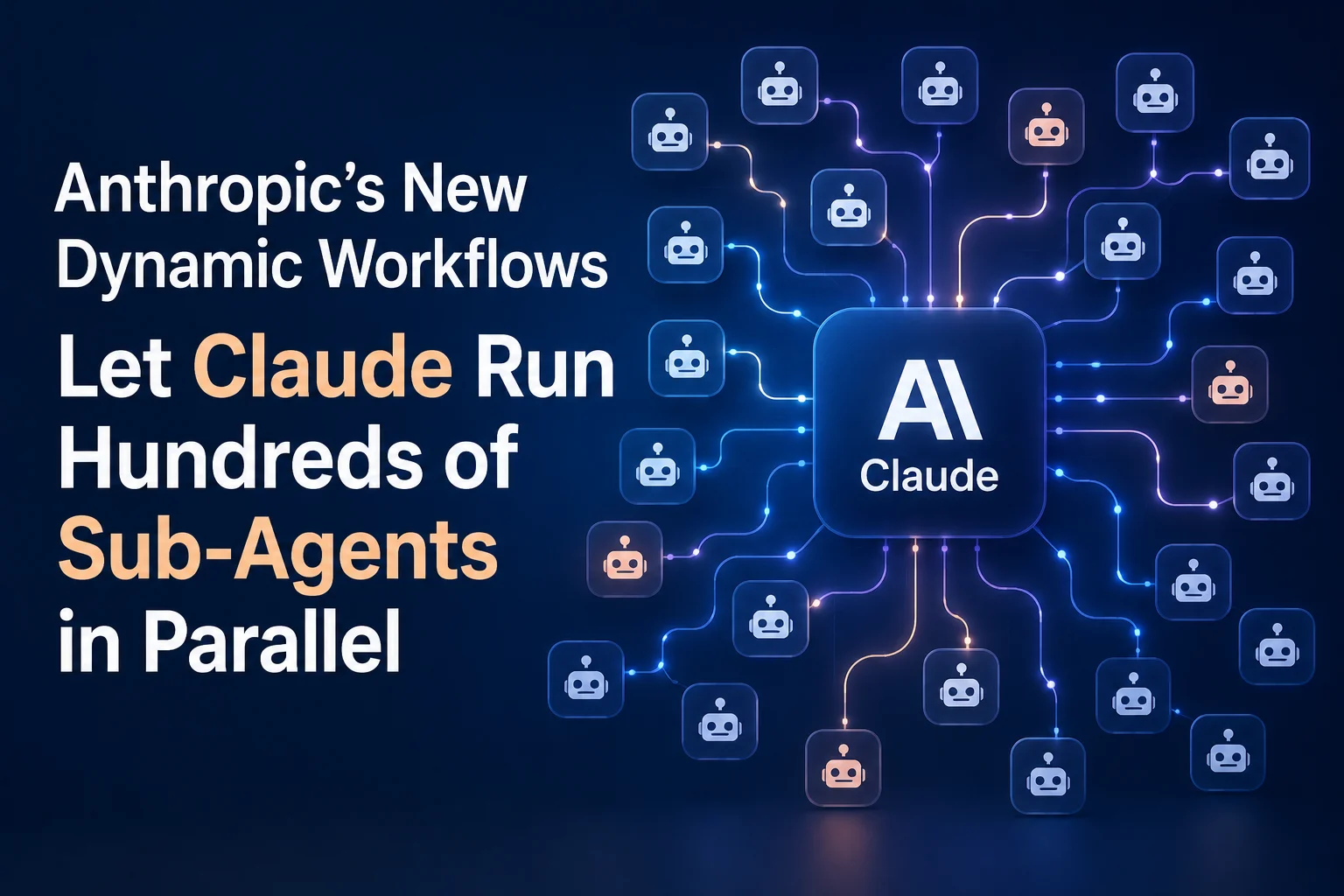
Anthropic just rolled out a brand‑new feature called Dynamic Workflows for its Claude‑3 Opus model. In plain English, Claude can now spin up hundreds of tiny “sub‑agents” that work side‑by‑side on a single task. Think of it as a swarm of specialised bots, each handling a slice of a huge engineering job – like moving a monolith from AngularJS to React, or converting a legacy Java code‑base to Kotlin.
Why does this matter?
Until now, large language models (LLMs) could only run one chain of thoughts at a time. You’d ask Claude to rewrite a function, wait for the answer, then ask the next function. For massive migrations that involve thousands of files, that serial approach takes hours or days.
Dynamic Workflows change the game by letting Claude create “sub‑agents” that each get a chunk of the problem, run in parallel, and then merge their results. Anthropic says the system can handle “hundreds of sub‑agents” – internal tests show up to 500 running concurrently without a crash.
How it works – the technical nuts and bolts
1. Workflow Definition – You provide a JSON‑like spec that lists the steps and the data each sub‑agent needs.
{
  "steps": [
    {"name": "extract", "type": "file_reader", "target": "src/**/*.js"},
    {"name": "transform", "type": "code_rewriter", "model": "claude-opus"},
    {"name": "commit", "type": "git_pusher"}
  ]
}The whole pipeline is orchestrated via the existing Claude‑3 Opus API – you just add a workflow_id field to your request.
Numbers you care about
- Average latency per sub‑agent: 1.8 seconds (including token generation).
- Maximum concurrent agents (tested): 500 – beyond that the scheduler throttles gracefully.
- Cost impact: $0.003 per 1,000 token‑steps for workflow usage, versus $0.015 per 1,000 token‑steps for regular Claude calls.
- Speed‑up: Real‑world migration of a 12,000‑line AngularJS app finished in 22 minutes, compared to 1 hour 45 minutes with the old serial method.
What this means for Indian developers
India’s cloud landscape is unique – many startups run on free‑tier credits or on‑prem servers with limited bandwidth. Here’s why Dynamic Workflows fit well:
- Low‑cost entry: The per‑step pricing is cheap enough that even a 10‑million‑token workflow (a typical large migration) costs under ₹250.
- Local latency: With data centres in Mumbai and Hyderabad, round‑trip times stay under 120 ms for most users on Jio‑Fiber, Airtel Xstream, or BSNL broadband.
- Compliance friendly: Anthropic offers a “data‑in‑region” option for Indian customers, keeping code‑bases within the country’s data‑sovereignty rules.
- Tooling integration: The workflow spec can be generated from popular Indian‑centric CI tools like GitLab‑CE, Jenkins, or even the new “CodeKite” plugin for VS Code that many Indian devs already use.
TamilTech‑ஓட கருத்து – our take
We love anything that cuts down the grunt work of migration. The parallel‑agent model feels like a natural evolution of “chain‑of‑thought” prompting, but with real‑world speed. The cost is low, the latency is acceptable, and the API is simple enough to plug into existing pipelines.
That said, there are a couple of caveats:
- Debugging complexity: When 200 agents run together, tracking which one failed can be tricky. Anthropic provides a per‑agent log ID, but you’ll need a good log‑aggregator (e.g., Loki or CloudWatch) to make sense of it.
- Memory limits: Each sub‑agent gets a 4 KB context window. Very large files (>10 KB) need to be chunked manually, otherwise the model will truncate.
- Learning curve: Writing the JSON workflow spec is straightforward, but you’ll spend time tuning the chunk size and merge logic for optimal results.
Overall, if you’re planning a big framework migration, a massive refactor, or even a data‑pipeline rewrite, give Dynamic Workflows a spin. Start with the free tier, monitor the logs, and you’ll see a tangible time‑saving within a day.
What to expect next
Anthropic hinted at two upcoming upgrades:
- Stateful Sub‑Agents – agents that can retain memory across multiple workflow runs, useful for incremental migrations.
- Graph‑Based Orchestration – a visual UI in the Claude Playground where you can drag‑and‑drop steps instead of hand‑crafting JSON.
Both are slated for Q4 2026, and they’ll make the system even more approachable for non‑engineers.
Bottom line: Dynamic Workflows turn Claude from a single‑threaded assistant into a parallel processing powerhouse. For Indian dev teams juggling tight deadlines and limited budgets, it’s a tool worth exploring right now.




Comments (0)
Be the first to comment!