


ChatGPT Rolls Out Ads: OpenAI Begins Testing Sponsored Results for Free and Go Tier Users
On February 9, 2026, OpenAI officially began testing advertisements inside ChatGPT, marking one of the most significant monetization moves in the history of artificial intelligence. The ads, which appear as contextual sponsored product placements at the bottom of AI-generated answers, are currently being rolled out to Free tier and ChatGPT Go tier users in the United States. This is not a rumor or a leaked plan — it is now live, and it changes the economics of AI permanently.
The move had been telegraphed since January 16, 2026, when OpenAI announced ChatGPT Go, a new $8/month tier (Rs 399/month in India) positioned between the free tier and the $20/month Plus subscription. At that announcement, OpenAI confirmed that advertising would be part of the monetization strategy for its lower-tier users. Now, less than a month later, the ads are here.
What Do ChatGPT Ads Look Like?
Unlike the intrusive banner ads or pop-ups that plague most free internet services, OpenAI has designed its advertising format to be contextual, minimal, and clearly labeled. Here is what users will experience:
- Placement: Ads appear at the bottom of ChatGPT's responses, below the AI-generated answer. They do not interrupt the conversation flow or appear mid-response.
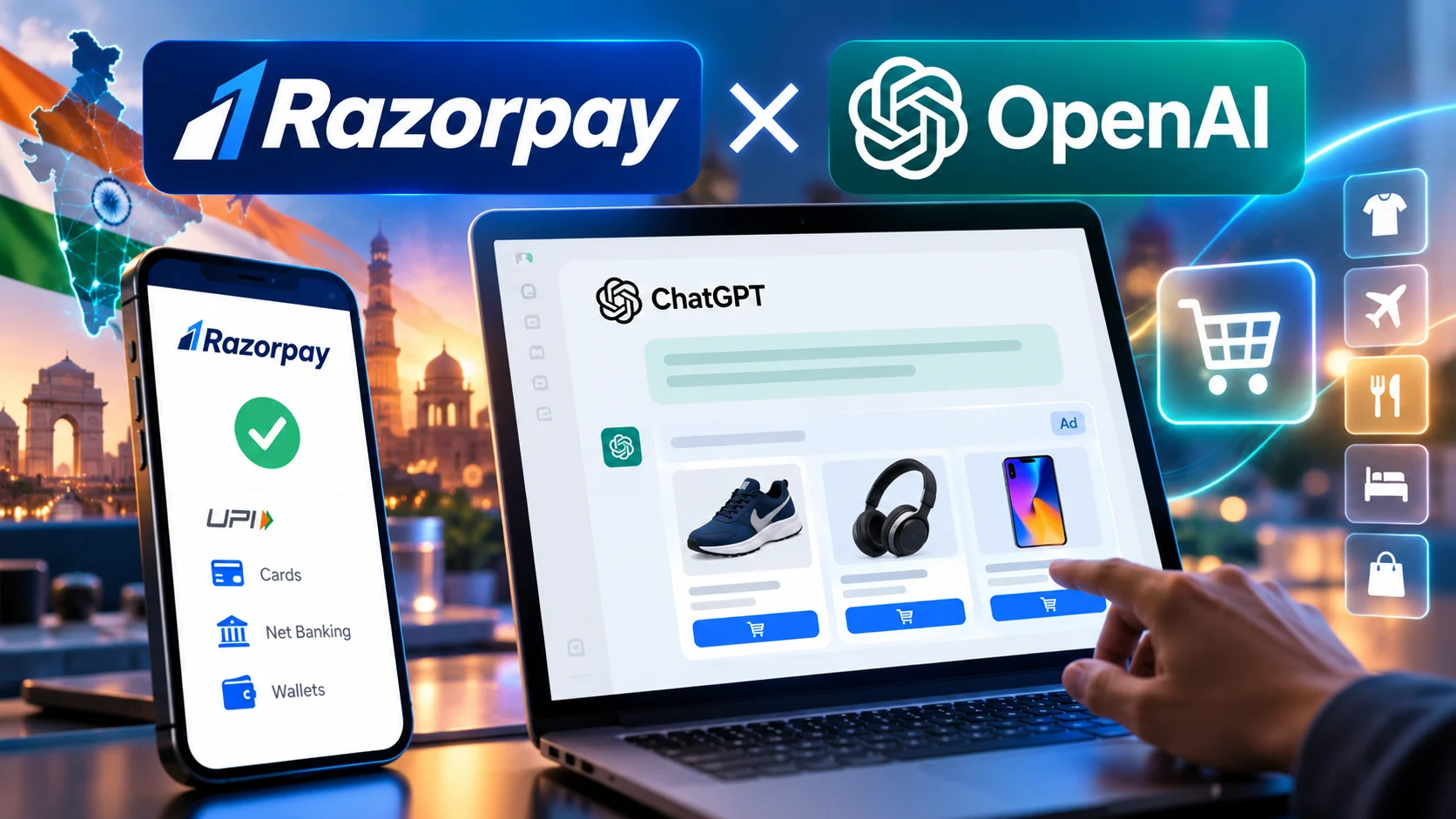
- Format: Sponsored product cards featuring a product image, brief description, pricing information, and a direct link to the advertiser's website.
- Labeling: Every ad carries a clearly visible "Sponsored" label to distinguish it from organic AI-generated content.
- Contextual Relevance: Ads are matched to the topic of the user's query. If you ask about photo editing software, you might see an Adobe Creative Cloud promotion. If you ask about home renovation, a Home Depot ad might appear.
- User Control: Users can dismiss individual ads and will eventually be able to manage ad preferences through their account settings.
First Advertisers on ChatGPT
OpenAI has partnered with a carefully selected group of launch advertisers, all major brands with established reputations:
| Advertiser | Category | Likely Ad Triggers |
|---|---|---|
| Adobe | Creative Software | Photo editing, video editing, PDF, design queries |
| Home Depot | Home Improvement | DIY projects, home renovation, tools, appliances |
| Dell | Technology / Hardware | Laptop recommendations, PC builds, monitors, peripherals |
| Inspire Brands | Food / Restaurant | Dining, fast food, restaurant recommendations |
Notably, OpenAI is starting with a small number of premium advertisers rather than opening the floodgates to programmatic ad networks. This is a deliberate strategy to maintain quality control and user trust during the initial rollout phase.
Which ChatGPT Users Will See Ads?
OpenAI has drawn a clear line between its paid and free tiers regarding advertising. Understanding which users are affected is critical:
| ChatGPT Tier | Price (US) | Price (India) | Ads? | Key Features |
|---|---|---|---|---|
| Free | $0 | Rs 0 | YES | GPT-4o mini, limited usage, basic features |
| Go | $8/month | Rs 399/month (promo Rs 0 until Dec 2026) | YES | GPT-4o, more usage, priority access, lighter ads |
| Plus | $20/month | Rs 2,000/month | NO | GPT-4o, o1, o3-mini, DALL-E, Advanced Voice |
| Pro | $200/month | Rs 16,700/month | NO | Unlimited access, o1 pro mode, priority everything |
| Business | $25/user/month | Varies | NO | Admin controls, enterprise features, no data training |
| Enterprise | Custom | Custom | NO | Unlimited, SSO, dedicated support, custom models |
The strategy is clear: ads subsidize free and low-cost access, while premium users pay for an ad-free experience. This is the same model that has powered YouTube, Spotify, and countless other digital platforms — except now it is being applied to an AI chatbot with over 800 million weekly active users.
The Business Case: Why OpenAI Needs Ad Revenue
To understand why OpenAI is introducing ads, you need to understand the company's financial position. The numbers tell a compelling story of explosive growth paired with equally explosive costs:
| Financial Metric | Figure |
|---|---|
| Annualized Revenue (2025) | $20 billion |
| Cumulative Losses (through 2026) | ~$14 billion |
| Weekly Active Users | 800 million+ |
| Monthly Visitors | ~3.8 billion |
| Projected Ad Revenue (2026) | ~$1 billion |
| Projected Ad Revenue (2029) | ~$25 billion |
| Ad CPM | ~$60 per 1,000 views |
The fundamental problem for OpenAI is that running ChatGPT is extraordinarily expensive. Every query requires GPU compute time, and with 800 million weekly users sending billions of messages, the infrastructure costs are staggering. Subscription revenue alone — even at $20 billion annualized — is not enough to cover the combined costs of compute, research, talent, and the massive capital expenditures required to build and maintain AI training clusters.
Advertising represents a potentially massive additional revenue stream. With an estimated CPM of $60 per 1,000 views (significantly higher than Google Search's average CPM of $2-3, reflecting the premium contextual placement), even modest ad loads could generate billions in additional revenue.
The People Behind the Ad Strategy
Two key executives are driving OpenAI's advertising push:
- Kevin Weil, Chief Product Officer: Weil joined OpenAI from Instagram, where he led product development and played a central role in Instagram's advertising business. His hiring was widely interpreted as a signal that OpenAI was planning to introduce ads. He leads the product design of how ads integrate into the ChatGPT experience.
- Sarah Friar, Chief Financial Officer: Friar, previously CFO of Nextdoor and Square, is responsible for the business case and revenue projections for the advertising program. She has been publicly vocal about the need for diversified revenue streams beyond subscriptions.
Privacy: What Advertisers Can and Cannot See
One of the most important questions surrounding ChatGPT ads is privacy. Users share deeply personal, sensitive, and sometimes confidential information in their ChatGPT conversations. OpenAI has made several commitments regarding advertiser access to user
- Conversation Privacy: OpenAI states that advertisers do not see the content of user conversations. Ads are matched based on topic categories, not by sharing raw conversation data with advertisers.
- No Conversation Selling: OpenAI has committed to not selling conversation transcripts or user data to advertisers.
- Contextual Matching: The ad matching system works on broad topic categories (e.g., "user asked about technology products") rather than specific conversation content.
- Ad Dismissal: Users can dismiss ads they find irrelevant or objectionable.
- Future Controls: OpenAI plans to introduce more granular ad preference controls in future updates.
However, privacy advocates have raised legitimate concerns. The fundamental question is: how long before the economic incentives of ad targeting lead to more invasive data usage? Every major tech platform — Google, Facebook, Amazon — started with privacy-respecting advertising before gradually expanding data collection to improve ad targeting. Whether OpenAI will follow the same trajectory remains to be seen.
India Impact: ChatGPT's Second-Largest Market
India is ChatGPT's second-largest market globally, accounting for approximately 8-9.4% of all ChatGPT traffic. This makes the advertising rollout particularly significant for Indian users:
| India-Specific Detail | Information |
|---|---|
| India Traffic Share | ~8-9.4% of global ChatGPT usage |
| ChatGPT Go Price (India) | Rs 399/month (promo: Rs 0 until Dec 2026) |
| ChatGPT Plus Price (India) | Rs 2,000/month |
| Free Tier Users (India) | Vast majority — estimated 90%+ of Indian users |
| Ad Rollout Timeline (India) | Currently US only; India expected in 2026 |
The pricing gap in India is significant. For most Indian users — students, job seekers, early-career professionals — Rs 2,000/month for ChatGPT Plus is a substantial expense. Even Rs 399/month for Go is meaningful for many. This means the overwhelming majority of Indian ChatGPT users will likely remain on the Free or Go tiers, which means they will see ads once the rollout extends to India.
The promotional offer of Rs 0 for ChatGPT Go until December 2026 in India is clearly designed to build the user base before monetizing with ads. It is the same playbook Jio used with free data to acquire hundreds of millions of users before introducing paid plans.
The Competitive Angle: Anthropic's Super Bowl Counter-Punch
The timing of ChatGPT's ad rollout created an extraordinary competitive moment. On the same weekend that OpenAI's ads went live, Anthropic — OpenAI's chief rival — ran a Super Bowl advertisement with a pointed message: "Ads are coming to AI. But not to Claude."
This is a direct and devastating competitive positioning move. Anthropic is explicitly differentiating itself as the AI platform that will never show ads to users, positioning Claude as the privacy-respecting, user-first alternative to ChatGPT. The Super Bowl ad reached an estimated 120 million viewers in the US alone.
| Feature | ChatGPT (Free/Go) | Claude (Anthropic) |
|---|---|---|
| Ads | Yes (Sponsored results) | No (committed to ad-free) |
| Free Tier | Available (with ads) | Available (no ads) |
| Paid Tier | $20/month Plus (no ads) | $20/month Pro (no ads) |
| Revenue Model | Subscriptions + Ads + API | Subscriptions + API only |
| Privacy Stance | Conversations not shared with advertisers | No ad infrastructure at all |
Whether Anthropic can sustain an ad-free model long-term depends on its subscription and enterprise revenue growth. But for now, it is a powerful marketing message that resonates with users who are uncomfortable with the idea of their AI conversations being used to target advertising.
The Bigger Picture: Is This the Future of All AI?
ChatGPT introducing ads is not just an OpenAI story — it signals a potential future for the entire AI industry. Consider the economics:
- Training frontier AI models costs billions of dollars. GPT-5 reportedly cost over $500 million to train.
- Inference (running the models) costs are enormous at scale. Every ChatGPT query costs OpenAI money.
- Subscription revenue alone may never cover costs for companies offering free tiers to hundreds of millions of users.
- Advertising is the proven model for monetizing massive free user bases in technology (Google Search, Facebook, YouTube, Instagram).
The question is whether ads in AI chatbots will follow the same pattern as ads in web search: starting small and unobtrusive, then gradually becoming more prominent and more deeply integrated as the revenue model matures. If ChatGPT's ad experiment succeeds, expect every AI company — with perhaps the exception of Anthropic — to follow.
Revenue Projections: From $1 Billion to $25 Billion
Industry analysts project OpenAI's advertising revenue will grow rapidly:
| Year | Projected Ad Revenue | Total Revenue (Est.) | Ad Share |
|---|---|---|---|
| 2026 | ~$1 billion | $20-25 billion | ~4-5% |
| 2027 | ~$5 billion | $35-40 billion | ~12-14% |
| 2028 | ~$12 billion | $50-60 billion | ~20-24% |
| 2029 | ~$25 billion | $75-90 billion | ~28-33% |
If these projections hold, advertising could eventually become OpenAI's second-largest revenue stream after enterprise API access, potentially surpassing consumer subscriptions.
What Users Can Do
If you are a ChatGPT user and want to understand your options regarding ads, here is a practical guide:
- Upgrade to ChatGPT Plus ($20/month or Rs 2,000/month): This is the most straightforward way to avoid ads entirely. You also get access to more powerful models, higher usage limits, and premium features.
- Use ChatGPT Go (Rs 399/month in India, free until Dec 2026): This tier will have lighter ads but still some sponsored content. The India promotional pricing makes it essentially free for now.
- Dismiss Irrelevant Ads: Use the dismissal feature to remove ads you find irrelevant. This also helps train the system to show more relevant ads over time.
- Try Alternatives: If ads are a dealbreaker, consider Claude (Anthropic), Gemini (Google), or other AI assistants that currently do not show ads to free users.
- Wait for Ad Preference Controls: OpenAI has announced that more granular ad settings are coming in future updates.
Conclusion
The introduction of advertisements in ChatGPT marks a watershed moment for the AI industry. It confirms what many had predicted: the economics of running massive AI models for free users are unsustainable without advertising revenue. OpenAI's approach — contextual, clearly labeled, non-intrusive ads at the bottom of responses — is about as user-friendly as advertising gets. But the history of digital advertising suggests that what starts small rarely stays small.
For Indian users, the immediate impact is limited since the rollout is currently US-only. But with India being ChatGPT's second-largest market and the vast majority of Indian users on free tiers, the eventual arrival of ads in India is virtually certain. The ChatGPT Go promotional pricing of Rs 0 until December 2026 is the clearest signal: OpenAI is building the largest possible free user base in India before flipping the advertising switch.
The Anthropic Super Bowl counter-campaign — "Ads are coming to AI. But not to Claude" — has set up one of the most fascinating competitive dynamics in technology. Whether users will migrate to ad-free alternatives or accept ads in exchange for free AI access will be one of the defining consumer technology questions of 2026 and beyond.

Comments (0)
Be the first to comment!