


Key Takeaways
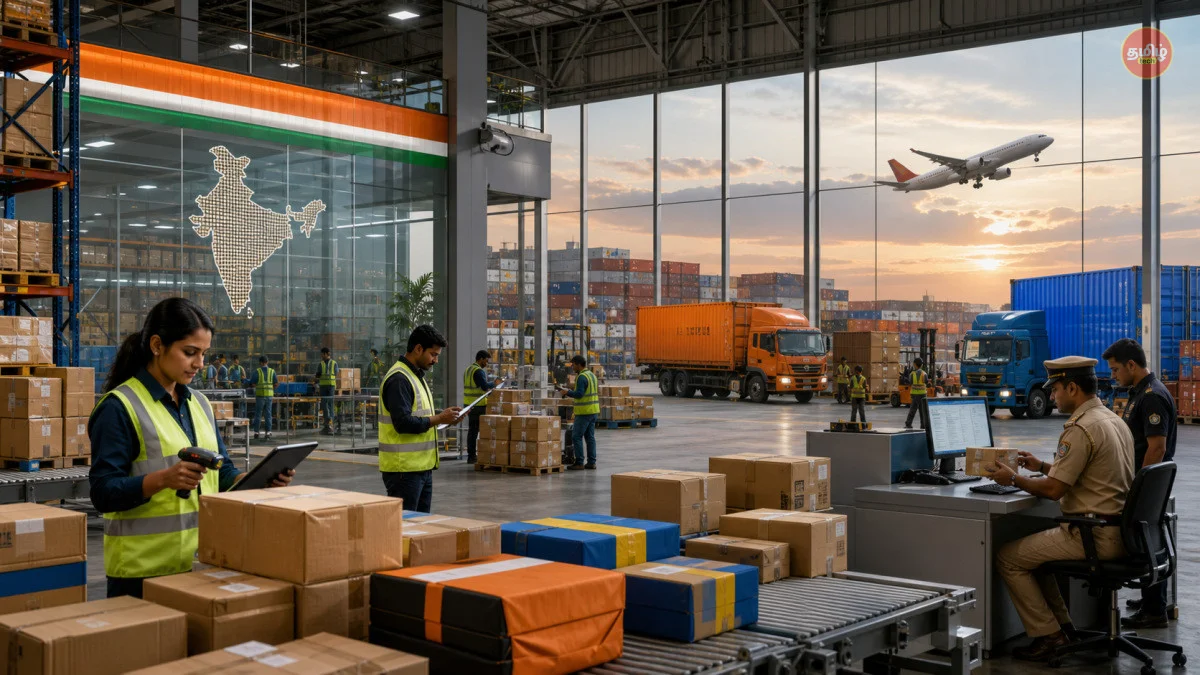
- Foreign-funded e-commerce companies like Amazon and Walmart-owned Flipkart can now own and manage inventory specifically for export purposes.
- The government is introducing E-commerce Export Hubs (EECH) to streamline logistics, warehousing, and customs clearance under one roof.
- This policy shift aims to help India reach its ambitious goal of $200 billion in e-commerce exports by 2030.
- Indian MSMEs and small-scale manufacturers will get direct access to global markets using the infrastructure of tech giants.
The Big Shake-up in Indian E-commerce
So, here is the thing — for years, India has been extremely strict about how foreign-funded e-commerce companies operate. If you have been following the news, you know the deal: companies like Amazon and Flipkart were only allowed to be a "marketplace." They were basically just the middleman connecting a buyer and a seller. They weren't allowed to own the products (inventory) because the government wanted to protect local kirana stores and small retailers from being crushed by deep-pocketed giants. But in 2026, the game has officially changed. The government has finally realized that if we want to beat global competitors, we need to let these giants use their full strength, but with a clever twist — it is only for exports.
This is a massive pivot. By allowing foreign-funded firms to own inventory for exports, India is essentially telling the world that we are ready to become the next global factory. Before this, a small seller in Coimbatore or Ludhiana had to jump through a thousand hoops to sell a single shirt to someone in New York. Now, the government is making it so easy that the big players can handle the heavy lifting of stocking and shipping. It’s a win-win, but as always, the devil is in the details. Let’s dive into what this actually looks like on the ground and why you should care.
Why the Old Rules Were Holding Us Back
To understand why this is a big deal, you have to look at how things worked until recently. Under the old FDI (Foreign Direct Investment) policy, foreign e-commerce players were strictly forbidden from following an "inventory-based model." They couldn't buy products in bulk, store them in their own warehouses, and sell them directly. This was fine for protecting local shops, but it was a nightmare for exports. Why? Because global shipping requires speed. If a customer in London orders an Indian-made leather bag, they don't want to wait three weeks while a small seller figure out the customs paperwork. They want it in three days.
Without owning inventory, giants like Amazon couldn't guarantee that speed. They couldn't stock up on popular items in advance. Every single order had to be processed individually by the seller, which led to high costs and slow delivery. Meanwhile, countries like China were dominating the market because companies like Shein and Temu have massive warehouses where they control everything from the factory floor to the customer's doorstep. India was fighting a 21st-century trade war with 20th-century rules. This new update in 2026 is the long-awaited fix for that specific bottleneck.
Enter the E-commerce Export Hubs (EECH)
The centerpiece of this new policy is the creation of E-commerce Export Hubs or EECH. Think of these as "Special Economic Zones" but specifically designed for the digital age. These hubs will be massive clusters near airports and ports where everything happens in one place. We're talking about warehousing, quality testing, packaging, and most importantly, lightning-fast customs clearance. In the past, getting a product cleared for export was a bureaucratic nightmare. Now, with these hubs, the government is bringing the officials directly to where the goods are stored.
Foreign-funded companies can now buy products from Indian MSMEs (Micro, Small, and Medium Enterprises) in bulk, move them to these EECH warehouses, and keep them ready for global orders. When someone in Dubai or Tokyo clicks 'Buy Now,' the product is already packed and cleared. It just needs to get on a plane. This infrastructure is what will allow a small-time artisan in a rural village to compete with a global brand. They focus on making the product; the tech giants and the export hubs handle the global headache.
The India Impact: What's in it for the Local Seller?
You might be wondering, "Does this hurt the local Indian market?" The answer is a solid no, because these relaxed rules only apply to goods leaving the country. The domestic marketplace rules remain as strict as ever to protect our local retailers. For the Indian manufacturer, this is like being handed a golden ticket. Currently, India's e-commerce exports are sitting around $5 billion. That is peanuts compared to China's $300 billion+. The government wants to hit $200 billion by 2030, and they know they can't do it without the logistics network of the big players.
For a seller, this means lower costs. When you ship one item at a time, the courier charges eat up all your profit. But when a giant like Flipkart or Amazon stocks 10,000 of your items in an export hub and ships them in bulk to a distribution center in Europe, the shipping cost per item drops by 60-70%. This makes Indian products competitive in the global market. Suddenly, that ₹500 handmade craft can be sold for $25 in the US, and the seller actually keeps a decent chunk of that money.
TamilTech’s Honest Take: Is This a Game Changer?
Here’s our perspective at TamilTech: This is probably the most sensible policy move we've seen in the e-commerce space in years. For too long, we've been stuck in this debate of "Amazon vs. Kirana Stores." By separating the export rules from the domestic rules, the government has found a way to help Indian businesses grow without hurting the local shopkeeper. It’s a smart play. We’ve seen how companies like Shein took over the US market by optimizing their supply chain. India is finally trying to build its own version of that machine.
However, we need to be careful. While this helps MSMEs, it also gives a massive amount of data and power to foreign companies. They will now know exactly what is selling, where it’s selling, and at what price. The government needs to ensure that these giants don't start squeezing the small manufacturers once they become the only gateway to the global market. If we can manage that balance, this is going to be a massive boost for the 'Make in India' initiative. Expect to see a lot of new brands popping up from tier-2 and tier-3 cities in India, selling directly to the world by the end of 2026.
What to Expect Next?
In the coming months, you’ll see the first few E-commerce Export Hubs popping up near major cities like Chennai, Mumbai, and Delhi. Companies like Amazon India have already hinted at increasing their export targets, and we expect Walmart/Flipkart to follow suit very quickly. If you are a small business owner or a creator making physical products, now is the time to look into the 'Global Selling' programs of these platforms. The barriers to entry have never been this low. The world is finally becoming a single market for Indian sellers, and 2026 is the year it actually becomes a reality.

Comments (0)
Be the first to comment!