


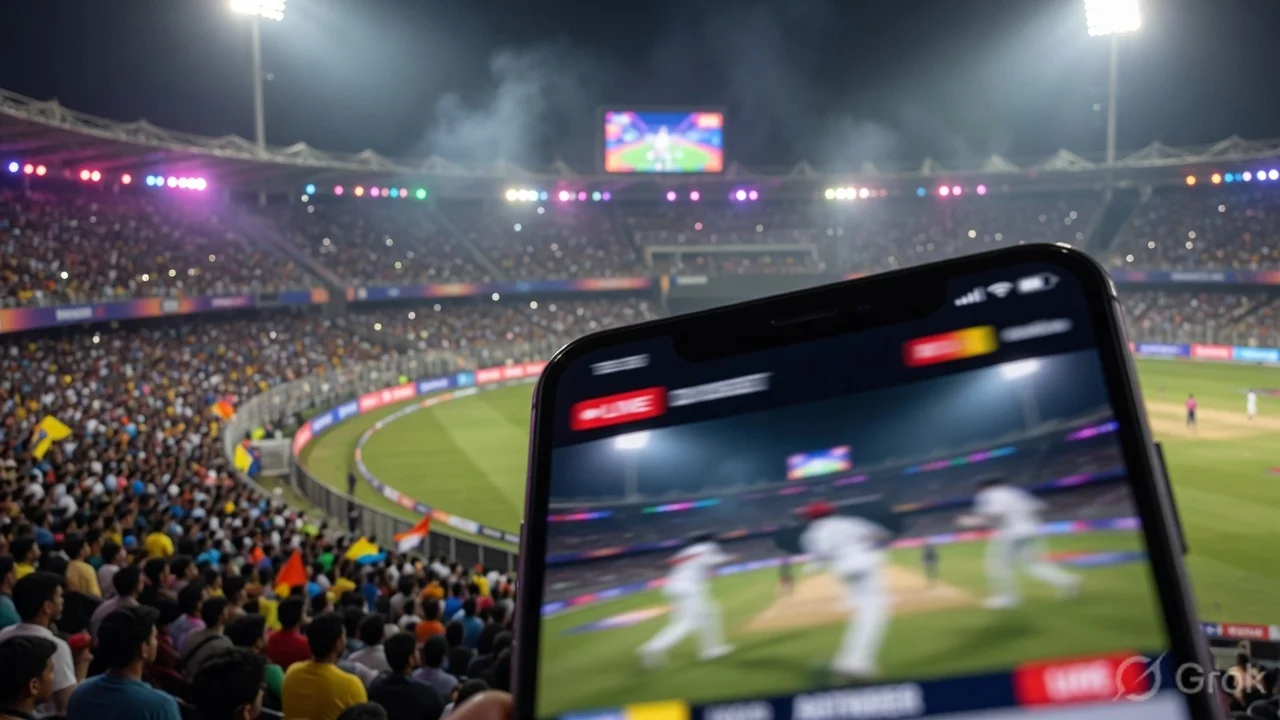
You're not just watching IPL anymore — your phone is part of the match
Think about how you actually watch IPL. TV or JioStar on one screen, WhatsApp group on your phone, Dream11 team on another tab, someone's Twitter thread open on the side. You're not watching cricket — you're living inside a multi-screen experience that cricket is the center of. Over 90% of Indian IPL fans are doing exactly this right now, using at least one other device alongside whatever they're watching the match on.
In 2026, the companies behind IPL have stopped treating that behaviour as a distraction and started building entire ecosystems around it. The result is what's being called the "second-screen economy" — and AI is the engine running it.
What the second-screen economy actually means
"Second screen" is the industry term for using a secondary device — your phone, tablet, or laptop — while watching something on TV or streaming. For cricket, this has always existed in casual form: checking scores, reading commentary, sharing memes. What's new in 2026 is that platforms are no longer just passively accepting this behaviour. They're designing for it, monetizing it, and using AI to make every second-screen interaction more valuable.
The numbers explain why everyone is paying attention. Last year's IPL generated approximately ₹6,000 crore in advertising revenue. That's not happening through 30-second TV spots alone — it's happening because advertisers have figured out that an IPL viewer with their phone in hand is a buyer, not just a viewer. The moment Virat Kohli hits a six, millions of phones light up simultaneously. What happens in that moment — what content appears, what ads load, what products get pushed — is now being engineered in real time using AI.
BCCI and Google India — AI comes directly into Search
The most significant announcement for IPL 2026's tech dimension: BCCI has made Google India a "Premier Partner" of the TATA IPL 2026. This isn't just a logo placement on the boundary boards. Google's AI Mode in Search is being integrated directly into the IPL viewing experience.
What this means practically: if you open Google Search during an IPL match and search for anything cricket-related — a player, a statistic, a tactical situation — you'll get AI-generated real-time analysis rather than standard search results. Google describes this as going "beyond basic scores" to offer "deeper tactical insights, real-time analysis, and a conversational cricket experience." BCCI secretary Devajit Saikia called it "fundamentally transforming the fan experience."
Google is also co-presenting sponsor for the IPL 2026 broadcast across JioStar's TV and digital platforms in a category-exclusive deal. So if you're watching on JioHotstar and pulling up Google on your phone simultaneously — both experiences are now connected through the same commercial and technological partnership.
Dream11's 100+ creator army — the fantasy cricket angle
Dream11 has assembled over 100 content creators specifically for IPL 2026. The platform is projecting nearly 5 crore active users during the tournament — which would be a new record. Think about what that means: 5 crore people making team decisions, checking match-by-match updates, engaging with creator content around Dream11, all on their phones during the matches. That's not second-screen viewing — that's second-screen obsession.
The fantasy cricket dimension is where second-screen engagement is most intense. A Dream11 user isn't just watching the match — they're analyzing every ball for its impact on their team. When a wicket falls, they're immediately checking if it affects their captain's points. When a player gets injured, they're substituting. The match is a real-time data stream that feeds into their fantasy decisions, and AI is increasingly helping them make those decisions faster.
Shoppable videos and AI ads that change based on where you are
The advertising technology being deployed for IPL 2026 is genuinely impressive and slightly unsettling in equal measure. Streaming platforms are implementing AI-generated short video content that triggers within 30 seconds of a live match moment — a wicket, a boundary, a half-century. These aren't pre-produced clips; they're auto-generated highlight packages delivered directly to WhatsApp and apps while the game is still in progress.
These videos are designed to drive conversions — buy a jersey, sign up for a fantasy platform, order snacks. The intent is immediate because the emotional high of the moment is immediate. AI is matching the advertiser's message to the exact moment of maximum fan engagement.
Virtual advertising technology is going further: the same broadcast feed can now show different brand advertisements to viewers in different cities or states, in real time, without production switching. Someone watching in Chennai might see an ad for a South India-focused brand on the same virtual hoarding that shows a different brand to a viewer in Delhi. AI handles the targeting and rendering seamlessly.
Click-to-WhatsApp advertising is another feature rolling out this season. You see a product in an ad during the match, tap it, and you're immediately in a WhatsApp conversation with that brand. No redirect, no separate app. For a country that runs much of its commerce through WhatsApp, this is the logical next step.
5G network slicing — the infrastructure behind all this
None of this real-time AI magic works without the infrastructure to support it. Telecom providers are deploying 5G network slicing specifically for IPL 2026 — dedicating specific bandwidth channels to ensure that streaming and interactive features don't degrade during peak moments. When millions of people simultaneously pull up the same match clip after a wicket, the network needs to handle that spike without buffering. 5G slicing makes this possible in ways 4G networks couldn't guarantee.
AI is also powering real-time multilingual commentary this season — automatic translation and dubbing of commentary into regional languages including Tamil, Telugu, Hindi, and others, generated dynamically rather than requiring separate human commentator teams for every language. For Tamil fans in particular, this means IPL coverage in Tamil that isn't hours behind the English broadcast.
What this means for you as a Tamil Nadu cricket fan
Practically, IPL 2026 will feel different if you pay attention. When you search Google during a match, you'll get AI analysis instead of basic score cards. The WhatsApp messages you get from fantasy platforms will be more personalized and arrive faster after match moments. The ads you see on JioHotstar will be more relevant to your location and viewing history than in previous seasons.
The 84-match window this IPL season — the largest in the tournament's history — stretches this attention economy over a longer period. Brands and platforms know they have nearly three months of India's most engaged audience. The AI systems being deployed are designed to keep you interacting throughout that window, not just during big matches.
For students, young professionals, and anyone who tracks both cricket and tech: IPL 2026 is a live laboratory for how AI transforms mass entertainment in India. The features being tested here will show up in other contexts — political events, entertainment, Bollywood releases — over the next few years. India's scale makes IPL the ideal testing ground.
TamilTech's take
IPL has always been ahead of its time as a commercial and entertainment product. The second-screen economy it's building in 2026 takes that further by turning passive viewers into active data points that AI can optimize against. As a cricket fan, more personalized content and real-time AI analysis is genuinely useful. As a consumer, the shoppable video and instant-purchase ad infrastructure being built is worth being aware of — knowing when you're being marketed to with AI-precision at peak emotional moments is part of navigating digital life in 2026.
The Google-BCCI partnership is the one to watch for long-term impact. If AI-powered conversational Search becomes the default way Indian fans engage with cricket stats and analysis, it changes how cricket knowledge is consumed — from static Wikipedia pages and news articles to real-time AI conversations. That's a fundamental shift in how cricket culture operates in India, and it starts with IPL 2026.


Comments (0)
Be the first to comment!