


Key Takeaways
- LPDDR5X memory prices have surged by 30% globally due to the massive demand for AI servers in 2026.
- The base MacBook Air M5 now starts with 16GB RAM as the standard, but at a higher price point of ₹1,14,900 in India.
- Shipping times for custom-configured MacBooks on the Apple India Store have slipped to 6-8 weeks.
- TamilTech recommends buying existing M3 or M4 stock from retailers like Amazon or Flipkart before the new price hikes fully reflect across all platforms.
The Unseen Crisis in the MacBook Lineup
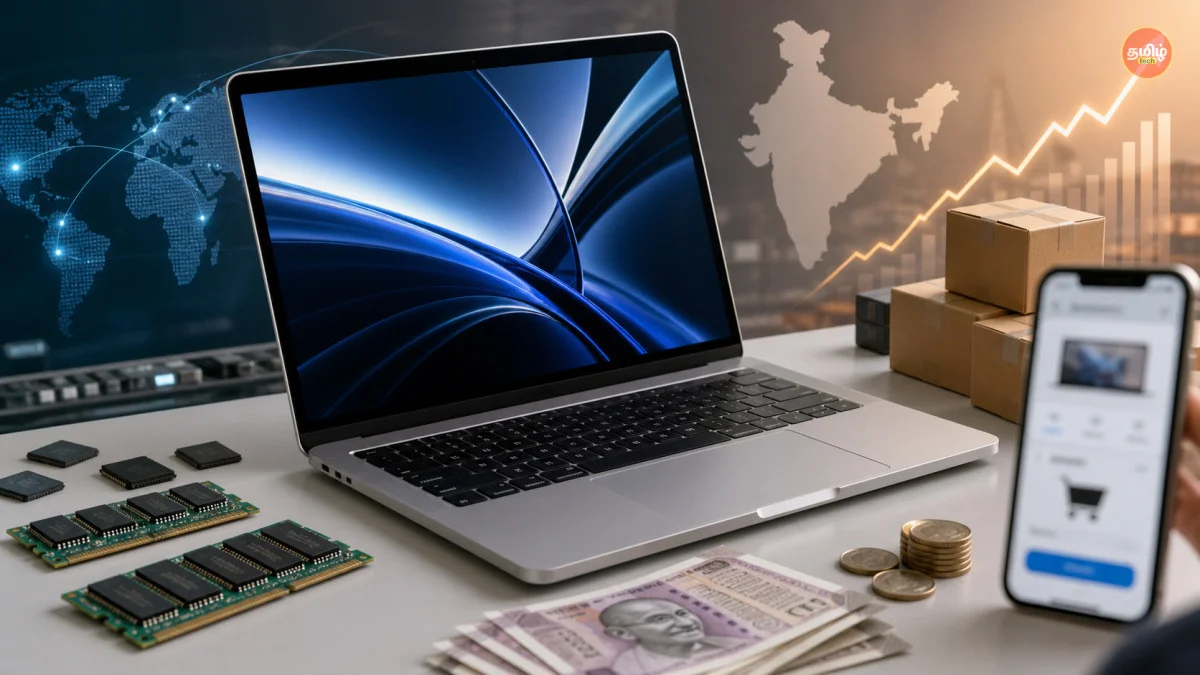
So, here is the deal—if you have been eyeing that sleek, thin MacBook Air, I have some news that might pinch your wallet. It is mid-2026, and the tech world is facing a problem we didn't see coming at this scale: a massive global memory shortage. It is not just about chips being unavailable; it is about the type of memory everyone wants. With the explosion of local AI processing on laptops, every manufacturer is fighting for the same high-speed LPDDR5X RAM modules. Apple, which usually has a rock-solid supply chain, is finally feeling the heat. This isn't just a rumor anymore; we are seeing the real-world impact on the MacBook Air, which is arguably the most popular laptop in India for students and professionals alike.
We have been tracking the inventory levels at major Indian retailers, and the signs are clear. The entry-level models are disappearing, and the newer shipments arriving at warehouses in Mumbai and Bengaluru are carrying revised price tags. It’s a classic case of demand outstripping supply. But why is this happening now? Why 2026? It all boils down to how much memory we now need just to run basic tasks. A couple of years ago, 8GB was 'fine' for many. Today, with Apple Intelligence and other background AI tasks running constantly, 16GB is the bare minimum, and that has put an incredible strain on the global supply of high-bandwidth memory.
The AI Gold Rush is Eating Your RAM
To understand why your MacBook Air is getting more expensive, we have to look at the bigger picture. In 2026, the world has gone completely 'AI-first.' Every company from Google to Microsoft is building massive data centers, and they are buying up all the high-performance memory they can get their hands on. This has created a massive bottleneck for consumer electronics. When a memory manufacturer has to choose between selling a high-margin module to an AI data center or a lower-margin one for a consumer laptop, you can guess where the stock goes. This 'AI tax' is now being passed down to us, the end-users.
Apple’s transition to the M5 chip this year was supposed to be a celebration of efficiency. Instead, the focus has shifted to how Apple can even secure enough unified memory to keep the production lines moving. Unlike Windows laptops where you could sometimes upgrade RAM later (though that's becoming rare too), Apple's unified memory architecture means the RAM is baked right onto the chip. If there's no RAM, there's no MacBook. This integrated design, while great for speed, makes Apple extremely vulnerable to these specific supply chain shocks. We are hearing that production yields at some of the major memory foundries have dipped slightly, further complicating the situation for the Cupertino giant.
India Impact: Pricing and Availability
Now, let's talk about the Indian context because that is what matters most to us. Historically, India has always been a price-sensitive market. When the MacBook Air M2 launched, it was a hit because of that sweet-spot pricing. But in 2026, the landscape has changed. The base MacBook Air with 16GB of RAM is now hitting the ₹1,14,900 mark. Just last year, you could get a very capable Air for under a lakh during the Big Billion Days or Great Indian Festival sales. Those days seem to be fading fast. We are looking at a permanent shift where the 'entry-level' premium laptop now starts well above the ₹1.1 Lakh barrier.
Availability is the other big headache. If you go to an Apple Authorised Reseller in Chennai, Delhi, or Hyderabad today, you might find that the 16GB/512GB configurations—the ones most people actually want—are on backorder. Some stores are quoting a wait time of 4 to 5 weeks. Even the official Apple India website is showing delayed shipping dates for anything that isn't the absolute base model. For a student starting college in July or August, this is a nightmare. You can't just walk into a store and walk out with your preferred machine anymore. You have to plan months in advance, which is something we haven't seen since the 2021 chip crisis.
Why 8GB is Finally Dead (And Why It Costs You)
For years, we at TamilTech have been saying that Apple needs to stop selling 8GB MacBooks. Well, in 2026, they finally did it. The M5 MacBook Air starts at 16GB. But here is the catch—they didn't just give us more RAM for the same price; they used the global shortage as a reason to hike the base price significantly. While 16GB is essential for the modern macOS experience, especially with the 2026 version of Apple Intelligence which uses local LLMs (Large Language Models) for everything from Siri to photo editing, the cost jump is hard to swallow for the average Indian buyer.
The technical reason behind this is 'Memory Bandwidth.' The M5 chip requires incredibly fast communication between the CPU and the RAM to make those AI features feel snappy. This high-speed RAM is exactly what is in short supply. If Apple had stuck with 8GB, the AI features would have been sluggish, ruining the user experience. So, they were forced to go with 16GB, but the timing couldn't have been worse. Every extra gigabyte of RAM now costs Apple significantly more than it did two years ago, and they are not known for absorbing those costs themselves.
The Windows Alternative: Is it Time to Switch?
With MacBook prices climbing, many of you are asking: "Is it time to look at Windows again?" The answer is... maybe. In 2026, we have some incredible 'AI PCs' running on the latest Snapdragon X Elite Gen 2 and Intel Lunar Lake chips. These laptops are also facing memory shortages, but because the ecosystem is broader, you can often find better deals. Brands like ASUS, HP, and Dell are being very aggressive with their pricing in India to steal some of Apple's market share. You can find a high-end Windows ultrabook with 16GB RAM and a 1TB SSD for around ₹95,000, which makes the MacBook Air look quite expensive.
However, the MacBook Air still wins on battery life and that 'Apple Ecosystem' magic. If you are already using an iPhone and an iPad, switching to Windows just to save ₹15,000 might not make sense in the long run. But if you are a student on a strict budget, the Windows side of the fence is looking a lot more attractive this year. We suggest looking at the latest Dell XPS or the ASUS Zenbook S13 OLED. They are thin, light, and offer comparable performance for most daily tasks, without the 'Apple Tax' being quite as high during this shortage.
TamilTech’s Honest Take: What Should You Do?
So, what is our final verdict? If you currently have a MacBook with an M2 or M3 chip and 16GB of RAM, do not upgrade. Stay with what you have. The jump to M5 is impressive, but it’s not worth the inflated price in the current market. However, if you are using an old Intel MacBook or a dying Windows laptop and you need a new machine right now, here is our advice: look for the MacBook Air M3 or M4 stock. Many retailers like Croma and Reliance Digital still have older stock at the 'pre-shortage' prices. You might be able to snag an M3 with 16GB RAM for under ₹1 Lakh, and honestly, for 90% of users, that is more than enough power.
Looking ahead, we expect the memory shortage to stabilize by mid-2027 as new factories in the US and Japan come online. But until then, it’s going to be a bumpy ride. If you can wait another year, wait. If you can't, be prepared to pay the premium or look for bank offers and no-cost EMI options which are quite popular on Amazon India and Flipkart. The era of the 'affordable' MacBook Air is taking a pause, and we have to adapt to this new reality of 2026. Stay tuned to TamilTech for more updates on price drops and deals—we will keep you posted the moment we see the supply chain easing up!





Comments (0)
Be the first to comment!