Key Takeaways#
- 60,253 enrollments recorded in Phase I of the National AI Skilling Initiative
- Phase II details currently being finalized with expanded curriculum
- Strong participation from Tier 2 and 3 cities across India
- Focus on job-ready AI skills for immediate industry placement
- Partnership with major tech companies for certification and placement
What's the News#
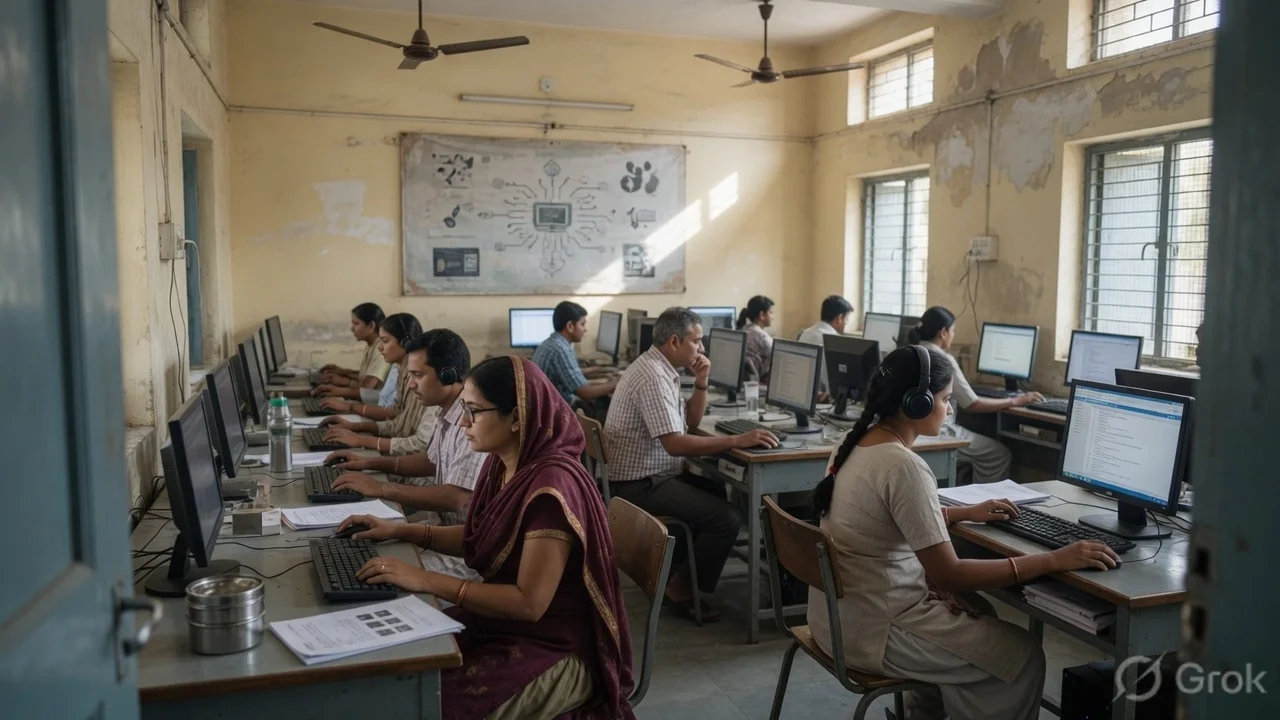
The National AI Skilling Initiative has announced impressive results from its first phase, recording 60,253 enrollments since its launch earlier this year. This massive response from across the country indicates growing awareness and demand for AI skills in the Indian job market. The initiative, launched under the
Digital India framework, aims to address the critical gap between AI education and industry requirements. Phase II is currently in the finalization stage, with plans to expand the course offerings and increase the enrollment capacity significantly. The
government has already begun consultations with industry leaders to align the curriculum with current market demands and emerging technologies.
Details of Phase I Success#
The first phase of the initiative offered several specialized AI tracks including machine learning fundamentals, natural language processing, computer vision, and
AI ethics. Each course was designed to be completed in 8-12 weeks, making it accessible to working professionals and students alike. The enrollment breakdown shows interesting patterns - over 40% of participants came from Tier 2 and Tier 3 cities, indicating the program's reach beyond major metropolitan areas. The average age of participants was 28 years, with a balanced gender distribution of 62% male and 38% female learners. The courses were offered in multiple languages including Hindi, Tamil, Bengali, and Telugu to ensure wider accessibility. Participants were required to pay a nominal fee of ₹999, with scholarships available for economically disadvantaged students.
India Impact#
This initiative directly addresses India's growing need for AI talent as the country positions itself as a global AI hub. With companies like Jio, Infosys, and
Flipkart expanding their AI capabilities, having a skilled workforce is crucial for maintaining competitive advantage. The program's success in attracting participants from smaller cities could help reduce the urban-rural skills gap that has long plagued Indian tech education. Moreover, the practical, job-oriented approach aligns perfectly with India's demographic dividend - our young population needs skills that translate directly to employment opportunities. The initiative also supports the government's vision of creating 500 million skilled workers by 2025, with AI skills being a critical component of this ambitious target.
Use Cases and Real-World Applications#
Participants in Phase I have already begun applying their skills in various domains. Many have joined AI startups working on solutions for agriculture, healthcare, and education sectors. Some graduates have developed AI models for local language processing, helping bridge the
digital divide for non-English speakers across India. The program's emphasis on practical projects means students graduate with portfolios showcasing real-world applications rather than just theoretical knowledge. Companies have reported that Phase I graduates are performing exceptionally well in roles such as data scientists, AI engineers, and machine learning specialists. The certification process, conducted in partnership with industry bodies, ensures that the credentials hold value in the job market.
Honest Take#
While the 60,253 enrollments are impressive, it's worth noting that this represents only a fraction of India's massive youth population. The real challenge will be scaling the program without compromising quality. Phase II needs to focus on maintaining the high standards set in Phase I while expanding reach. The initiative's success also depends on creating sustainable career paths for graduates, not just training for training's sake. We're seeing positive momentum, but the journey to making India a global AI talent powerhouse has just begun. The government should consider integrating these programs with existing educational institutions to create a more sustainable ecosystem for AI skill development. Nonetheless, Phase I's results show that when done right, large-scale skilling initiatives can deliver meaningful results for both individuals and the country's economic growth.






Comments (0)
Be the first to comment!