


Key Takeaways
- Founded by IIT Delhi alumni, the startup has developed lightweight AI models that reduce drone power consumption by 40%
- Their technology enables real-time decision-making in remote areas without internet connectivity
- Indian space agency ISRO has shown interest in integrating their AI systems for satellite data processing
- The startup has raised INR 15 crore in seed funding from prominent Indian investors
- Their AI-powered sensors are being tested in Indian agricultural fields for crop monitoring
What's the News
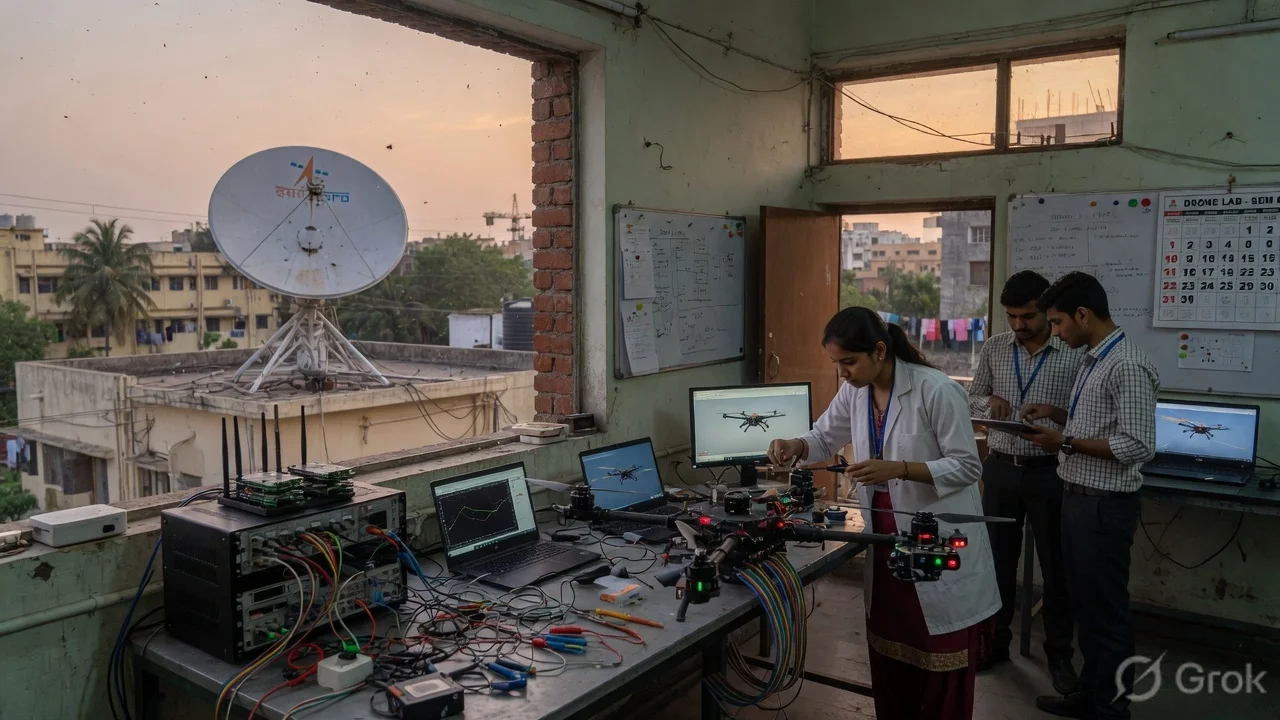
Remember those sci-fi movies where drones think for themselves and satellites make smart decisions? Well, it's not fiction anymore. An IIT Delhi startup called 'AeroMind AI' is making this a reality by embedding artificial intelligence directly into drones, sensors and satellites. The team, comprising IIT Delhi alumni and faculty advisors, has developed a revolutionary approach to edge AI that's catching the attention of both Indian and global tech giants.
Details
Founded just two years ago in the bustling startup hub of Delhi's NCR region, AeroMind AI has been quietly working on something truly special. Their secret sauce? They've managed to shrink powerful AI models to run efficiently on resource-constrained devices. Traditional AI systems require massive computing power and constant internet connectivity, but AeroMind's approach works offline and uses minimal energy - a game-changer for Indian conditions where connectivity can be patchy and power supply isn't always reliable.
The startup's flagship product is a lightweight neural network that can process complex visual data in real-time, allowing drones to identify objects, navigate obstacles and make decisions without human intervention. What's impressive is how they've achieved this while keeping the computational requirements low enough to run on battery-powered devices for extended periods.
India Impact
This isn't just another Silicon Valley import - it's homegrown innovation solving Indian problems. AeroMind AI's technology could transform several sectors across India. For agriculture, their AI-powered drones can monitor crop health, detect pest infestations and even spray pesticides precisely where needed, reducing chemical usage by up to 30%. In disaster management, their drones could search for survivors in remote areas without needing satellite connectivity.
The startup has already partnered with several Indian agricultural companies and is in talks with state governments for implementing their technology in rural development projects. Their sensors are being tested in the Himalayan regions to monitor glacial movements, potentially providing early warnings for avalanches and floods.
Use Cases
The applications are as diverse as India itself. In urban areas, AeroMind's AI-powered traffic monitoring systems could help cities like Bengaluru and Mumbai manage congestion more efficiently. For infrastructure, their drones can inspect bridges, power lines and railway tracks, identifying potential issues before they become critical.
The startup is also working with Indian startups building delivery drones, helping them navigate complex urban environments. Their satellite imaging technology could help with everything from monitoring illegal mining to tracking deforestation in the Western Ghats.
Honest Take
While AeroMind AI's technology is impressive, it's not without challenges. The Indian drone market is still developing, with regulations evolving slowly. The startup faces competition from both established international players and other Indian startups. Additionally, scaling their technology from controlled environments to real-world conditions across India's diverse landscapes will be no easy feat.
That said, their IIT Delhi pedigree, combined with the practical applications they're pursuing, gives them a strong foundation. The recent interest from ISRO and various state governments suggests they're onto something big. If they can navigate the regulatory landscape and scale effectively, AeroMind AI could become a poster child for Indian deep tech innovation - proving that world-class AI technology doesn't always have to come from Silicon Valley.



Comments (0)
Be the first to comment!