


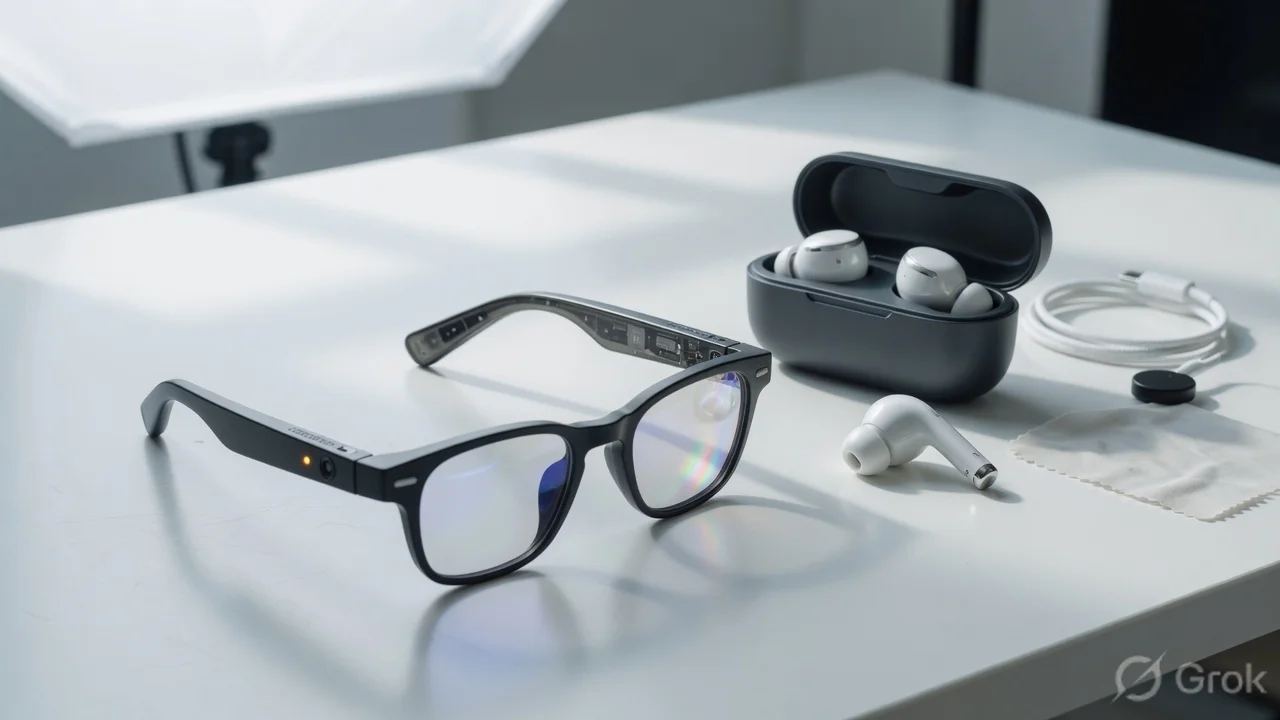
The brand that made transparent phones wants to make transparent glasses
If you own a Nothing Phone or use Nothing Ear buds, you already know what this brand is about: hardware that looks different from everything else on the market, priced aggressively enough to actually compete, with a community of enthusiasts who genuinely care about the product. That formula turned Nothing into a unicorn — the company crossed a $1.3 billion valuation after raising $200 million in a Series C round last year.
Now Nothing is expanding that formula into AI wearables. According to insider reports, the company has plans for two new AI-focused devices: a pair of smart glasses launching in the first half of 2027, and a new set of earbuds with AI features coming later in 2026. For a brand that's spent its entire existence making phones and audio gear, this is a meaningful strategic pivot.
What Carl Pei actually said — and why his mind changed
The interesting part of this story is the internal journey. Carl Pei, Nothing's CEO and co-founder (previously of OnePlus fame), was reportedly skeptical about smart glasses. The category has a complicated history — Google Glass failed publicly, and despite Meta's Ray-Ban smart glasses finding a real audience, the category still feels niche to many hardware executives.
But something shifted. Pei has reportedly told employees that the company needs to move beyond its current device lineup and pursue a multi-device strategy. The reasoning likely involves a few converging trends: Meta's Ray-Ban glasses have sold several million units and proved there's a real consumer market; Google and Samsung are building Android XR glasses together; Apple is rumored to launch smart glasses in 2027; and AI assistants have become genuinely useful enough that having them accessible through eyewear rather than requiring you to pull out your phone makes sense for a growing number of use cases.
Nothing entering this space in 2027 would put it in direct competition with Meta, Google/Samsung, Apple, and a cluster of startups like Even Realities and Rokid. That's a crowded field. But Nothing has proven before — with phones — that a distinctive design and a passionate community can carve out space even against dominant incumbents.
What the Nothing smart glasses will actually do
Based on what's been reported, the Nothing smart glasses will include cameras, microphones, and speakers. They will not have a built-in display — which is the right call for a first-generation product from a company that hasn't built eyewear before. Displays in glasses are technically complex, expensive, and battery-hungry. Meta's Ray-Ban glasses also skip the display, and that's part of why they work well for everyday wear.
For AI processing, the glasses will rely on a connected smartphone and cloud services rather than onboard chips. This is essentially the same architecture Meta uses for Ray-Ban — the glasses capture audio and video, send it to your phone or directly to the cloud, AI processes the query, and the answer comes back through the speakers. It keeps the glasses lightweight and battery-efficient at the cost of requiring an internet connection for most AI features.
The obvious question for Nothing fans: will the glasses have the transparent design elements that made Nothing phones so recognizable? No official word yet, but given that distinctive design is literally Nothing's brand identity — the transparent backs, the glyph LED arrays, the visible circuitry — it would be unusual for them to ship something that looks like every other pair of glasses on the market. Expect something that visually stands out.
AI earbuds in 2026 — the closer launch
While the glasses are a 2027 story, Nothing's AI earbuds are reportedly arriving later in 2026. This is more immediately interesting for Indian buyers who already use Nothing Ear or Ear (a) products.
Nothing hasn't officially announced what "AI features" means for the earbuds, but based on where the category is headed, the likely candidates include: real-time translation in your ear, AI-powered noise cancellation that learns your environment, voice assistant integration that works without pulling out your phone, and potentially the ability to ask questions and get answers spoken back to you through the earbuds without touching your phone at all.
Nothing's earbuds already have a loyal user base in India — the Ear and Ear (a) sell strongly on Flipkart and are among the most discussed budget-to-mid-range earbuds in Indian tech communities. An AI upgrade to that lineup would be a genuine reason for existing users to upgrade and new users to enter the ecosystem.
The India angle — why Nothing matters here specifically
Nothing has an unusually strong following in India relative to its global market share. The Nothing Phone series found serious traction among Indian tech enthusiasts who wanted something that didn't look like every other Android phone. The transparent back, the glyph notification lights, the general sense that someone actually thought about design — all of this resonated with a market that's sophisticated about hardware even at mid-range price points.
In India, Nothing phones typically land in the ₹20,000 to ₹35,000 range. The earbuds are in the ₹3,000 to ₹8,000 range. If smart glasses follow a similar pricing philosophy — competitive against the premium brands while undercutting them on value — they could realistically find an audience here. Meta's Ray-Ban glasses cost around ₹25,000-₹30,000 in India. Nothing pricing glasses in a similar range but with a more distinctive aesthetic and India-relevant features could work.
The language and AI context matters too. If Nothing's AI earbuds and glasses work well with Indian languages — Hindi, Tamil, Telugu — that would be a meaningful differentiator over products primarily optimised for English-speaking Western markets.
The competitive picture — everyone is doing this in 2027
2027 is shaping up to be the year smart glasses become genuinely mainstream. Apple's smart glasses are rumoured for that year. Google and Samsung's Android XR glasses are expected before then. Meta continues iterating on Ray-Ban. Nothing entering the field means essentially every major consumer electronics player will have a glasses product by late 2027.
For consumers, this is good news. Competition drives price decreases, feature improvements, and design diversity. The smart glasses category has been stuck in an early-adopter, high-price phase. When Apple, Google/Samsung, Meta, and now Nothing all have products competing for the same buyers, prices will find their natural level quickly.
TamilTech's take
Nothing building smart glasses is the right move at the right time. Carl Pei has consistently shown he knows how to enter a market, find the underserved design-and-value gap, and build a community around it. Smart glasses in 2027 with a distinctive Nothing aesthetic, AI integration, and aggressive pricing could do for eyewear what Nothing phones did for mid-range Android. The earbuds arriving in 2026 are the more immediately actionable story for Indian buyers — watch for pricing and India launch details in the next few months. If Nothing's AI earbuds land under ₹8,000 with genuinely useful AI features, they'll be hard to ignore.






Comments (0)
Be the first to comment!