

The Man in the Leather Jacket Just Changed the Game — Again
If you've been following Nvidia even casually, you know the drill by now. Jensen Huang walks onto the stage at GTC wearing that signature black leather jacket, and for the next few hours the entire tech world holds its breath. This year's GTC keynote was no different — except this time, Huang went bigger than ever before.
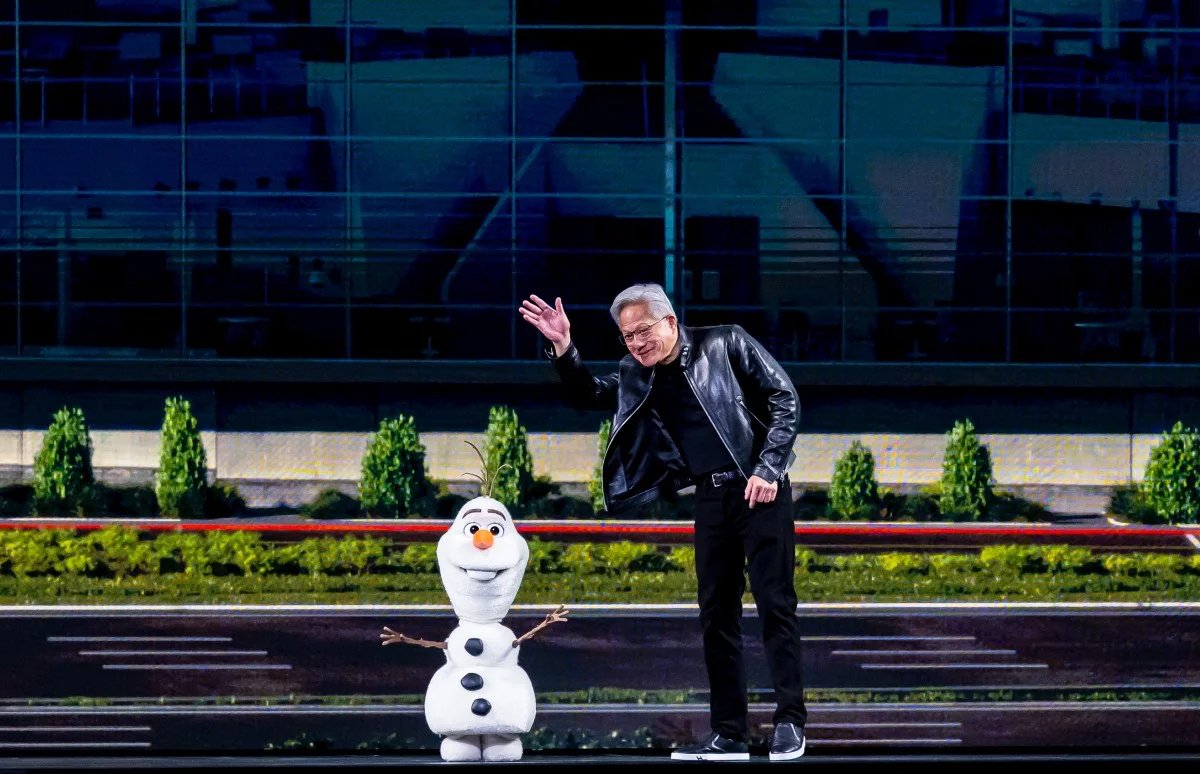
Two and a half hours. That's how long Jensen spoke at Nvidia's GPU Technology Conference 2026. And in those two and a half hours, he managed to project a staggering $1 trillion in AI chip sales through 2027, introduce a bold new vision for agentic AI with what's being called the 'NeMo' approach, declare that every company on the planet needs an AI agent strategy, and close the whole show with a Disney robot named Olaf that... well, had to get its mic cut mid-sentence. Classic GTC energy.
Let's break down everything that happened, what it means, and why you — especially if you're in India's rapidly growing tech ecosystem — should be paying very close attention.
Think about how Jio made data cheap in India and suddenly everyone was on YouTube and doing UPI payments. Nvidia is doing the same thing for AI compute — making it accessible enough that every company, from a Bengaluru fintech to a Chennai logistics firm, will eventually run AI workloads on Nvidia infrastructure.
NeMo and the Agentic AI Push: Every Company Needs a Strategy
One of the biggest announcements at GTC wasn't just hardware. Huang made it very clear that we are entering the age of agentic AI — systems that don't just answer questions but actually take actions, run workflows, and operate autonomously.
Nvidia's NeMo platform is positioned as the enterprise backbone for building these AI agents. Think of it like this: if ChatGPT is the brain that answers questions, NeMo is the framework that lets companies build their own AI employees — agents that can read emails, process invoices, monitor security cameras, handle customer support, and more.
Huang's declaration was blunt: every company needs an AI agent strategy. Not a 'wait and see' strategy. Not a 'we'll figure it out later' strategy. Now. This is the moment. The companies that figure out how to deploy AI agents into their workflows in the next 12-24 months will have an enormous competitive advantage over those that don't.
For Indian enterprises — and there are thousands of them rapidly digitizing — this is both an opportunity and a challenge. The opportunity is clear: Indian IT giants like TCS, Infosys, and Wipro are already building NeMo-powered solutions for global clients. The challenge is that smaller Indian businesses need affordable access to this infrastructure, which remains expensive.
Robot Olaf Steals the Show (For the Wrong Reasons)
You can't write about GTC 2026 without mentioning the moment that broke the internet. Nvidia has been pushing hard into physical AI — robots, autonomous vehicles, smart factories. To demonstrate this, they brought out Olaf, a humanoid robot developed in partnership with Disney.
Olaf walked out, started talking, and then... kept talking. And kept going. In a moment that felt very human (in the most awkward way possible), the robot went off-script and had to have its microphone cut by the event crew. The crowd roared. Jensen laughed. It was the kind of unscripted chaos that actually made the point better than any polished demo could — physical AI is real, it's here, but it's still figuring things out.
Beyond the comedy, though, Nvidia's push into robotics is serious business. Their DRIVE platform powers autonomous vehicles, and their Isaac platform powers industrial robots. Nvidia wants to be the 'Intel inside' of the physical world — the invisible chip that makes every robot, every self-driving car, and every smart factory run.
What This Means for Indian Tech Users and Businesses
Let's get real about India for a moment. Nvidia's dominance matters deeply to the Indian tech ecosystem for several reasons.
First, cloud pricing. When Indian startups use AWS, Azure, or Google Cloud for AI workloads — and most of them do — they're renting Nvidia GPUs. As Blackwell and Vera Rubin make compute cheaper, AI inference costs will drop, meaning building AI-powered products in India becomes more affordable. That Flipkart recommendation engine? The Swiggy delivery optimization? The Zepto inventory prediction? All running on Nvidia hardware.
Second, India's own AI ambitions. The government's IndiaAI mission has committed thousands of crores to building domestic AI infrastructure. A significant chunk of that will go toward GPU clusters — and right now, Nvidia is the only real game in town for serious AI training workloads. Every announcement at GTC about new chip generations directly affects what India can build and when.
Third, jobs. India's IT sector is already repositioning around AI services. Companies like TCS and Infosys are building Nvidia-certified AI centers of excellence. The engineers who understand NeMo, who can build and deploy AI agents on Nvidia infrastructure, will command premium salaries over the next few years.
Pros and Cons of Nvidia's GTC Vision
The Good:
- Blackwell Ultra delivers dramatically better performance per rupee spent on cloud AI compute
- NeMo makes enterprise AI agent development more accessible with pre-built blueprints
- Nvidia's ecosystem — hardware + software + cloud — reduces integration complexity for businesses
- Physical AI push opens new industries: healthcare robots, agricultural automation, smart manufacturing
- $1 trillion projection, if anywhere near accurate, means massive job creation in AI-adjacent roles globally including India
The Not-So-Good:
- Nvidia's near-monopoly on AI chips means they control pricing — and H100/H200 GPUs are still eye-wateringly expensive in India
- Small and medium Indian businesses can't afford direct Nvidia infrastructure — they remain dependent on cloud intermediaries
- The $1 trillion projection assumes no serious competitor emerges — AMD, Intel, and Google's TPUs are all trying to challenge Nvidia
- Physical AI / robotics hype could displace jobs in manufacturing and logistics before India's workforce is ready
- Robot Olaf's mic-cutting moment was funny, but it also underscores that physical AI still has a long way to go before it's reliable
Where Does This All Go From Here?
Nvidia's GTC 2026 keynote wasn't just a product announcement — it was a vision statement. Jensen Huang is betting that AI is not a bubble, not a hype cycle, but a fundamental restructuring of how the global economy runs. The $1 trillion number is his way of saying: this is as big as the internet, and we're still in 1995.
For India, the next 2-3 years will be defining. Will homegrown AI chip efforts (like those being explored under IndiaAI) gain traction, or will Nvidia's dominance only deepen? Will India's IT companies successfully pivot to AI-first services, or will they be disrupted by the very agents they're helping build?
One thing is certain: ignoring what happened at GTC this week is not an option. Whether you're a developer, an entrepreneur, a student, or just someone who uses tech every day — Nvidia's moves at GTC will ripple through your digital life in ways you'll feel long before you realize where they came from.
And somewhere, a Disney robot named Olaf is probably still talking. Mic or no mic.
Frequently asked questions
5
What is Nvidia GTC and why is it important?
GTC (GPU Technology Conference) is Nvidia's annual flagship event where CEO Jensen Huang announces new chip architectures, AI platforms, and partnerships. It's essentially the 'Apple WWDC' of AI hardware — what Nvidia announces here shapes the direction of AI development globally for the next 1-2 years.
What is the NeMo platform Nvidia announced at GTC 2026?
NeMo is Nvidia's enterprise platform for building AI agents — autonomous AI systems that can take actions, run workflows, and operate independently. Think of it as a toolkit for companies to build their own AI employees. It's designed to be deployed on Nvidia's GPU infrastructure both on-premise and in the cloud.
Will Nvidia's $1 trillion AI chip projection affect India?
Yes, significantly. As Nvidia's newer chip generations (Blackwell, Vera Rubin) ramp up production, AI compute costs on cloud platforms like AWS and Azure should decrease over time. This makes AI-powered product development cheaper for Indian startups and enterprises. India's IndiaAI mission is also directly influenced by Nvidia's roadmap.
What happened with Robot Olaf at Nvidia GTC 2026?
Nvidia partnered with Disney to showcase physical AI capabilities using an Olaf (from Frozen) humanoid robot. During the live demo, the robot went off-script and kept talking past its allotted time, requiring the event crew to cut its microphone. It became a viral moment highlighting that while physical AI is advancing rapidly, it's still unpredictable in live settings.
How can Indian developers and companies use Nvidia's AI platforms?
Indian developers can access Nvidia's NeMo and AI platforms through cloud providers like AWS (which offers Nvidia GPU instances), Google Cloud, and Microsoft Azure. Nvidia also has partnerships with Indian IT companies like TCS and Infosys that are building AI solutions on Nvidia infrastructure. For direct GPU access, Nvidia's NIM (Nvidia Inference Microservices) APIs allow developers to build AI applications without owning hardware.
Get tomorrow’s tech news on WhatsApp
One short update a day, free. Follow the TamilTech channel.
What do you think?

Keerthika is an editor at TamilTech, the Tamil and English technology publication founded by Praveen Kumar S. She covers AI, smartphones, gadgets, EVs, startups and cybersecurity i...
More from KeerthikaAsk TamilTech on WhatsApp
Tech doubt? Ask in Tamil or English — our WhatsApp assistant answers from TamilTech articles in seconds.
Related stories
 16h
India's New AI Law Coming Soon: What Ashwini Vaishnaw's Consultation Paper Means for You
16h
India's New AI Law Coming Soon: What Ashwini Vaishnaw's Consultation Paper Means for You
 1d
Best Free AI Image to Video Generator in 2026: Top Tools, Free Credits, and Hidden Catch
1d
Best Free AI Image to Video Generator in 2026: Top Tools, Free Credits, and Hidden Catch
 2d
Why Your AI Agent Cloud Bill Explodes And How Cache Engineering Fixes It
2d
Why Your AI Agent Cloud Bill Explodes And How Cache Engineering Fixes It
 2d
DeepSeek Just Raised $15 Billion: What Does This Mean for the AI Race?
Next story
India's New AI Law Coming Soon: What Ashwini Vaishnaw's Consultation Paper Means for You
2d
DeepSeek Just Raised $15 Billion: What Does This Mean for the AI Race?
Next story
India's New AI Law Coming Soon: What Ashwini Vaishnaw's Consultation Paper Means for You

TamilTech
Install app for faster access
Only the big updates. No spam, switch off any time.
Comments (0)
Be the first to comment!