


Key Takeaways
- Nvidia's stock faces pressure as the $200bn+ AI giant pumps billions back into ecosystem, raising concerns about circular financing deals
- Rubin chip debut coincides with increased regulatory scrutiny over AI infrastructure financing
- Indian AI startups and companies dependent on Nvidia GPUs face uncertainty as the company's growth slows
- India's $50bn+ AI market at risk if Nvidia's performance doesn't meet expectations
- Government's AI mission funding could be affected by Nvidia's market position and pricing power
What's the News
Nvidia, the undisputed king of AI chips, is facing a perfect storm of challenges. The company that rode the AI wave to become a $200bn+ valuation giant is now seeing its stock come under pressure as it pumps billions of dollars back into the AI ecosystem. This has raised eyebrows about potential circular deals that could artificially inflate the market.
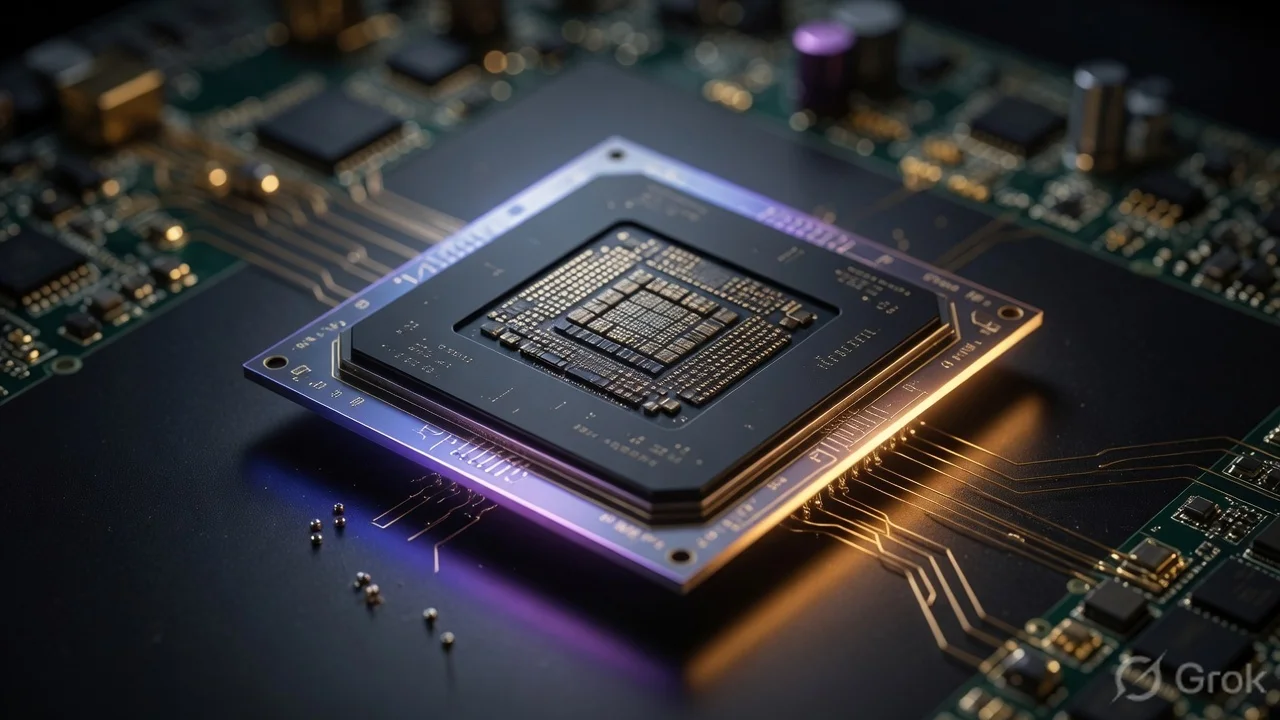
The timing couldn't be more challenging. Nvidia is preparing to launch its Rubin chip architecture, which is expected to be a significant upgrade from the current Hopper and Blackwell generations. However, this debut comes at a time when investors and regulators are questioning the sustainability of the AI boom and the financing structures supporting it.
What's particularly concerning is how Nvidia's business model has evolved. The company has been spending billions on developing AI infrastructure, partnerships, and ecosystem development. While this has helped cement its market dominance, it's also creating dependencies that could be problematic if the market cools down.
Details
Let's break down what's really happening here. Nvidia's recent financial performance has been nothing short of spectacular, with revenue growth exceeding 100% year-over-year at its peak. This growth was primarily driven by demand for its H100 and A100 GPUs, which became essential components for training large language models.
However, the company's strategy of pumping money back into the ecosystem has created some interesting dynamics. Nvidia has been investing heavily in AI startups, research institutions, and even competing technologies. This has led to questions about whether these investments are creating a circular economy where Nvidia funds companies that then buy Nvidia products.
The Rubin chip architecture, expected to launch later this year, is supposed to address some of these concerns. It's designed to be more efficient and cost-effective, potentially reducing the dependency on massive GPU clusters. But even with these improvements, the fundamental challenge remains: can Nvidia maintain its growth trajectory as the market matures?
From a technical perspective, Rubin represents a significant leap forward. It's expected to feature improved memory bandwidth, better power efficiency, and enhanced capabilities for mixed-precision computing. These improvements could help address some of the cost concerns that have been mounting in the AI community.
India Impact
This situation has significant implications for India's AI ecosystem. Indian startups, from Bengaluru to Hyderabad, have been heavily dependent on Nvidia's GPUs for their AI development. Companies like Fractal Analytics, Mu Sigma, and numerous AI startups have built their entire infrastructure around Nvidia's hardware.
The Indian government's AI mission, which has allocated thousands of crores for AI development, is also closely tied to Nvidia's ecosystem. Many of the initiatives under the IndiaAI Mission rely on Nvidia's technology stack, from research institutions to government AI projects.
What's particularly concerning for the Indian market is the potential for price increases. If Nvidia's growth slows and the company needs to maximize revenue from its existing customer base, we could see significant price hikes for GPUs and related services. This would be particularly painful for Indian companies that have been operating on tight budgets.
The Indian IT services giants - TCS, Infosys, Wipro - have also invested heavily in Nvidia technology for their AI offerings. Any slowdown in Nvidia's growth could impact their AI service lines and revenue projections.
Use Cases
Despite these challenges, the use cases for Nvidia's technology continue to expand. In healthcare, Indian hospitals are using Nvidia's platforms for medical imaging analysis and drug discovery. The agriculture sector is leveraging AI for crop monitoring and yield prediction, with companies like CropIn using Nvidia-powered solutions.
In the financial services sector, Indian banks and fintech companies are using Nvidia's technology for fraud detection, risk assessment, and algorithmic trading. Companies like HDFC Bank and ICICI Bank have been experimenting with AI solutions built on Nvidia's platforms.
The education sector is also seeing increased adoption, with platforms like Byju's and Unacademy exploring AI-powered personalized learning solutions. Many of these initiatives rely on Nvidia's infrastructure for training and inference.
For Indian developers and researchers, Nvidia's CUDA platform remains the de facto standard for GPU programming. This creates a significant barrier to entry for alternative solutions, further cementing Nvidia's position in the Indian market.
Honest Take
Here's my honest take on this situation: Nvidia is at a critical inflection point. The company has done an incredible job of building the AI ecosystem, but it's now facing the consequences of its own success.
The circular financing deals that are coming under scrutiny are not necessarily malicious - they're a natural outcome of a company trying to maintain its competitive advantage. But they do create risks for the broader market.
For India, this is both a challenge and an opportunity. The challenge is that many Indian companies are overly dependent on Nvidia's technology stack. The opportunity is that this situation could accelerate the development of indigenous AI solutions and alternative hardware platforms.
I believe we'll see more Indian companies exploring alternatives to Nvidia's technology, including partnerships with companies like AMD and Intel. The government's push for self-reliance in technology could also lead to increased investment in domestic AI chip development.
In the short term, though, Indian companies will likely have to ride out this uncertainty. The demand for AI capabilities is too strong to ignore, and Nvidia still offers the best performance-to-price ratio for most applications.
FAQs
Q: How will Nvidia's growth slowdown affect Indian AI startups?
A: Indian AI startups that are heavily dependent on Nvidia's GPUs could face higher costs and potential supply constraints. However, this might also accelerate innovation in alternative solutions and create opportunities for companies that can develop more efficient AI models.
Q: Is the Indian government considering alternatives to Nvidia for its AI mission?
A: While the government hasn't publicly announced any shift away from Nvidia, there are discussions about developing indigenous AI capabilities. The IndiaAI Mission has provisions for exploring alternative technologies, but any transition would take several years.
Q: Should Indian companies be worried about their Nvidia investments?
A: Companies should be prudent but not panic. Nvidia's technology is still the best available for most AI applications. However, diversifying AI infrastructure and exploring alternatives would be a wise long-term strategy.
Q: How does this affect the relationship between Indian IT companies and Nvidia?
A: The relationship remains strong, but Indian IT companies are likely to become more selective in their Nvidia investments. They may focus on specific use cases where Nvidia's performance advantage is most significant.
Q: What opportunities does this create for Indian chip companies?
A: This situation creates opportunities for Indian semiconductor companies to develop specialized AI chips or solutions tailored to Indian needs. Companies like SemiNex and other emerging players could benefit from increased interest in alternative AI hardware.





Comments (0)
Be the first to comment!