


Key Takeaways
- OpenAI is launching three new models—GPT-5.6 Sol, Terra, and Luna—globally this Thursday, July 9, 2026.
- The US Department of Commerce has officially cleared the broad rollout, ending months of regulatory speculation.
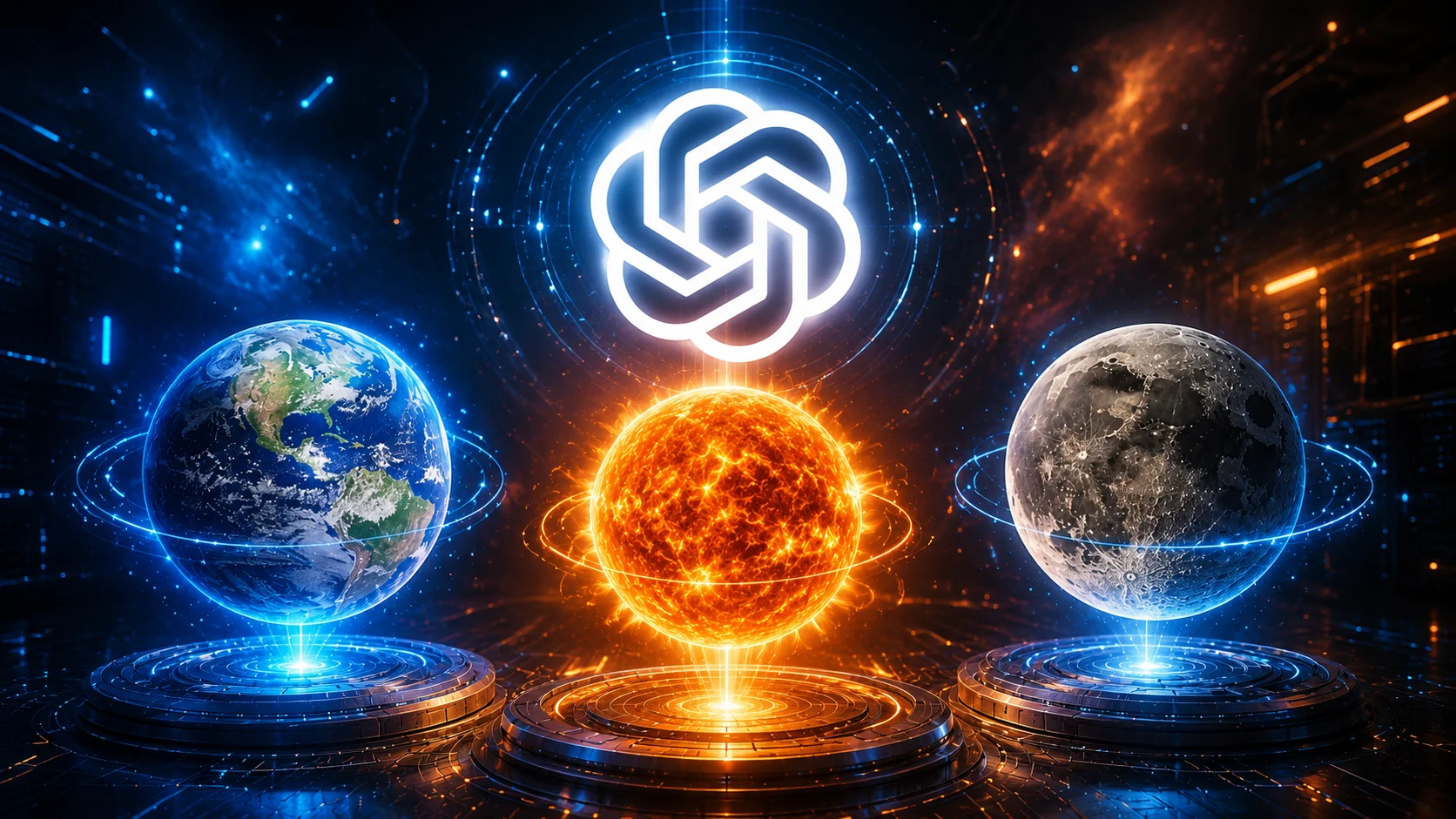
- GPT-5.6 Sol is the flagship, while Terra is optimized for mobile/edge devices and Luna focuses on ultra-low latency voice/video.
- In India, these models will be available via ChatGPT Plus for approximately ₹1,650/month and through API for developers.
The Wait is Finally Over: Thursday is the Day
So, here we are. After months of rumors, leaked benchmarks, and "coming soon" teasers, OpenAI has finally confirmed what we’ve all been waiting for. This Thursday, July 9, 2026, OpenAI is dropping not one, but three distinct AI models: GPT-5.6 Sol, Terra, and Luna. This isn't just a minor update or a 'point' release; this is a full-scale ecosystem shift. If you thought GPT-5 was impressive when it launched last year, wait until you see what the .6 iteration brings to the table.
What makes this announcement even more massive is the regulatory green light. For the past few months, there were rumors that the US government might restrict the export of high-reasoning models. However, our sources confirm that the US Department of Commerce has cleared a broad rollout. This means users in India, Europe, and Asia won't have to wait for weeks. We are getting it at the same time as the US. This is a huge win for Indian developers and tech enthusiasts who usually have to deal with staggered release dates.
Meet the Trio: Sol, Terra, and Luna
OpenAI is moving away from the 'one size fits all' approach. They realized that a model that can write a PhD thesis doesn't need to be the same one that helps you find a recipe on your phone. GPT-5.6 Sol is the 'Sun' of this system—it’s the massive, high-intelligence flagship model. It features a staggering 2-million-token context window. To put that in perspective, you could feed it ten 500-page novels at once, and it would remember every single character's eye color. It’s designed for complex coding, scientific research, and deep data analysis.
Then we have Terra. This is the one I'm most excited about for the Indian market. Terra is designed for 'Edge' computing. It’s small, efficient, and optimized to run on modern smartphones like the latest iPhone 17 or the Samsung S26 series. It doesn't need a constant, heavy internet connection to perform basic reasoning. For a country like India, where high-speed 5G can still be spotty in rural areas, an on-device model like Terra is a game-changer. It brings high-level AI to your pocket without the lag.
Finally, there's Luna. As the name suggests, it’s meant to be fast and always there. Luna is the specialist for real-time interaction. OpenAI has managed to bring the latency down to under 100 milliseconds. This means voice conversations with the AI will feel 100% natural, with no awkward pauses. If you’re using AI for real-time translation or as a personal tutor, Luna is the model that will be doing the heavy lifting. It’s essentially the engine behind the next generation of 'Advanced Voice Mode'.
The Commerce Department Clearance: Why It Matters
You might wonder why the US Department of Commerce is even involved. Well, in 2026, high-end AI models are considered 'dual-use technology'—they can be used for both good and bad. There were serious concerns that GPT-5.6's reasoning capabilities were so high they could be used for cyber-warfare. The fact that the Commerce Department cleared a 'broad rollout' suggests that OpenAI has implemented what they call 'Safety-First Architecture'.
This clearance is a massive relief for the global tech economy. If the US had restricted these models, we would have seen a fragmented AI world where different countries have access to different levels of intelligence. By clearing this, the US is allowing OpenAI to compete directly with open-source models that have been gaining ground in India and China. It’s a strategic move to keep the GPT ecosystem as the global standard.
India Impact: Pricing and Availability
Let's talk numbers. In India, ChatGPT Plus is currently priced at $20, which roughly translates to ₹1,650 per month including taxes. Starting Thursday, your Plus subscription will likely give you full access to GPT-5.6 Sol (with some usage caps) and unlimited access to Luna. Terra will likely be integrated into the mobile app as an 'Offline Mode' feature, though we’re still waiting for the final confirmation on that. For developers in Bengaluru, Hyderabad, and Chennai, the API pricing is expected to be about 20% cheaper than the initial GPT-5 launch, making it more accessible for Indian startups.
I think this is going to spark a massive wave of AI-integrated apps in India. Imagine a Swiggy or Zomato bot powered by Luna that can handle complex voice orders in Tamil, Hindi, or Telugu without any delay. Or an EdTech app using Sol to create personalized lesson plans for UPSC aspirants. The possibilities are endless, and the fact that we get it this Thursday is the cherry on top.
TamilTech’s Verdict: Should You Be Hyped?
Honestly? Yes. Usually, I tell people to wait for the reviews, but the jump from GPT-5 to 5.6 Sol seems substantial based on the early developer previews we've seen. The real star, however, isn't Sol—it's Terra. The ability to have that kind of intelligence on your device without relying on a server is the future. If you are a student, a coder, or just someone who uses AI to manage their daily life, this Thursday is going to be a turning point.
We will be doing a full live-stream on our YouTube channel as soon as the models go live on Thursday evening (IST). We’ll test the Tamil reasoning of Sol and the latency of Luna in real-time. Make sure you have your ChatGPT apps updated to the latest version by tomorrow night. This is going to be a wild ride!




Comments (0)
Be the first to comment!