


Key Takeaways
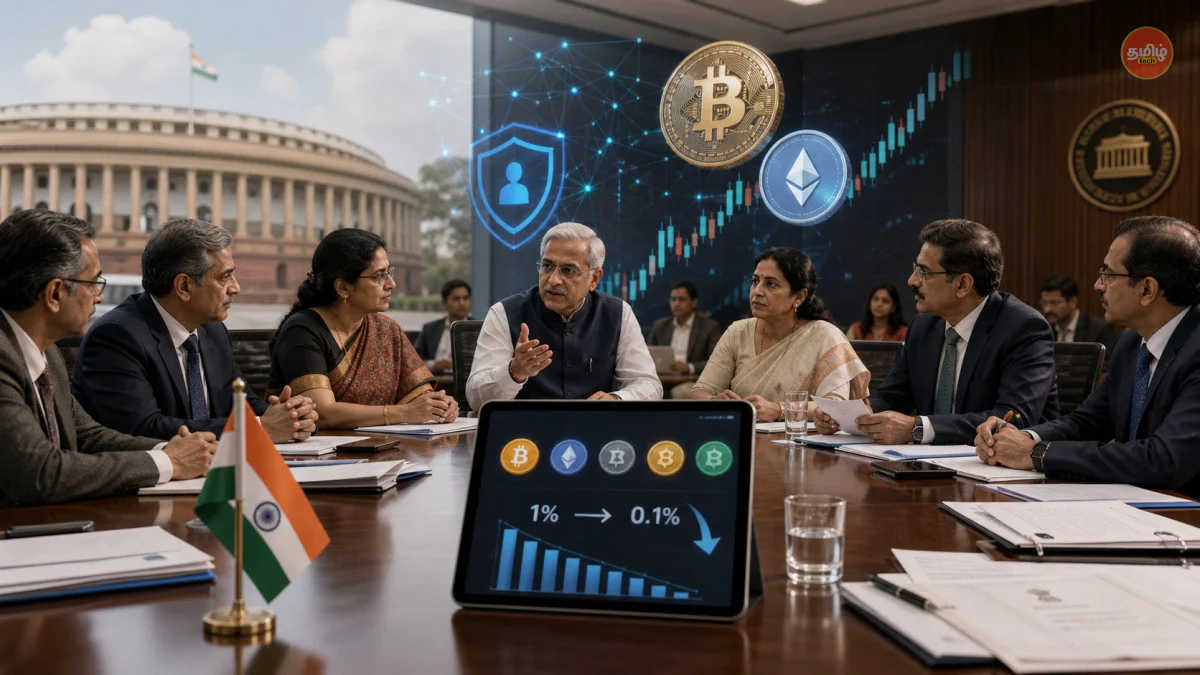
- The Parliamentary Panel recommends reducing the TDS on crypto transactions from 1% to 0.1% to boost market liquidity in 2026.
- Cryptocurrencies are proposed to be classified as 'Regulated Digital Assets' rather than currencies, putting them under SEBI's oversight.
- A new 'Investor Protection Fund' is suggested to compensate Indian users in case of exchange hacks or liquidations.
- The bottom line: While not a full legal tender, this move marks the first real step toward a formal, tax-friendly crypto framework in India.
The Long Wait is Finally Over
For the past four years, the Indian crypto community has been living in a state of 'regulatory limbo.' Since the 2022 tax laws were introduced, most of us have seen our portfolios stagnate, not just because of the market, but because of the heavy 30% tax and that frustrating 1% TDS. But as we sit here in July 2026, things are finally shifting. A high-level Parliamentary Panel has just submitted a groundbreaking report that could potentially end this deadlock. If these recommendations are accepted by the Finance Ministry, the way you buy, sell, and hold crypto in India is about to change forever. We’ve been tracking these developments closely at TamilTech, and it’s clear that the government is finally moving away from a 'ban' mindset toward a 'regulate' mindset.
So, what exactly happened? The panel, consisting of experts across finance and technology, realized that the current tax structure was simply pushing Indian money to offshore exchanges. Instead of stopping crypto, the 2022 rules just made it harder for the government to track it. This new 2026 report acknowledges that blockchain technology is here to stay and that India needs a slice of the Web3 pie. It’s a massive U-turn from the days when crypto was compared to gambling. We aren't just talking about a few tweaks here; we are talking about a complete overhaul of how Digital Virtual Assets (VDAs) are treated under Indian law.
The History of the Deadlock: How We Got Here
To understand why this 2026 report is a big deal, we have to look back at the mess that was 2022-2025. Back in 2022, the government introduced a flat 30% tax on gains with no option to offset losses. To make matters worse, the 1% TDS (Tax Deducted at Source) on every single trade killed high-frequency trading. Indian exchanges like WazirX and CoinDCX saw their volumes drop by over 90%. Many Indian developers and startups packed their bags and moved to Dubai or Singapore. For the last two years, the RBI and the Finance Ministry have been at loggerheads—the RBI wanted a total ban, while the Ministry wanted to tax it without officially recognizing it.
This deadlock created a 'grey market' where people started using P2P (Peer-to-Peer) platforms and international DEXs (Decentralized Exchanges) to avoid the 1% TDS. This meant the government lost out on tax revenue and data. The Parliamentary Panel’s latest move is a pragmatic response to this failure. They’ve realized that you can’t ban a decentralized protocol; you can only bring it into the light. By mid-2026, the pressure from the G20 framework on crypto regulation has also forced India’s hand to align with global standards. It's no longer just about India; it's about how we fit into the global digital economy.
Breaking Down the Big Recommendations
The meat of the report lies in three major areas: Taxation, Classification, and Oversight. First, let’s talk about the 1% TDS. This has been the biggest pain point for Indian traders. The panel has recommended slashing this to 0.1%. Why does this matter? Because at 1%, your capital gets locked up after just 100 trades. At 0.1%, liquidity returns to the market, and professional traders can finally come back to Indian platforms. This single move could revive the domestic exchange ecosystem overnight. If you’ve been holding off on trading because of the tax friction, this is the news you’ve been waiting for.
Next is the classification. For years, there was confusion: is it a currency? Is it a commodity? The panel suggests labeling them as 'Regulated Digital Assets.' This means you can’t use Bitcoin to buy a chai at a local shop (sorry, no crypto-UPI yet), but you can trade it like a stock or a bond. By calling it an asset, they bring it under the purview of SEBI (Securities and Exchange Board of India). This is huge because SEBI has decades of experience in protecting retail investors. Unlike the unregulated Wild West we’ve seen so far, having a regulator means clear rules on listings, disclosures, and even advertisements.
The India Impact: What Happens to Your Wallet?
If these recommendations become law in the upcoming session, the impact on the average Indian investor will be immediate. First, expect the 'India Premium' or 'India Discount' on prices to stabilize. Currently, because liquidity is low, prices on Indian exchanges often differ from global rates. With the TDS reduction, we will see more parity with global markets like Binance or Coinbase. You’ll also likely see a surge in new features on apps like CoinSwitch or CoinDCX—think SIPs in crypto, better lending products, and even crypto-backed insurance policies.
Speaking of insurance, the panel has proposed a 'Consumer Redressal Mechanism.' If an exchange gets hacked—something we've seen happen globally—there would be a mandatory insurance pool to compensate users. This is similar to how your bank deposits are insured up to ₹5 lakh. For the first time, an Indian crypto user won’t be left high and dry if a platform fails. This builds immense trust for the older generation of investors who have stayed away from crypto due to the perceived 'scam' factor. We expect a lot of 'new money' to enter the market in the latter half of 2026 once these protections are in place.
TamilTech’s Honest Take: Is it Time to Buy?
Here’s what we think at TamilTech. This report is the most positive signal we’ve seen in years, but it’s not a green light to go 'all-in' just yet. While the recommendations are great, they still need to be passed in Parliament and signed into law. We’ve seen many reports gather dust on shelves before. However, the tone this time is different. The government needs the tax revenue, and they need the tech talent to stay in India. The reduction of TDS to 0.1% is the 'litmus test'—if that happens, the bull market in India truly begins.
What should you do? If you are a long-term holder (HODLer), this news is fantastic because it reduces the 'regulatory risk' of your assets being frozen or banned. If you are a trader, keep an eye on the next Parliament session. Don't move all your funds back to Indian exchanges just yet, but start keeping your KYC updated. We believe that by the end of 2026, India will have one of the most sophisticated crypto regulatory frameworks in Asia. It won't be a tax-free paradise, but it will be a safe, legal, and functional market. Stay tuned to TamilTech, and we’ll let you know the moment the official notification drops!
Frequently Asked Questions
Q: Will the 30% tax on crypto profits go away?
A: Unfortunately, the panel has focused more on the 1% TDS and regulation. While there are whispers about moving to a slab-based tax system, the 30% tax on gains is likely to stay for now, though you might be able to offset losses in the future.
Q: Can I use Bitcoin for UPI payments now?
A: No. The panel specifically recommends against using crypto as a payment currency. It will be treated as an investment asset, similar to gold or stocks.
Q: Is it safe to use Indian exchanges now?
A: It is safer than before, but we recommend waiting for the formal 'Investor Protection Fund' to be established before keeping large amounts of life savings on any single exchange.





Comments (0)
Be the first to comment!