


Key Takeaways
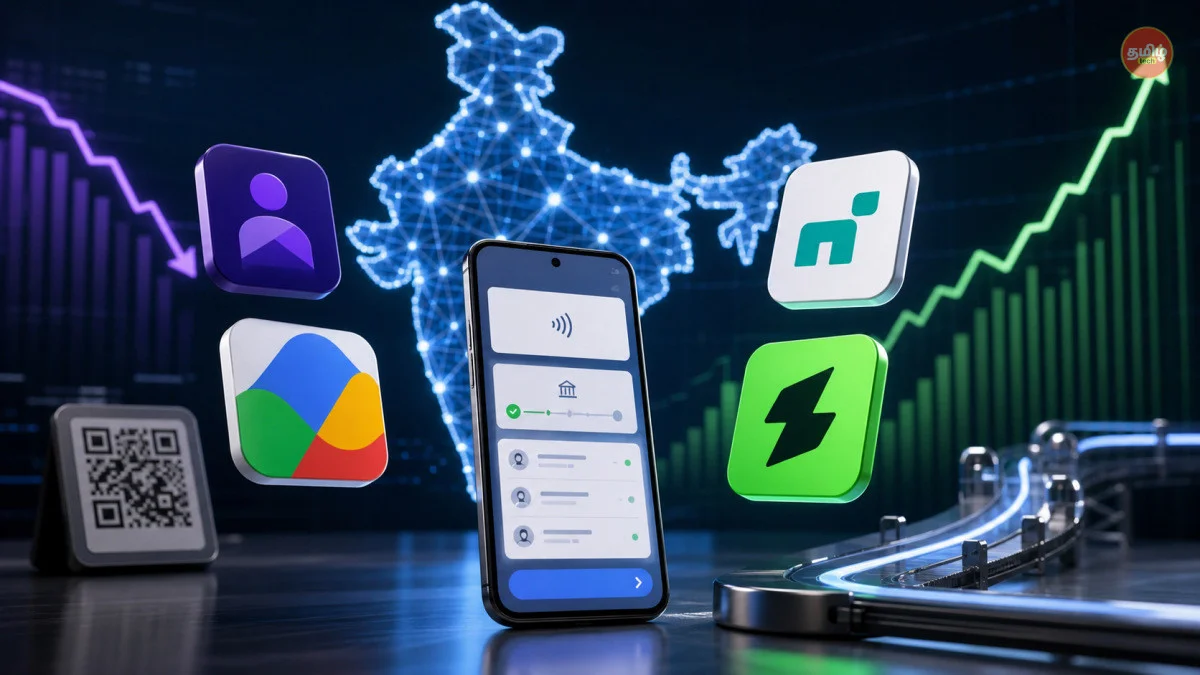
- PhonePe and Google Pay's combined market share dipped below 82% in June 2026, marking a slow but steady decline from their previous 85%+ dominance.
- Navi, led by Sachin Bansal, has broken into the top 5 UPI apps by transaction volume, leveraging its integrated personal loan and insurance ecosystem.
- The newcomer super.money has recorded a staggering 40% month-on-month growth in June 2026, driven by aggressive cashback rewards and a simplified UI.
- NPCI's 30% market cap mandate is finally influencing the market as the regulator encourages users to diversify their payment app choices to ensure systemic stability.
The UPI Game is Changing in 2026
For the longest time, whenever we thought of UPI in India, only two names came to mind: PhonePe and Google Pay. They were like the Coke and Pepsi of the Indian fintech world. But as we step into the middle of 2026, the data for June shows that the ground is shifting. While these two giants are still very much the leaders, their iron grip on the market is starting to show some cracks. It’s not that people are stopping their use of UPI—in fact, total transaction volumes are at an all-time high—but users are finally starting to look elsewhere. We are seeing a real diversification in the apps people use for their daily chai-samosa payments and big-ticket transfers.
This shift isn't accidental. It’s the result of a perfectly timed combination of aggressive new players, better incentive structures, and a regulatory push from the National Payments Corporation of India (NPCI). We’ve been tracking this trend for a few months now, and June 2026 seems to be the tipping point. Newer apps aren't just copy-pasting what the big guys did; they are offering something genuinely different. Whether it's better credit integration or a cleaner, ad-free experience, the Indian user is finally being spoiled for choice again, reminiscent of the early 2018-19 days when UPI was just taking off.
How the Duopoly Started to Slip
To understand why PhonePe and Google Pay are slipping, we have to look at their current state. Over the last two years, both apps have become incredibly cluttered. What started as simple payment apps have turned into 'super apps' filled with insurance ads, stock broking, gold investments, and endless notifications. For many users, the simple act of scanning a QR code now takes more clicks or involves dodging three different pop-up banners. This 'app fatigue' is real. When an app becomes too heavy, users naturally look for faster, leaner alternatives that just get the job done without the extra noise.
In June 2026, PhonePe’s market share by volume hovered around 47%, while Google Pay sat at roughly 34%. While these numbers sound massive, they are a notable drop from where they were a year ago. The 'others' category is finally growing. This is exactly what the NPCI wanted. For years, the regulator has been worried about 'concentration risk'—the idea that if one of these two apps has a technical glitch, half of India’s economy could come to a standstill. By subtly pushing for a 30% cap on market share, the NPCI has created a window of opportunity for smaller players to step in and grab a piece of the pie.
The Rise of Navi and super.money
The biggest surprise of June 2026 has been Navi. Sachin Bansal’s fintech venture has played a very clever game. Instead of just being another UPI app, Navi has integrated UPI deep into its lending platform. When you use Navi for UPI, you aren't just making a payment; you are building a credit profile that gives you instant access to personal loans and health insurance at better rates. This 'UPI-first' approach to credit has resonated deeply with the middle-class Indian demographic. In June alone, Navi saw a massive surge in users who are tired of traditional banks and want their payment app to actually help them financially.
Then there’s super.money. Backed by the Flipkart ecosystem, this app has been the 'dark horse' of 2026. Their strategy is simple: 'Real Rewards.' While Google Pay has mostly moved to 'Better luck next time' or useless discount vouchers for brands you’ve never heard of, super.money has been giving actual, usable cashback. Their UI is also incredibly fast. In our testing, the time it takes from opening the app to completing a transaction is nearly 1.5 seconds faster on super.money compared to the older giants. In the world of quick payments, that second feels like an eternity, and users are noticing. Their 40% growth in a single month is proof that if you give users a fast app and real money back, they will switch.
What This Means for You (The India Impact)
So, what does this mean for the average Indian consumer? First, expect more 'offers' to come back. When competition heats up, the user wins. PhonePe and Google Pay aren't going to sit back and watch their market share vanish. We expect them to launch new loyalty programs or simplify their interfaces soon to win back the crowd. Secondly, this is a great time to explore 'Credit on UPI.' Apps like Navi and even CRED are making it much easier to link your Rupay credit cards or take 'bite-sized' loans directly through the UPI interface. This is changing how we manage our monthly budgets—you don't need a physical credit card anymore; your UPI app is your credit line.
However, there is a flip side. With more apps comes more fragmentation. You might find yourself with four different UPI IDs across four different apps. Our advice? Don't delete your primary app just yet, but definitely keep a second 'lite' app like Navi or super.money for those times when the main servers are crowded or when you want a cleaner experience. Also, always check which app is giving the best cashback for big transactions like electricity bills or insurance premiums. The days of being loyal to just one payment app are officially over in 2026.
Our Honest Take: Is the Change Good?
At TamilTech, we think this is the best thing to happen to the Indian fintech scene in years. Monopolies or duopolies lead to stagnation. When only two companies rule, they stop innovating and start monetizing you through ads and convenience fees. The rise of Navi and super.money is a wake-up call. It proves that the Indian market is still open for innovation. We love the speed of the newer apps, but we also caution our viewers to stay safe. When switching to a new app, ensure it’s a verified, NPCI-approved platform. Stick to the big names that have a solid reputation behind them.
Looking ahead, we expect the market to stabilize with about 4-5 strong players, each holding 15-20% share. This would be the 'Goldilocks zone' for India—enough competition to keep things cheap and fast, but enough scale to keep the system stable. If you haven't tried a new UPI app in the last six months, June’s data suggests you might be missing out on a much smoother experience. Give them a shot, see which UI fits your style, and don't be afraid to switch. After all, it's your money, and you should use the app that treats it (and your time) the best.

Comments (0)
Be the first to comment!