


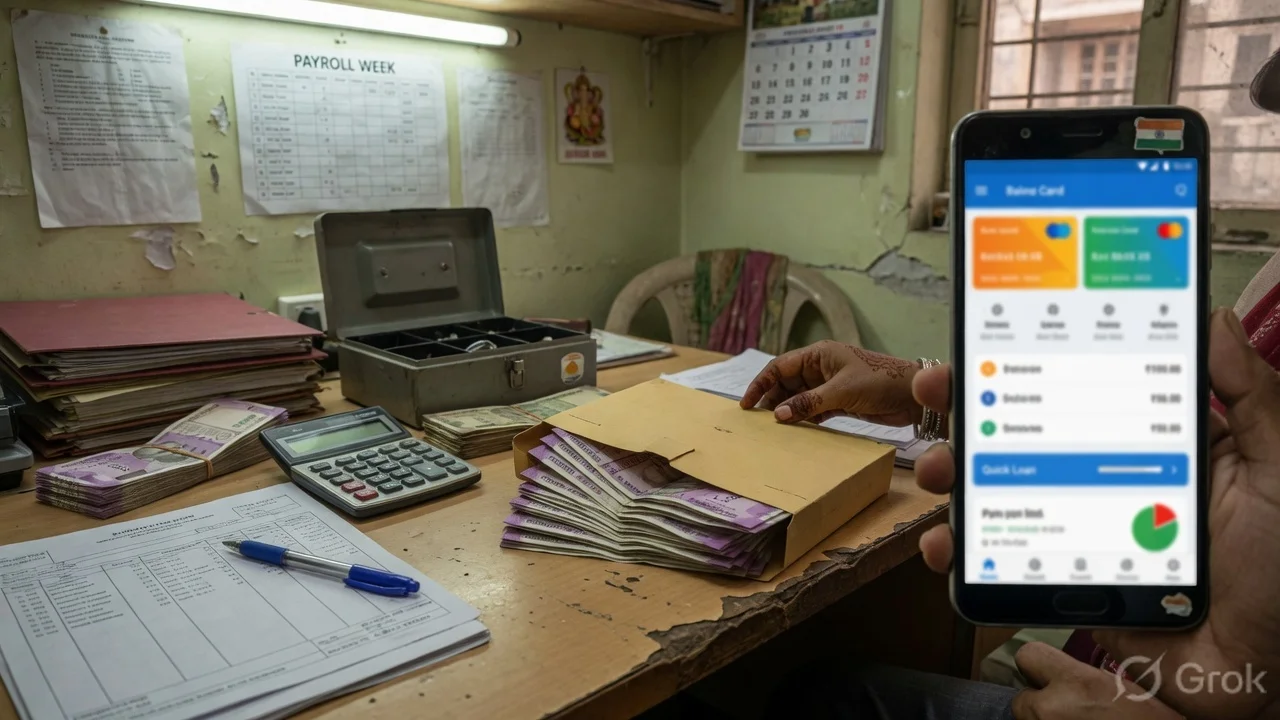
Key Takeaways
- Fund My Staff allows employees to access low-interest loans ranging from ₹10,000 to ₹5,00,000 with their employer acting as a guarantor.
- Interest rates are expected to be 30-40% lower than traditional unsecured personal loans because the risk is mitigated by the company.
- The platform integrates directly with company payroll systems for automated EMI deductions, ensuring a near-zero default rate for lenders.
- This is Ashneer Grover’s major 2026 pivot under his 'Third Unicorn' umbrella, targeting India's massive MSME workforce.
The Return of the Shark: What is Fund My Staff?
Ashneer Grover is a name that needs no introduction in the Indian startup ecosystem. Whether you know him from his BharatPe days or his blunt honesty on Shark Tank India, the man knows how to disrupt the fintech space. Today, on July 24, 2026, he has officially pulled the curtains back on his latest venture: Fund My Staff. This isn't just another lending app; it is a B2B2C (Business-to-Business-to-Consumer) platform that changes how an average Indian employee borrows money. In a market where personal loan interest rates are skyrocketing, Grover is betting on the 'trust' between an employer and an employee to bring those rates down.
The concept is simple but powerful. Instead of you going to a bank and showing 50 documents to prove you can pay back a loan, your company 'vouches' for you. Fund My Staff partners with companies—ranging from small startups to large manufacturing units—and offers credit lines to their staff. Because the employer is involved, the risk for the lending partner (NBFCs) drops significantly. This isn't just about money; it's about building a financial safety net for the millions of blue-collar and white-collar workers who are often ignored by traditional banks due to a lack of a high credit score.
How the Technology Works Behind the Scenes
We took a deep dive into the platform's architecture, and it's quite sophisticated for 2026 standards. Fund My Staff uses a proprietary API that plugs directly into a company's HRMS (Human Resource Management System) like Darwinbox or Zoho People. When an employee applies for a loan on the app, the system automatically verifies their tenure, salary history, and upcoming pay cycles. There is no manual paperwork involved. The KYC is completed in under 2 minutes using the latest Aadhaar-linked face-matching tech that has become the industry standard this year.
The real magic happens at the repayment stage. Unlike traditional apps where you have to set up an e-mandate and hope you have enough balance in your bank account, Fund My Staff uses a 'Salary Deduction' model. The EMI is deducted by the employer before the salary hits the employee's account. This 'source-deduction' makes it a very safe bet for lenders, allowing them to offer interest rates as low as 9% to 11% per annum, compared to the 18% to 24% usually seen on other instant loan apps. For a worker earning ₹25,000 a month, this difference in interest is a huge deal for their monthly budget.
The 2026 Indian Fintech Landscape and Why This Matters
Why now? As of July 2026, the Reserve Bank of India (RBI) has tightened the screws on 'unsecured' digital lending. Many popular apps that were thriving in 2024 and 2025 have struggled because they didn't have a solid recovery mechanism. Ashneer Grover has identified this gap perfectly. By making the loan 'employer-backed,' he has essentially created a new category of 'semi-secured' loans. This fits perfectly within the new regulatory framework while providing much-needed liquidity to the Indian middle class.
In India, we have over 63 million MSMEs (Micro, Small, and Medium Enterprises). Most of these businesses want to help their employees during emergencies—like a medical crisis or a child's school fees—but they don't always have the cash flow to give out 'salary advances' from their own pockets. Fund My Staff solves this problem for the business owner too. They can offer financial help as a 'perk' to their employees without actually spending their own capital. It’s a win-win situation that we think will see massive adoption in industrial hubs like Chennai, Pune, and Gurgaon.
How to Use Fund My Staff: A Step-by-Step Guide
If you are an employee or a business owner wondering how to get started, here is the breakdown. First, the employer needs to sign up on the Fund My Staff corporate portal. They upload their basic business registration and GST details. Once approved, the employer gets a unique 'Company Code.' They then share this code with their employees. The employee downloads the Fund My Staff app, enters the code, and their profile is automatically linked to their workplace. It’s that seamless.
Once linked, the employee can see their 'Eligible Credit Limit,' which is usually 2x to 3x of their monthly take-home salary. If they need funds, they just select the amount, choose a tenure (usually 3 to 12 months), and click 'Apply.' The funds are disbursed into their registered bank account within 15 minutes. The app also features a financial wellness dashboard that helps users track their spending and gives them tips on how to improve their overall financial health, which is a nice touch for a lending app.
TamilTech’s Honest Take: Pros, Cons, and What to Watch Out For
Look, we’ve seen Ashneer Grover launch many things—some worked, some didn't. But Fund My Staff feels like a return to his core strength: solving a massive credit problem with a scalable tech solution. The biggest 'Pro' here is definitely the interest rate. Getting a loan at 10% without collateral in 2026 is almost unheard of for most people. Also, the fact that it helps build a credit score is a huge plus for younger employees who are just starting their careers.
However, there are some 'Cons' to consider. The biggest risk is the 'Employer Lock-in.' If an employee gets a loan through this platform and then wants to quit their job, things could get complicated. The platform likely has clauses where the full remaining balance becomes due immediately upon resignation, or the final settlement (Full & Final) is used to clear the debt. This might make some employees feel 'trapped' in a job they don't like just because they have an active loan. We suggest users read the fine print very carefully regarding job transitions before signing up. Overall, though, this is a bold move that could finally make 'Salary Advances' a thing of the past and bring organized credit to the masses.






Comments (0)
Be the first to comment!