


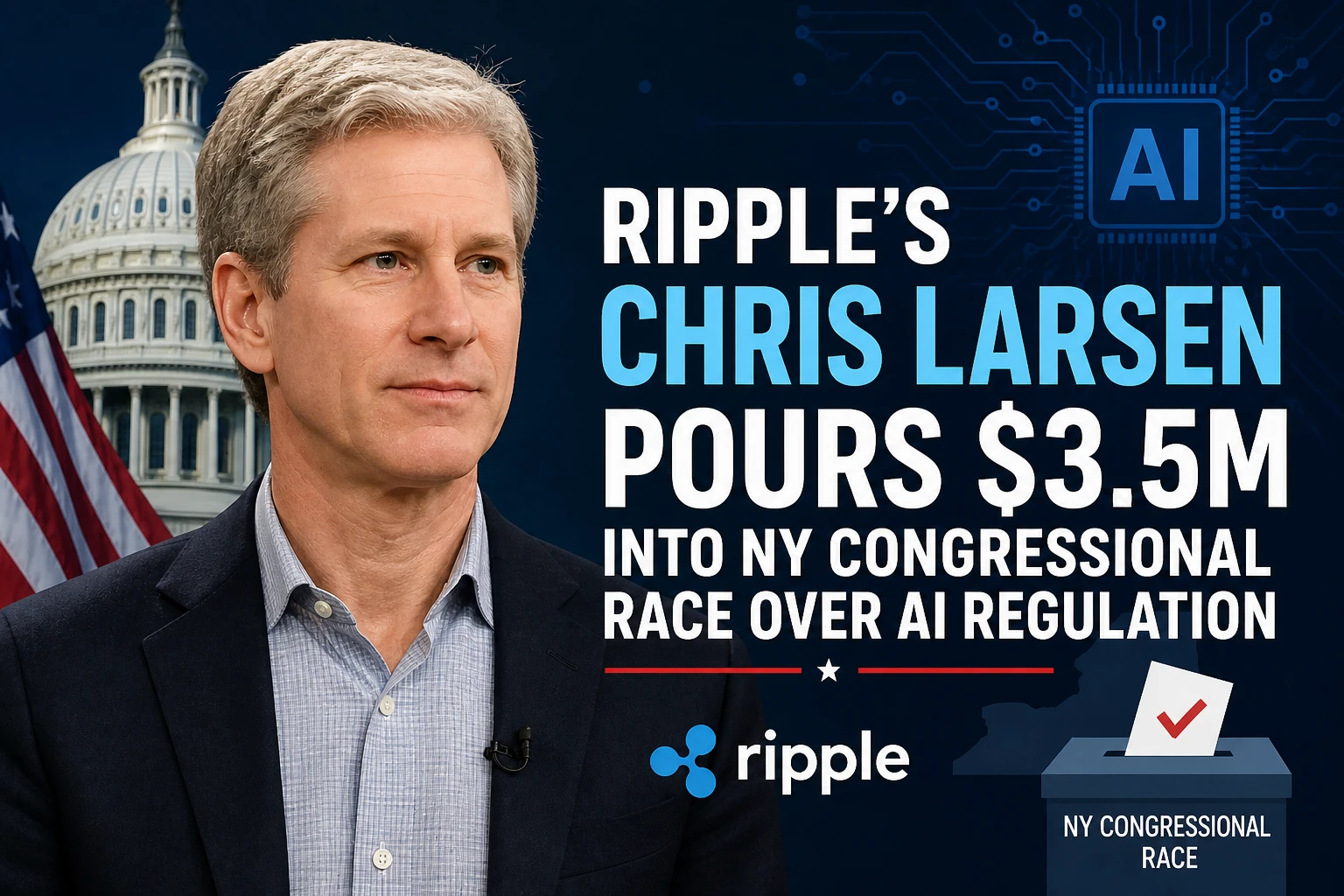
What’s happening?
Chris Larsen, co‑founder of Ripple Labs and a long‑time crypto investor, has just announced a $3.5 million contribution to the campaign of Alex Bores, a Democrat running for New York’s 3rd congressional district. The cash isn’t just charity – it’s a strategic play in the emerging battle over AI regulation that could shape how the US, and by extension India, handle the next wave of generative‑AI services.
Why Alex Bores?
Bores, a former senior adviser at the Office of Science and Technology Policy, has positioned himself as a moderate who wants clear, industry‑friendly AI rules. He’s been vocal about avoiding heavy‑handed bans and instead pushing for a “sandbox” approach that lets innovators test AI while a regulatory framework evolves. That stance puts him at odds with a growing progressive bloc that wants stricter oversight after recent AI‑related scandals.
How the money is being used
The $3.5 M will fund a mix of traditional TV spots, digital ads, and a ground‑game operation targeting tech‑savvy voters in Brooklyn, Queens and Long Island. A big chunk is earmarked for a series of webinars where Bores will host AI experts – from Stanford researchers to Indian AI startup founders – to discuss responsible AI development.
What’s in it for Ripple?
Larsen’s move is less about a single congressional seat and more about setting a precedent. If Bores wins, he could become a key voice in the House Committee on Energy and Commerce, which will draft the first federal AI bill. Ripple, which recently faced a $1.2 billion lawsuit from the SEC, is desperate for a regulatory environment that treats digital assets and AI as complementary, not adversarial.
India angle – why our readers should care
India is on the cusp of its own AI regulatory framework. The Ministry of Electronics and Information Technology (MeitY) released a draft AI policy in early 2024, but the final rules are still pending. A US law that leans toward a light‑touch, innovation‑first model could influence Indian policymakers, especially given the close trade ties and the fact that many Indian AI startups rely on US cloud providers.
For Indian developers, a US‑friendly AI regime means easier access to APIs from OpenAI, Anthropic and other players that operate under American jurisdiction. It also opens doors for Indian firms to partner with US fintechs that are experimenting with AI‑driven payments – an area where Ripple is already making moves with its XRP Ledger.
TamilTech’s take
We think this is a classic case of "policy‑by‑money" that could have ripple effects (pun intended) far beyond New York. If Bores secures the seat, we might see a bipartisan push for AI sandboxes that let startups test models without fearing immediate litigation. That would be a boon for Indian tech companies looking to scale globally.
On the flip side, the injection of big‑money into a single race raises concerns about democratic fairness. The AI debate is too important to be decided by a handful of donors, no matter how well‑meaning they are.
What could happen next?
- Watch the House Intelligence Committee hearings on AI – Bores will likely be a vocal participant.
- Monitor Ripple’s lobbying filings; they may start filing more AI‑related positions.
- Indian startups should prep for potential US‑style sandbox participation – think about compliance, data‑localisation, and cross‑border payments.
Bottom line
Chris Larsen’s $3.5 M isn’t just campaign cash – it’s a signal that the crypto world wants a seat at the AI policy table. For Indian tech enthusiasts, the outcome could indirectly shape the kind of AI rules we adopt at home. Keep an eye on the New York race; it might just be the first front‑line of a global regulatory showdown.



Comments (0)
Be the first to comment!