


Key Takeaways
- Digital-first fashion brand Theater has raised Rs 56.25 crore in its Series A round, led by Niveshaay, valuing the company at Rs 400 crore.
- This comes after two strong fiscal years of growth, proving that niche Indian fashion brands can pull in institutional funding.
- FirstPort Capital, Skagen Ventures, and other investors joined Niveshaay in backing the company.
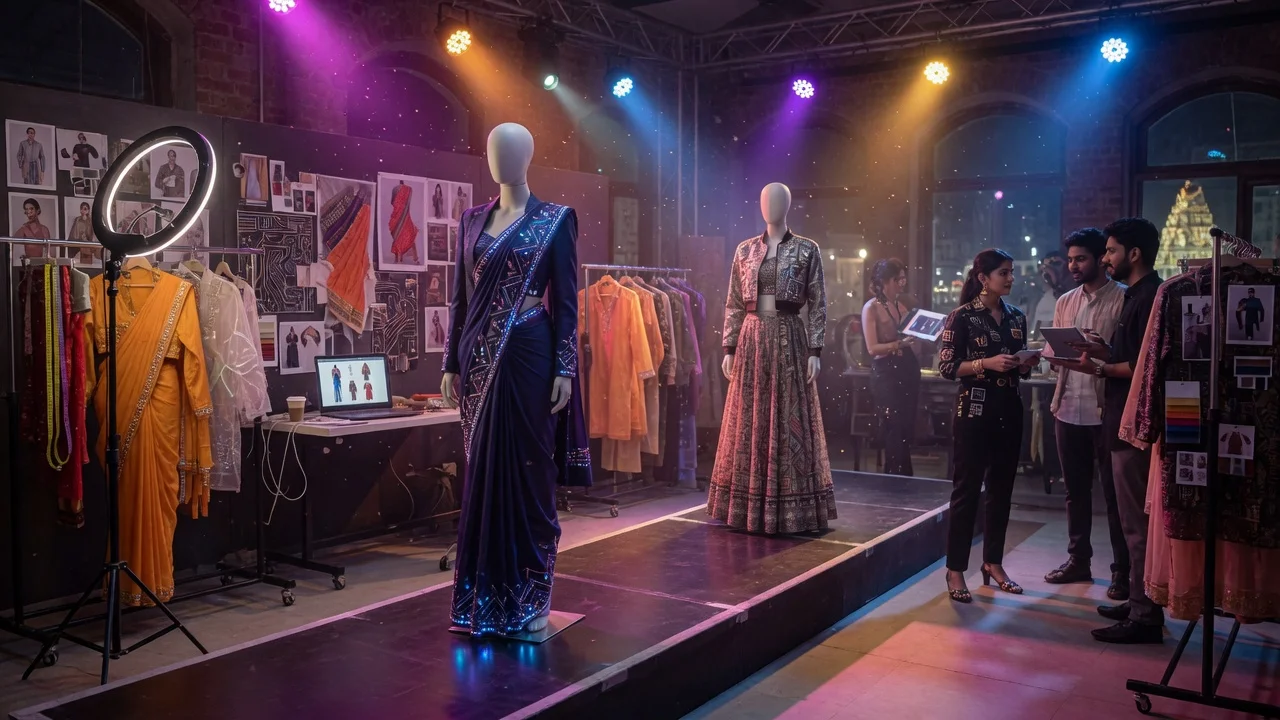
- Theater operates as a community-centric, digital-native fashion platform rather than a traditional e-commerce store.
- For the Indian ecosystem, this deal sharpens the playbook for lean, high-margin consumer startups outside of SaaS.
What's the news
The Indian consumer-tech scene has been hungry for the next great fashion story, and Theater has delivered. The digital-first brand has closed a Rs 56.25 crore Series A round at a Rs 400 crore valuation, according to publicly available data. The round was led by Niveshaay, with participation from FirstPort Capital, Skagen Ventures, and a handful of other domestic and international backers.
What makes this noteworthy is not just the sum, but the timing and the signal it sends. Fashion is a notoriously sticky space in India, where consumers still value celebrity endorsements and deep discounting. Theater, however, has carved out a different path. It has focused on a specific audience, built a loyal community, and used digital-native tactics to drive organic growth. Over the past two fiscal years, the company has demonstrated that it can grow revenue while keeping burn in check, and that combination is exactly what Series A investors look for in 2026.
This is not a brand that inflated its numbers to chase hype. The Rs 56.25 crore raise suggests institutional investors have stress-tested Theater's unit economics. Niveshaay, as lead, has placed a bet that the brand's loyal following can scale without losing exclusivity. That thesis is particularly compelling in a market where venture capital has become selective about consumer plays.
Details
Let us break down the mechanics of this deal. A Rs 56.25 crore injection at a Rs 400 crore post-money valuation means the investors are pricing in a specific revenue and growth trajectory. For an Indian fashion startup, this is a strong signal that the round was not priced purely on top-line momentum but on a path toward sustainable growth. Niveshaay's presence as lead suggests due diligence was rigorous and possibly hands-on.
The participation by FirstPort Capital adds another layer. FirstPort has a track record of backing indie-tech and consumer startups that prioritize creative independence and long-term brand building. Their involvement implies Theater's founders are being given room to iterate on product, marketing, and community programs without an immediate pivot to mass-market mediocrity.
Skagen Ventures, a firm with global exposure, brings a cross-market perspective. This could help Theater wire protocols for international shipping, benchmark inventory turnover against global players, and potentially explore supply-chain innovations like smaller, hyper-local fulfillment centers. For an Indian fashion label, global visibility without massive offline infrastructure is the dream.
Theater's operational model also deserves attention. The company is not a typical marketplace or influencer-tag shop. It appears to function as a vertically integrated digital fashion house: product ideation, design, limited drops, community feedback loops, and direct-to-consumer fulfillment. In a country where return rates and sizing friction are major pain points, Theater's ability to maintain growth suggests it has solved enough of those problems to earn repeat purchases.
On the tech side, the brand likely leverages AI-driven personalization, trend forecasting, and region-aware marketing. As India's internet user base grows deeper into Tier-2 and Tier-3 cities in 2026, brands that can speak local languages and style cues while keeping a consistent national identity will win. Theater seems to be playing that middle ground, which explains why investors see recent traction as replicable across metros and beyond.
India impact
For the Indian startup ecosystem, Theater's Series A is a small but meaningful validation. For years, the venture playbook in India has leaned heavily toward SaaS, ad-tech, and B2B infrastructure. Consumer retail, especially direct-to-consumer fashion, has often been seen as a high-CAC, low-margin grind. Theater is quietly challenging that narrative by showing that a digitally native, community-led consumer brand can raise serious capital at a robust valuation.
This impacts several stakeholders. For designers and creators in India, it opens the door to treating fashion as a tech startup rather than a seasonal job. For investors, it refreshes the category thesis: niche, aesthetically cohesive brands with low overhead deserve Series A scrutiny. For competitors, it raises the bar. Expect to see faster delivery timelines, better return windows, and more transparent sizing guides across digital-only labels.
On a macroeconomic note, this deal is a reminder that 2026 India is still a frontier market for fashion-tech experimentation. UPI-first payments, low logistics partnerships, and regional social media strategies are lowering entry costs. Theater has apparently capitalized on this, which is why the growth story feels credible even without massive offline marketing spend.
There is also a cultural dimension. Indian fashion has long been dominated by legacy conglomerates and e-commerce giants. A Series A-valued startup with a distinct aesthetic proves that the country's digital transition is creating new cultural icons, not just transactional platforms. That is the sort of story that inspires the next wave of founders to build with identity, not just inventory.
Use cases
If you are a founder trying to decode this deal, here is how to map Theater's playbook to your own venture:
First, anchor your identity in community, not just catalogs. Theater's growth suggests that a loyal audience is worth more than a thousand SKUs. Build content, engage micro-communities, and let product drops feel like events. When people feel part of a circle, they spend more and forgive mistakes.
Second, engineer your tech stack for elasticity. Theater's Series A likely funds enhancements to its recommendation engine, inventory forecasting, and low-cost fulfillment. For a fashion brand, every rupee spent on customer acquisition must return through repeat purchases. Technology should reduce friction, not add it.
Third, keep the balance sheet patient. Rs 56.25 crore is enough to run a disciplined two-year runway, hire senior talent, and expand to Tier-2 and Tier-3 cities. The key is to use the Series A to strengthen supply-chain moats and data assets, not just marketing spend.
Fourth, think about data as a asset class. In 2026, a fashion brand's real IP is often its customer dataset. Theater can use its funding to build data infrastructure that predicts trends, personalizes size recommendations, and customizes communication in regional languages. That creates a defensible edge against generic marketplaces.
Finally, consider partnership models. Theater could leverage part of the capital to formalize B2B supply agreements, white-label collaborations, or even a creator marketplace. A Series A is the right time to explore adjacent revenue without diluting the core consumer brand.
Honest take
Let us cut through the noise. Rs 56.25 crore at a Rs 400 crore valuation is an attractive deal for a fashion startup in India, but it does not erase the risks. The digital fashion space is crowded, and copycat brands are launched every week with modest budgets and decent aesthetics.
Theater's edge has been its ability to grow organically and keep unit economics healthy, but consumer trends shift quickly. A style that appeals to 22-year-olds today may be forgotten tomorrow. If Theater cannot diversify its product pillars or push deeper into lifestyle beyond apparel, the brand risks fatigue. Niveshaay and FirstPort Capital are betting that Theater has found an aesthetic niche with staying power, and that is a reasonable thesis. However, in a market as volatile as fashion, durability beats flash.
Another concern is the burn-rate reality. A Series A at Rs 400 crore is a heavy burden for a consumer brand. If Theater cannot pivot to a profitable model within two years, it will face pressure to raise on more dilutive terms. The honest test ahead is execution: can the company maintain its community voice at scale, negotiate better supplier rates, and keep its customer acquisition costs within healthy bounds?
What we can say is that Theater has entered a crucial phase. The funding gives it room to experiment, hire, and expand, but the brand must prove it is not just a product launch operation. It needs to become an institution in its niche. If it does, this Series A will look like a bargain in hindsight. If it does not, the next funding round could be a stress test.
That is the cold truth of Series A funding in 2026: capital buys runway, but it cannot buy taste or timing. Theater has the money. Now it has to run.




Comments (0)
Be the first to comment!