


Key Takeaways
- The US government has implemented new export controls in June 2026, specifically targeting high-reasoning AI models like Anthropic's Claude 4.5 and 5.
- Indian AI startups currently rely on US-based APIs for over 80% of their complex reasoning tasks, making them vulnerable to policy shifts in Washington.
- The restriction focuses on 'model weights' and high-compute exports to countries not part of the primary US-AI trade bloc.
- India's ₹10,372 crore IndiaAI Mission is now pivoting faster toward building local sovereign compute and indigenous foundational models to reduce dependency.
The 2026 AI Geopolitics Shift
It is June 2026, and the honeymoon phase of global AI collaboration seems to be hitting a rough patch. For the past two years, Indian developers have been building world-class apps using Anthropic's Claude and OpenAI's GPT models. But this week, the US Department of Commerce dropped a bombshell. They have introduced a new layer of export controls that specifically target 'frontier-tier' AI models. This means companies like Anthropic now need special licenses to provide high-level API access or share model architectures with several countries, and India finds itself in a complicated middle ground. This isn't just about software; it's about who controls the 'intelligence' that runs our modern world.
We have seen this coming, but the speed of the implementation has caught many Bengaluru-based startups off guard. The core of the issue is that the US wants to ensure that the most powerful AI—the kind that can design chips or simulate biological agents—doesn't fall into the wrong hands. While India is a strategic partner, the blanket nature of these controls means that Indian companies might face higher latency, restricted features, or even total service pauses if diplomatic or security concerns arise. At TamilTech, we believe this is the loudest wake-up call yet for the Indian tech industry. We can't just be the world's UI/UX layer; we need to own the engine.
Understanding Export Controls: What Actually Changed?
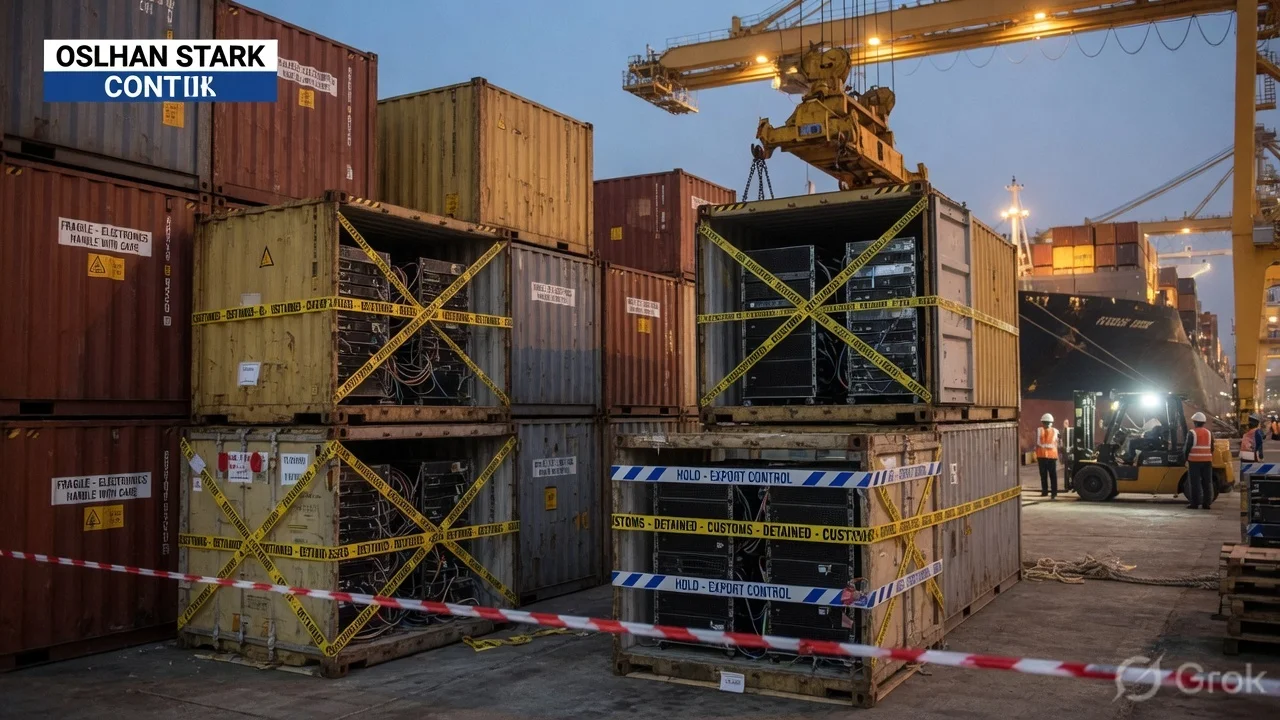
When we talk about 'export controls' in 2026, we aren't talking about shipping boxes of GPUs. We are talking about the digital gates. The new US policy focuses on two things: the compute power used to train the model and the 'reasoning capability' of the model itself. Anthropic's latest models are considered dual-use technology—meaning they can be used for both civilian and military purposes. Because of this, the US is treating these AI models like they treat fighter jet engines or advanced semiconductors. They want to govern where the 'weights' (the actual learned data of the AI) are stored and who gets to run them.
For an Indian developer, this means the API you use today might have a 'kill switch' controlled by a foreign government. If the US decides that a certain type of AI use-case in India doesn't align with their current policy, they can legally compel Anthropic to throttle or cut off access. This creates a massive 'sovereignty risk.' Imagine building a healthcare system for millions of Indians on top of Claude, only to have the access revoked because of a trade dispute or a change in US export laws. That is the reality we are facing right now.
The Anthropic Factor: Why It Hits Hard
Why is Anthropic at the center of this? In 2026, Anthropic has emerged as the gold standard for 'Constitutional AI'—AI that is supposedly safer and more controllable than its rivals. Many Indian enterprise firms, especially in banking and legal sectors, preferred Anthropic because of its focus on safety and ethics. Unlike some other models that are seen as 'wild west,' Claude offered a level of reliability that Indian corporate giants trusted. Now, that trust is being tested by geopolitical boundaries. If Anthropic is forced to comply with strict US-only data residency for its most powerful models, Indian firms will be forced to use older, less capable versions.
This creates a 'digital divide.' US-based startups will have access to the full-throttle Claude 5, while Indian startups might be stuck with 'Claude 5 Lite' or restricted versions that have been 'nerfed' to comply with export laws. We are already seeing reports of Indian AI labs losing access to certain high-reasoning features that were available just last month. This isn't just a technical glitch; it's a policy-driven limitation that puts Indian innovation at a disadvantage compared to Silicon Valley.
India's Response: The Sovereign AI Push
The Indian government hasn't been sitting idle. The IndiaAI Mission, which was supercharged back in 2024-25, is now moving into high gear. The goal is to build a 10,000-GPU supercomputing cluster that can train local models. We are seeing players like Krutrim, Sarvam AI, and several IIT-led initiatives trying to bridge the gap. But building a model that rivals Anthropic isn't just about money; it's about data and talent. Most of our high-quality data is in local languages—Tamil, Hindi, Telugu—which US models are good at, but don't truly 'understand' the cultural nuances as well as a local model could.
The real challenge for India in 2026 is 'Compute.' We still rely on NVIDIA chips, which are also subject to US export controls. So, we are stuck in a loop: we need US chips to build Indian AI so we don't have to rely on US AI. To break this, India is looking at alternative chip architectures and even partnering with other nations for 'non-aligned' compute. It is a long road, and the current Anthropic situation shows that we might be running out of time. The dependency is deep, and the 'tap' is in someone else's hand.
The Impact on Indian Startups and Pricing
For the average startup founder in Chennai or Hyderabad, this news means one thing: uncertainty. When export controls tighten, compliance costs go up. Anthropic and OpenAI have to hire massive legal teams to ensure they aren't violating US laws when they sell to India. Guess who pays for that? The end-user. We expect API pricing to increase by 20-30% for 'high-risk' regions. Additionally, we might see the introduction of 'Local Nodes'—where US companies set up servers in India—but even then, the core logic will still be governed by US law.
We also have to talk about latency. If the US mandates that all high-level reasoning must happen on 'cleansed' servers located within the US or specific allied territories, the round-trip time for a request from India will increase. In the world of real-time AI agents and voice assistants, every millisecond counts. Indian apps will feel 'slower' and 'clunkier' compared to their US counterparts, simply because of the physical and legal distance the data has to travel. This is a hidden tax on Indian innovation.
What Should You Do? A Step-by-Step Guide for Developers
If you are a developer or a business owner, you cannot rely on a single US-based API anymore. Here is how we think you should pivot in 2026:
- Adopt a Multi-LLM Strategy: Don't put all your eggs in the Anthropic or OpenAI basket. Use a mix of Claude, Gemini, and local models like Krutrim.
- Invest in Fine-Tuning: Instead of using the 'biggest' model for everything, take a smaller, open-source model (like Llama 4 or an Indian equivalent) and fine-tune it on your specific data. This can be hosted locally or on Indian cloud providers.
- Data Sovereignty: Ensure your customer data stays in India. Use local cloud regions (AWS Mumbai/Hyderabad, Google Cloud Delhi) to avoid complications with international data transfer laws that often overlap with export controls.
- Watch the Open Source Space: The 'Open Source' movement is India's best friend. Models whose weights are public cannot be easily 'recalled' or 'blocked' by a single government.
TamilTech's Honest Take: Is it Time to Panic?
Look, we aren't saying the sky is falling today. You can still log in and use Claude. But the 'vibe' has changed. For years, we treated AI like a global utility, like the internet or electricity. But in 2026, AI has become a weapon and a diplomatic tool. The US export controls on Anthropic are a clear signal that they view AI as their intellectual property first and a global tool second. India's 'AI for All' vision is a noble one, but it cannot be achieved using someone else's permission.
We think this is actually a blessing in disguise. It will force the Indian government and private investors to stop being 'lazy' and start investing in real deep-tech infrastructure. We have the smartest engineers in the world; we just need our own 'furnace' to forge the AI. In the next 12-18 months, expect a massive surge in 'Made in India' AI models. They might not be as polished as Claude 5 on day one, but they will be ours. And in a world of export controls, 'ours' is the most important feature an AI can have.
The Road Ahead: What to Expect Next
Expect more countries to follow suit. China already has its own ecosystem, and the EU is building its 'AI Sovereignty' walls. The world is splitting into 'AI Blocs.' India's challenge is to remain a bridge while building its own island. We will likely see new trade agreements specifically for AI compute and data sharing between New Delhi and Washington. But until those are signed, the tech industry in India will remain on edge.
Keep an eye on the upcoming 'IndiaAI Summit' later this year. We expect some big announcements regarding indigenous chip manufacturing and massive subsidies for startups using local compute. At TamilTech, we will be tracking every update. The AI race isn't a sprint; it's a marathon where the rules are being written while we run. Stay informed, stay flexible, and most importantly, start looking for alternatives to US-only tech stacks. The era of 'borrowed intelligence' is coming to an end.





Comments (0)
Be the first to comment!