Key Takeaways#
- RBI Governor Sanjay Malhotra emphasizes India must proactively shape its AI journey rather than be shaped by default by global tech giants.
- The call for a sovereign AI strategy focuses on building domestic capabilities in data, algorithms, and computing power to ensure national interests are protected.
- Malhotra highlights the need for a balanced regulatory framework that fosters innovation while managing risks like data privacy and algorithmic bias.
What's the News#
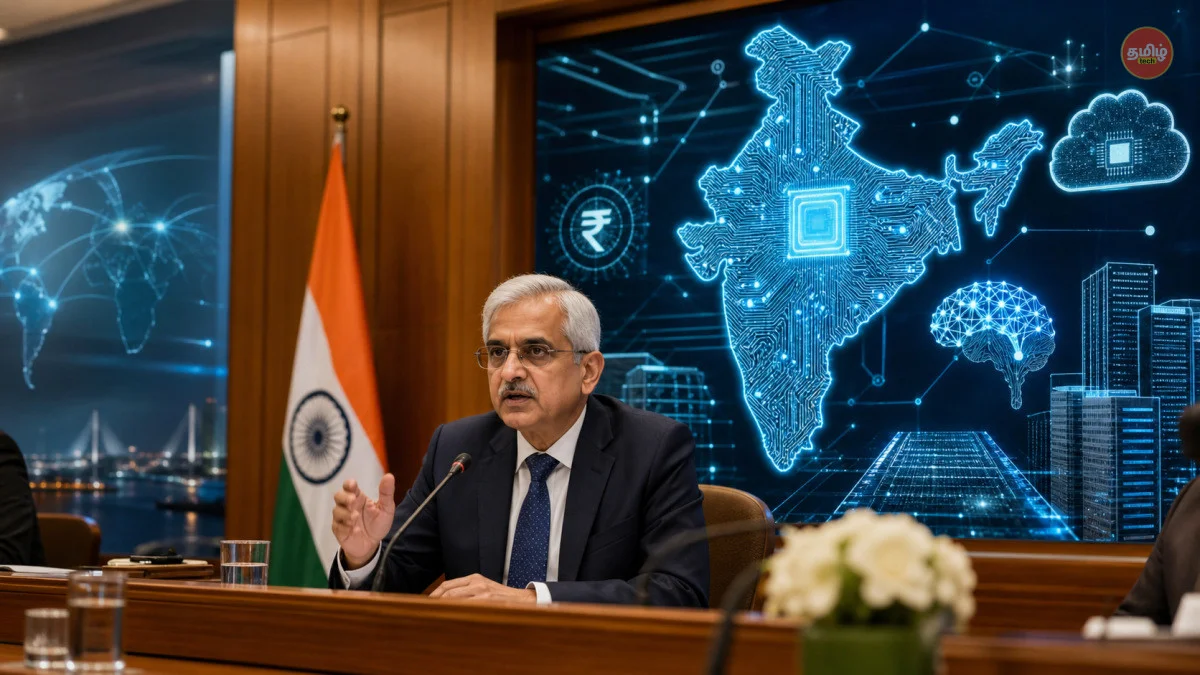
RBI Governor Sanjay Malhotra has issued a strong directive for India to take control of its
Artificial Intelligence development. In a recent address, he cautioned against allowing the nation's AI future to be dictated by external forces, stressing the urgency of creating a homegrown AI ecosystem. This statement comes as India stands at a critical juncture, balancing rapid technological adoption with the need for strategic autonomy in the digital age. The Governor's remarks are seen as a significant policy signal, urging both government and private sectors to align with a vision of AI that serves India's unique socio-economic fabric.
Details#
Malhotra's argument is rooted in the observation that most foundational AI models and technologies are currently developed and controlled by a handful of multinational corporations. He argues that this dependency poses a strategic risk, potentially making India vulnerable to biases,
security threats, and economic disadvantages. The Governor proposes a multi-pronged approach: investing in domestic AI research, fostering talent through education and skilling initiatives, and creating robust data governance policies. He also touched upon the importance of developing sovereign cloud infrastructure and high-performance computing capabilities, which are essential for training large language models and other advanced AI systems. The vision is to create an AI stack that is built for Indian languages, contexts, and needs, ensuring that the benefits of AI are inclusive and equitable.
India Impact#
The implications of this push for AI sovereignty are profound for India. With a massive, digitally connected population and a thriving startup ecosystem, India is uniquely positioned to leverage AI for national development. A sovereign AI strategy could revolutionize sectors like healthcare, agriculture, education, and financial inclusion. For instance, AI models trained on Indian data could provide more accurate diagnoses for local diseases or offer hyper-personalized financial advice for millions of UPI users. Furthermore, it could empower millions of small businesses on platforms like Flipkart and
Amazon India by providing them with AI-driven tools for marketing, inventory management, and customer service. This move also aligns with the broader '
Digital India' and '
Make in India' initiatives, aiming to transform India from a consumer market into a global innovation hub.
Use Cases#
The practical applications of a domestically developed AI ecosystem are vast and varied. In healthcare, AI could be used to analyze medical images and predict disease outbreaks based on local data. In agriculture, AI-powered drones and sensors could provide real-time advice to farmers on crop management and weather patterns. The financial sector could benefit from AI models that are better equipped to assess creditworthiness for the unbanked population, using alternative data sources. For governance, AI could streamline public service delivery, from optimizing traffic management in cities like Bengaluru to personalizing education for students in rural schools. The focus would be on creating solutions that are not just technologically advanced but also culturally and linguistically relevant to the Indian context.
Honest Take#
While the ambition for AI sovereignty is commendable, the path is fraught with challenges. Building a world-class AI ecosystem requires massive, sustained investment in research and development, infrastructure, and human capital. The private sector's role will be crucial, and the government must create an environment that encourages innovation without stifling it. The regulatory framework needs to be agile, capable of keeping pace with the fast-evolving
technology while safeguarding citizen rights. Malhotra's call is a necessary wake-up call, but its success will depend on a coordinated and long-term effort from all stakeholders. It's a race against time, and India's ability to shape its own AI destiny will be a defining factor in its global standing in the coming decades.







Comments (0)
Be the first to comment!