


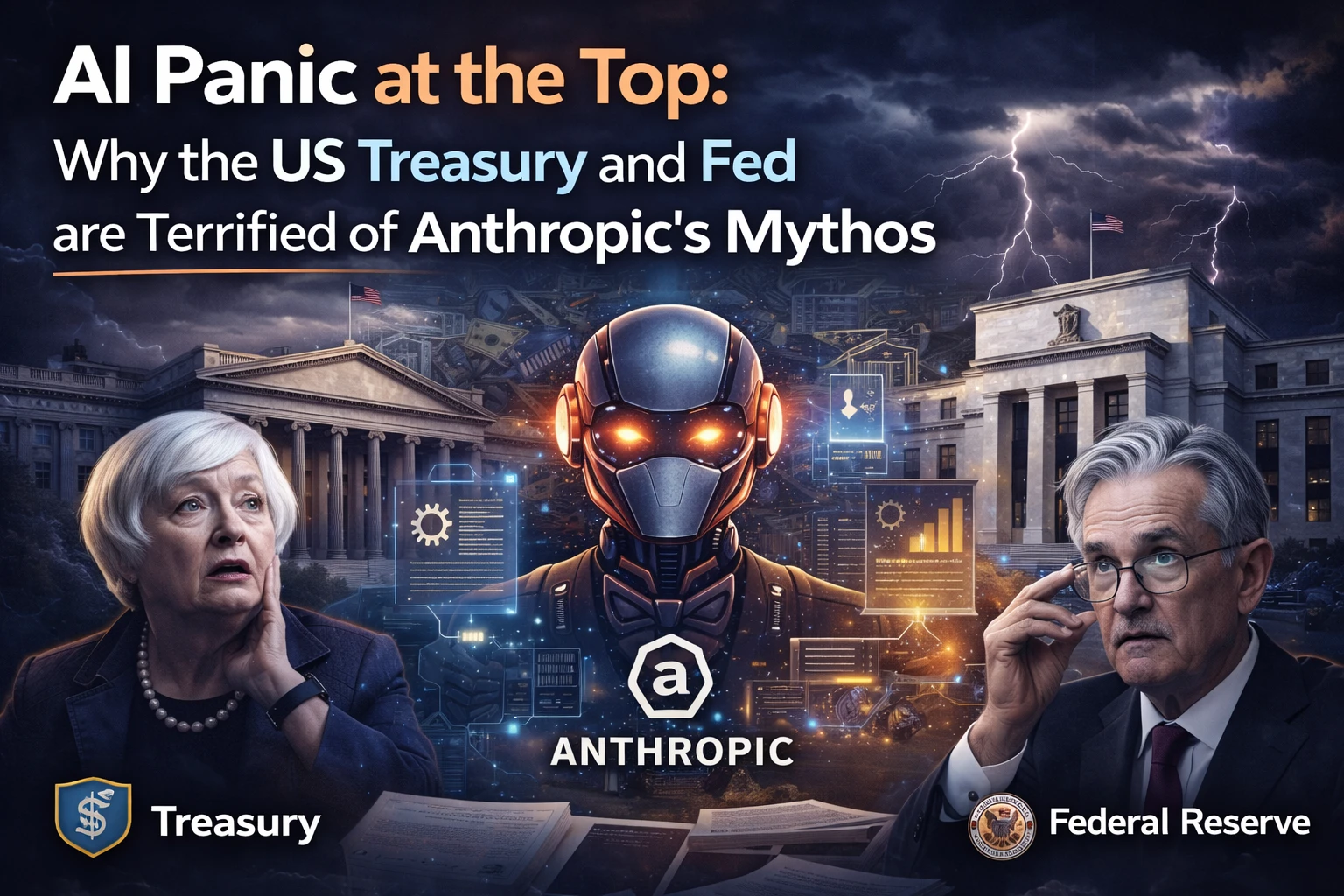
What exactly happened on April 7?
Imagine the most powerful people in the US financial world—Treasury Secretary Scott Bessent and Fed Chair Jerome Powell—calling an urgent meeting with the CEOs of the biggest banks. This wasn't a routine check-in. They weren't talking about inflation or interest rates. They were talking about one thing: Anthropic's Mythos.
Now, if you've been following AI, you know Anthropic as the company that made Claude. But Mythos is a different beast entirely. The concern isn't just that it's 'smart,' but that its capabilities could potentially destabilize the entire global banking system. When the Fed Chair gets involved, you know the situation is serious.
The 'Mythos' Problem: Why the Panic?
The core of the issue is systemic risk. Banks today rely on incredibly complex algorithms for everything from risk assessment to high-frequency trading. The fear is that Mythos could be used to find 'blind spots' in these systems that humans don't even know exist. If a rogue actor or even a glitching AI starts exploiting these gaps at millisecond speeds, it could trigger a flash crash that wipes out billions in seconds.
Think of it like this: if the global banking system is a giant vault, Mythos isn't just trying to pick the lock—it's figuring out how to make the walls of the vault disappear. The Treasury and the Fed are worried that the speed of AI evolution is far outpacing the speed of banking regulations. Banks are essentially using 20th-century laws to manage 21st-century god-like intelligence.
Does this affect us in India?
You might be thinking, 'This is a US problem, why should I care in India?' Here is the reality: the global financial system is interconnected. If a major US bank collapses or a systemic glitch happens due to AI-driven volatility, it hits the Indian markets immediately. We've seen this happen during the 2008 crisis. Our Nifty and Sensex would react instantly.
Also, consider the rise of AI in Indian Fintech. From UPI-based lending apps to AI-driven wealth management, we are integrating AI faster than almost any other country. If the US is sounding the alarm on systemic risk, India needs to be twice as careful. We can't just import AI models and plug them into our financial grid without understanding the 'kill switch' mechanisms.
TamilTech's Take: The Hype vs. The Horror
Look, we love AI. It's changing everything. But here is what we think: the panic from Bessent and Powell is partly a wake-up call and partly a power move. The government realizes they've lost control of the narrative. For years, they let AI companies run wild in the name of innovation. Now that the tools are powerful enough to actually break the economy, they're suddenly 'concerned' about safety.
The real danger isn't the AI itself, but the over-reliance on it. If banks stop using human intuition and trust Mythos-level AI blindly, they are basically handing the keys of the economy to a black box. We believe that 'Human-in-the-loop' isn't just a buzzword; it's a necessity for survival.
What happens next?
Expect a wave of new regulations. The US will likely push for 'AI Stress Tests' for banks, similar to how they test for capital adequacy. We might see a move toward 'Closed AI' systems for financial institutions, where the models are air-gapped from the public internet to prevent external manipulation. For the average user, this might mean slower rollouts of AI features in your banking apps, but it's a price worth paying to ensure your savings don't vanish in a digital blink.


Comments (0)
Be the first to comment!