


Key Takeaways
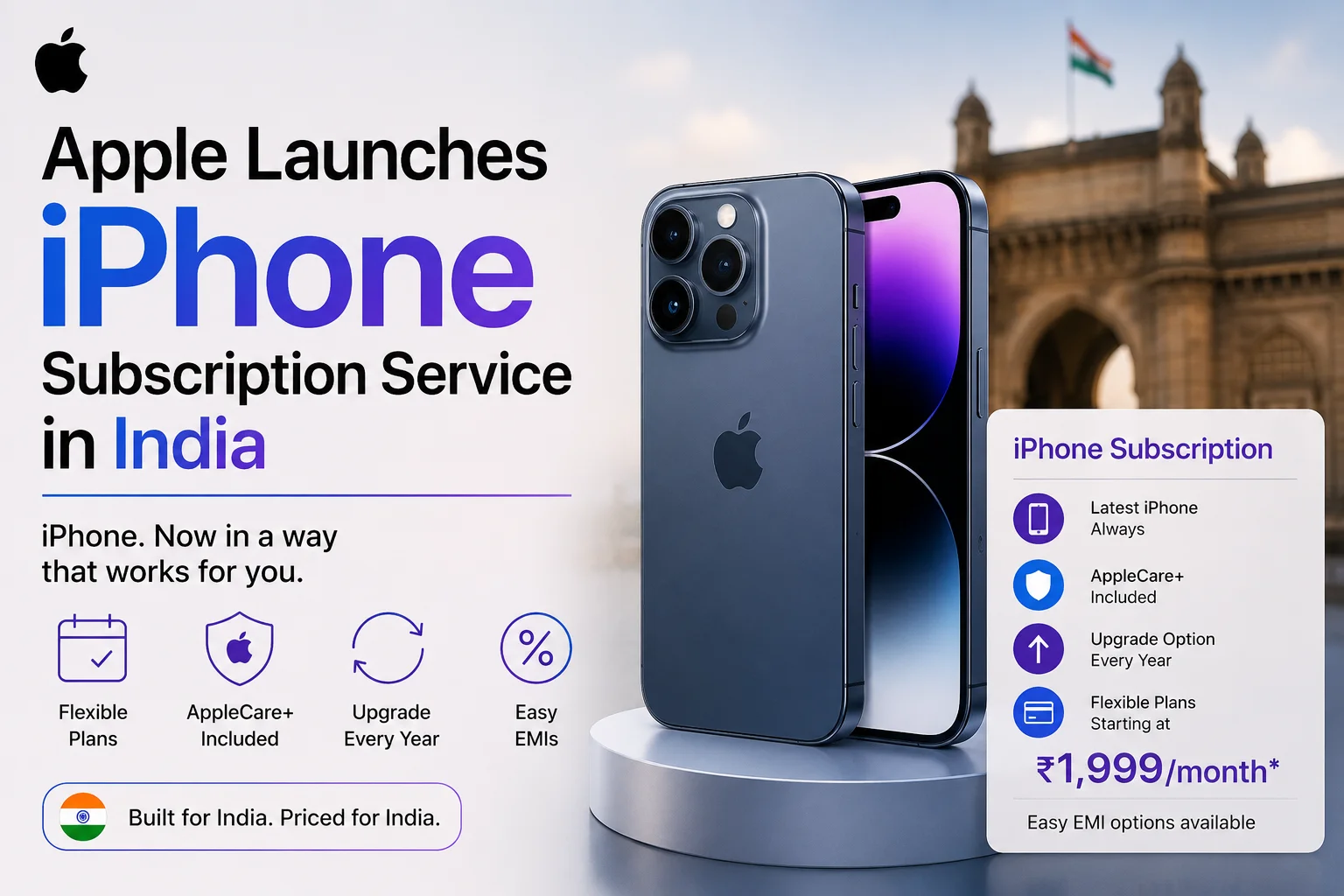
- Apple’s new Hardware Subscription allows users to get the latest iPhone 17 for a monthly fee starting at ₹3,499.
- The plan includes AppleCare+ coverage and a guaranteed upgrade to the next iPhone model every 12 months.
- Unlike traditional EMI, you don't own the device; you return it or pay a residual fee at the end of the term.
- The service is launching in India via the Apple Store Online and select Apple Premium Resellers this August 2026.
The Big Shift: From Owning to Subscribing
For decades, the dream was to 'own' an iPhone. We saved up lakhs of rupees or swiped our credit cards for 24-month EMIs just to call that piece of glass and titanium our own. But as of July 2026, Apple has officially flipped the script. They’ve decided that you don’t actually need to own an iPhone to use one. With the launch of the Apple Hardware Subscription program, the tech giant is treating the iPhone less like a product and more like a service, similar to how you pay for Netflix or iCloud storage. This isn't just another financing scheme; it’s a fundamental change in how we consume technology.
We’ve been hearing rumors about this since 2022, but the 2026 rollout in India is surprisingly aggressive. The idea is simple: you pay a fixed monthly fee, and in exchange, you get the latest iPhone, full insurance coverage, and the right to swap it for a brand-new model every single year. No more worrying about resale values on OLX or Cashify, and no more stressing over battery health after two years of usage. You simply use it, and when the new one comes out, you trade it in and keep paying your monthly dues. It sounds convenient, but as always, the devil is in the details and the long-term math.
How It Actually Works: The 'iPhone for Life' Program
So, how does this actually work on the ground? Apple has integrated this directly into the Apple Store app and physical stores. When you select an iPhone 17 or iPhone 17 Pro, you now see a third option alongside 'Buy' and 'Trade-in' called 'Subscribe.' This isn't a loan from a bank like HDFC or ICICI in the traditional sense, though there is a credit check involved. Apple is partnering with financial institutions to facilitate the backend, but for the user, the interface is pure Apple. You pick your model, choose your color, and agree to a monthly subscription fee.
The subscription is bundled. You aren't just paying for the hardware. Every lease includes AppleCare+ by default. This is a huge deal because it covers accidental damage, including those heart-stopping screen cracks. If you break the phone, you pay a small deductible, get it fixed, and continue your subscription. The most interesting part is the 'Upgrade Window.' After 12 successful payments, a notification pops up on your iPhone screen: 'Your new iPhone is ready.' You book an appointment, hand over your current device, and walk out with the latest model without paying a single rupee upfront. It’s a seamless loop designed to keep you in the Apple ecosystem forever.
The India Impact: Pricing and Availability
In India, the pricing is where things get very interesting. For an iPhone 17 (128GB), the subscription starts at roughly ₹3,499 per month. If you want the top-of-the-line iPhone 17 Pro Max, you’re looking at around ₹5,999 per month. When you compare this to a standard No-Cost EMI, the monthly outgo is actually lower. Why? Because with an EMI, you are paying for the full value of the phone. With a lease, you are only paying for the 'depreciation' of the phone over the year you use it. Apple knows that a one-year-old iPhone 17 Pro Max is still worth a lot of money, so they can afford to charge you less per month and then resell your used device as 'Certified Refurbished.'
This is going to disrupt the Indian smartphone market significantly. We are a country that loves EMI options. Bajaj Finserv and various credit card offers have made iPhones accessible to the middle class. However, the subscription model takes it a step further by lowering the barrier to entry even more. You don't need a ₹1.5 lakh credit limit to get the Pro Max anymore; you just need to prove you can afford the ₹6,000 monthly payment. We expect this to significantly boost the sales of Pro models in India, as the price gap between the base and Pro models feels much smaller when spread across monthly payments.
Is it a Better Deal Than Buying? The Math
Let’s look at the real-world use case. If you buy an iPhone 17 Pro for ₹1,29,900 today, and sell it after a year, you might get ₹80,000 for it if you're lucky and the phone is in pristine condition. Your net loss is ₹49,900. Now, add the cost of AppleCare+ (around ₹18,000). Your total cost for one year of usage is nearly ₹68,000. Under the subscription model, at ₹4,999 per month, you pay roughly ₹60,000 for the year. You’ve actually saved money, avoided the headache of finding a buyer, and you were fully insured the whole time. It seems like a no-brainer for those who upgrade every year.
However, for the 'long-term users'—the people who keep their phones for 4 or 5 years—this is a terrible deal. If you keep paying the subscription for 3 years, you would have paid more than the actual cost of the phone but you still don't own it. If you stop paying, you have to return the device and you're left with nothing. This is the 'subscription trap.' You are essentially renting your digital life. For the average Indian user who holds onto a phone until it stops working, buying on a 6-month No-Cost EMI and then using it for 4 years remains the most economical path.
TamilTech's Honest Take: Who Should Get This?
We think this is a game-changer for a specific type of user. If you are a tech enthusiast, a content creator, or someone who simply must have the latest camera features every year, this is the best way to get an iPhone in 2026. It removes the friction of ownership. No more worrying about battery degradation, no more worrying about scratches reducing resale value, and no more huge upfront payments. It's 'iPhone-as-a-Utility.'
But, and this is a big 'but,' you need to be careful about your monthly commitments. In an era where we already pay for 5-6 different OTT apps, gym memberships, and various software, adding a ₹5,000 hardware bill can lead to 'subscription fatigue.' If you lose your job or have a financial crunch, you can't just 'stop' paying without losing your phone—and in 2026, our phones are our wallets, our IDs, and our connection to the world. Our advice? If you're the type who buys a phone and forgets about it for three years, ignore this. But if you're already upgrading every year, the Apple Hardware Subscription is officially the smartest way to do it.





Comments (0)
Be the first to comment!