


Key Takeaways
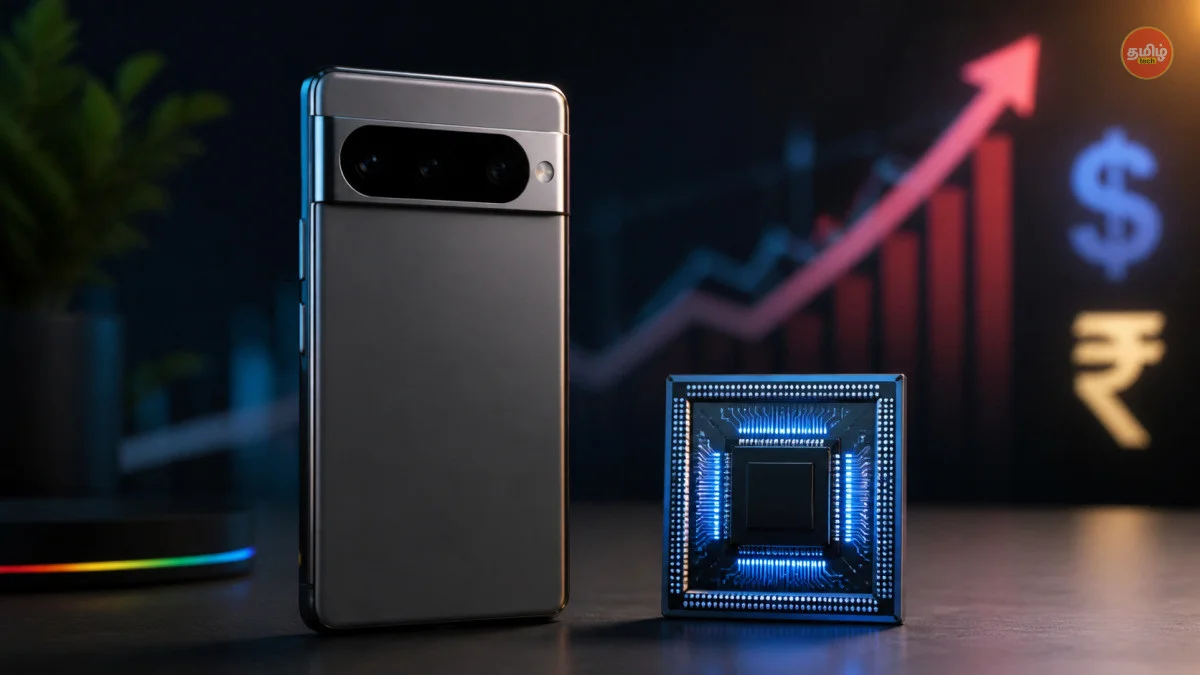
- The Pixel 11 series is expected to see a price increase of approximately $100 (around ₹8,500 - ₹10,000) compared to previous generations.
- A major factor behind the hike is the transition to the Tensor G6 chip, which will be fully designed by Google and manufactured on TSMC's 2nm or 3nm process.
- In India, the base Pixel 11 model is projected to start at a price point of ₹89,999, pushing it deeper into the ultra-premium category.
- The price increase is also attributed to upgraded camera sensors and advanced AI processing capabilities integrated directly into the hardware.
The Future of Pixel: Why 2026 is a Turning Point
If you have been tracking Google's smartphone journey, you know that they have slowly moved from being the 'value-for-money' flagship choice to a direct competitor for Apple and Samsung. As we move through 2026, the buzz around the upcoming Pixel 11 is reaching a fever pitch. But there is a catch that might not sit well with everyone—the price is going up. This isn't just a random rumor; it is a strategic shift that Google is making to finally stand toe-to-toe with the big players in terms of raw performance and hardware reliability.
For years, Google relied on Samsung's foundry to build their Tensor chips. While those chips were great for AI features, they often lagged behind in terms of thermal management and raw power. With the Pixel 11, Google is reportedly breaking away from that dependency. This transition is a massive undertaking that involves billions in R&D, and unfortunately, that cost is going to be passed down to the consumer. We are looking at a more refined, more powerful device, but one that demands a premium price tag.
The Tensor G6 Shift: The Real Reason Behind the Hike
The biggest story inside the Pixel 11 is the Tensor G6. This isn't just another incremental update. For the first time, Google is taking full control over the design and manufacturing process, partnering with TSMC—the same company that makes chips for Apple's iPhones. This move to a more advanced manufacturing node (likely 2nm or 3nm) is incredibly expensive. TSMC’s wafers cost significantly more than what Google was paying Samsung, and that is the primary driver for the price hike we are seeing in the supply chain reports.
Why should you care about this expensive chip? Well, it solves the two biggest complaints Pixel users have had for years: battery life and overheating. The new architecture is much more efficient, meaning your phone won't turn into a pocket-heater when you're recording 4K video or using heavy AI features. But this level of optimization comes at a premium. Google is essentially saying that if you want iPhone-level efficiency and performance, you have to be prepared to pay iPhone-level prices.
Hardware Upgrades: It's Not Just the Silicon
Beyond the internal chip, the Pixel 11 is expected to feature a completely overhauled camera system. We are hearing reports of a new primary sensor that can capture significantly more light, which will take Google's already legendary Night Sight to a whole new level. Adding these high-end optics increases the Bill of Materials (BoM) for Google. When you add up the cost of a better LTPO display, a more robust cooling system, and these new sensors, the price hike starts to make sense from a manufacturing perspective.
Furthermore, Google is doubling down on durable materials. We expect the Pixel 11 to feature a more refined titanium or high-grade aluminum frame with improved drop resistance. In 2026, a flagship phone isn't just about software; it is about a premium hand-feel. Google is trying to ensure that when you hold the Pixel 11, it feels like a ₹90,000 device. This focus on premium build quality is another reason why the days of the $599 flagship Pixel are officially over.
AI Integration: Gemini's Next Evolution
By 2026, AI isn't just a gimmick; it is the core of the smartphone experience. The Pixel 11 is being designed around Gemini 2.0 (or even 3.0 by the time it launches). Unlike previous versions where a lot of AI processing happened in the cloud, the Tensor G6 is built to handle massive AI models locally on the device. This means faster responses, better privacy, and features that work even without an internet connection. But dedicated AI hardware on a chip takes up physical space and increases design complexity.
We are also looking at new 'Always-on AI' features that can summarize your entire day, manage your notifications intelligently, and even predict what you need before you ask. This level of software-hardware integration requires a massive amount of RAM—likely 16GB or even 20GB as standard across the Pixel 11 lineup. High-speed RAM prices have been fluctuating, and Google opting for higher capacities to support AI is another contributor to the final retail price.
India Pricing and Market Reality
Now, let's talk about the most important part for us—the Indian price. Historically, Google has priced Pixels slightly higher in India due to import duties and local taxes. If the global price increases by $100, we can expect a jump of at least ₹10,000 in the Indian market. The Pixel 10 launched at a premium, and the Pixel 11 is likely to start at ₹89,999 for the base 128GB (or hopefully 256GB) variant. The Pro and Pro XL models will easily cross the ₹1,10,000 and ₹1,25,000 marks respectively.
This puts Google in direct competition with the iPhone 17 and the Samsung S26 series in India. For a long time, Indian users chose Pixel because it was the 'smart' alternative that cost a bit less. With that price gap closing, Google will have to work twice as hard to convince Indian buyers. However, with Google now manufacturing some of its Pixel units in India, there is a small hope that they might manage to keep the price hike slightly lower than expected, though we wouldn't count on it just yet.
Who Should Upgrade to Pixel 11?
With the price going up, the question is: is it for you? If you are using a Pixel 8 or older, the jump to the Pixel 11 will feel like moving to a different dimension. The performance gains from the TSMC-made Tensor G6 alone will be worth the upgrade. However, if you recently bought a Pixel 10, the differences might be more subtle, mostly revolving around slightly better AI speed and efficiency. For professional mobile photographers, the new sensor array on the 11 series will likely be the gold standard for 2026.
If you are someone who values the 'clean' Android experience but is on a budget, this news might be disappointing. You might want to look at the 'A' series (like the Pixel 10a) which will likely retain a more accessible price point. The main Pixel 11 is now clearly an 'enthusiast' and 'pro' device. It is for those who want the absolute best of Google and are willing to pay the premium for a device that will likely get 7 to 8 years of software updates.
TamilTech's Honest Take: Should You Wait?
At TamilTech, we think this price hike was inevitable. You can't keep using high-end TSMC nodes and advanced AI hardware while keeping the price stagnant. The real test will be whether the Pixel 11 can finally deliver a bug-free, cool-running experience from day one. If Google fixes the modem and heating issues with the Tensor G6, then even at ₹90,000, it might be a better deal than an iPhone for many people.
Our advice? If you are planning to buy a flagship in late 2026, start saving now. Don't jump in on day one unless there are massive pre-order bank offers. In India, Pixel prices usually see a decent correction during the Flipkart Big Billion Days or similar sales a few months after launch. If you can wait for 3-4 months after the release, you might be able to snag the Pixel 11 at the 'old' Pixel prices. But for now, prepare your wallets—the premium Google era is officially here.





Comments (0)
Be the first to comment!