


Key takeaways
- Dimensity 9600 Pro is MediaTek's first mobile SoC on TSMC's 2nm process, aimed at top flagships.
- Dimensity 9600M sits on TSMC 3nm and targets a wider flagship band — the phones most Indian buyers actually stretch for.
- Expect these chips in 2026 phones from Xiaomi, Realme, Oppo and Vivo, with listings on Flipkart and Amazon.in.
- 2nm efficiency should help battery life and sustained performance on Jio and Airtel 5G without crazy heat.
- Pricing pressure could keep premium MediaTek phones more affordable in INR than equivalent Snapdragon flagships.
Your phone gets warm mid-BGMI match. Battery dips faster than the score. Sound familiar?
MediaTek just put a new chip on the table that tries to fix exactly that headache — and it is not a small step.
What just happened?
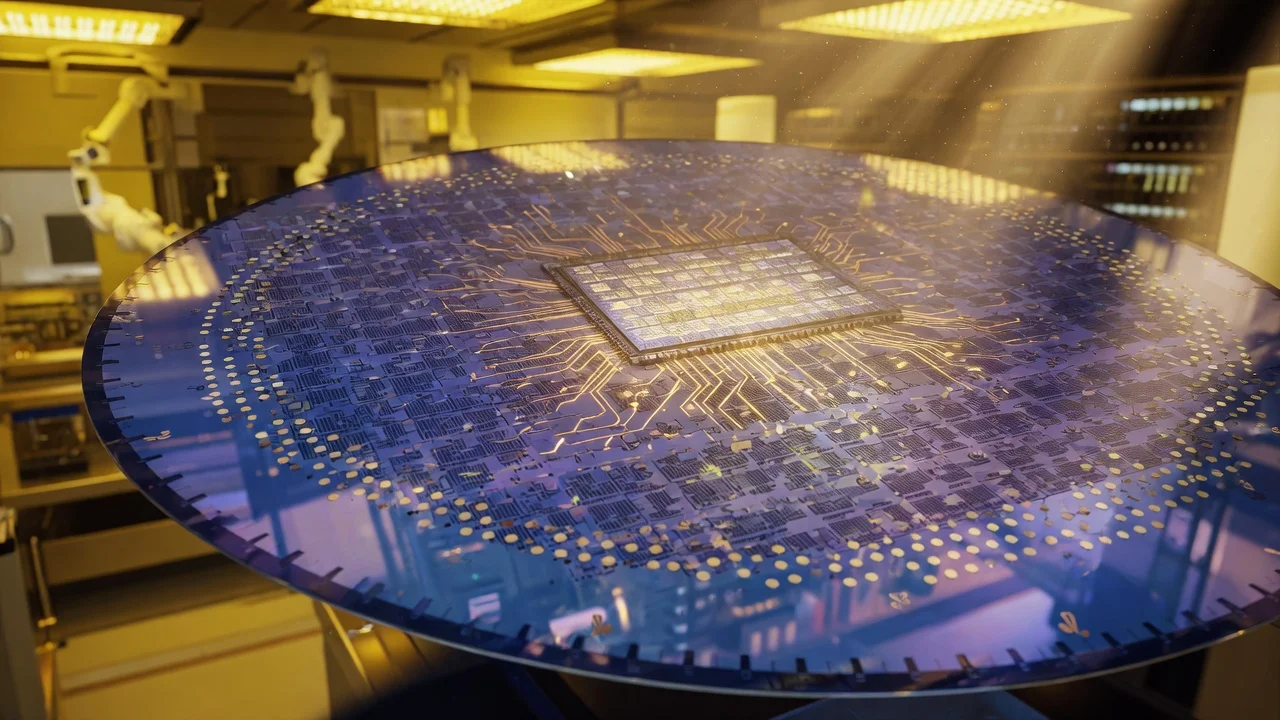
MediaTek has launched the Dimensity 9600 Pro. It is the company's first mobile processor built on TSMC's most advanced 2-nanometre process.
Alongside it comes the Dimensity 9600M, made on TSMC's 3nm node. That one is not only for the absolute tip-top models. It aims at a broader flagship set.
This is a real process-node jump, not a marketing checkbox. Smaller transistors generally mean better performance per watt, cooler sustained clocks, and more room for on-device AI without killing the battery in 20 minutes.
The 9600M on 3nm keeps MediaTek competitive where most Indian buyers actually shop — high-volume premium, not just ultra-flagship vanity.
TSMC's 2nm is current cutting-edge foundry tech. Getting first dibs on it for a mobile chip puts MediaTek in rare company. The clear goal: close any leftover perception gap with Qualcomm's Snapdragon lineup, especially in India where MediaTek already owns a huge mid-range and upper mid-range share.
How does this actually work?
The Dimensity 9600 Pro sits at the top of MediaTek's new stack. Being on 2nm should deliver meaningful gains in power efficiency and transistor density versus older 3nm and 4nm Dimensity chips.
In plain terms: higher peak clocks that stay high longer under load. Better GPU throughput for gaming and camera work. A more capable NPU for generative AI features that now show up even in mid-premium phones.
Think of a long Genshin or BGMI session. Or 4K video plus on-device AI photo edits. A more efficient process gives thermal headroom. Indian summers and closed-case designs punish hot chips. This setup helps frame rates stay stable and cuts early throttling.
The Dimensity 9600M is the volume play. Same generation architecture family, but on the more mature and slightly cheaper 3nm process. Brands can still ship 120Hz OLED, solid cameras and fast charging without the absolute highest silicon cost.
That matters a lot for India. The sweet spot for many buyers sits between Rs 30,000 and Rs 55,000.
We are not inventing a mountain of core counts or clock speeds. What the announcement gives is process nodes and positioning: 9600 Pro for absolute flagship tier, 9600M for the wider flagship band.
Expect the usual MediaTek checklist — advanced ISP for multi-camera setups, a strong modem for 5G Sub-6 and mmWave where available, and Wi-Fi 7 readiness. Exact core counts, cache sizes and GPU configs will surface once phone makers start teasing devices.
What changes for people in India?
India is MediaTek country. Walk into any Flipkart Big Billion Days or Amazon Great Indian Festival and Dimensity phones from Realme, Xiaomi, iQOO, Oppo, Vivo and even some Motorola models dominate bestseller lists.
A stronger flagship chipset from MediaTek directly shapes what lands on those shelves in late 2026 and early 2027.
Expect the Dimensity 9600M first in the Rs 35,000–50,000 band. That is where most Indian buyers stretch for a "flagship killer". Better efficiency means brands can keep batteries at 5000–5500mAh while still claiming all-day plus gaming endurance on Jio True 5G or Airtel 5G.
Fast UFS storage and LPDDR5X still matter. The SoC sets the ceiling.
The 9600 Pro will likely land in the Rs 55,000–80,000 range, competing with Snapdragon 8-series devices. If MediaTek prices the silicon aggressively, phone makers can undercut Qualcomm-based rivals by a few thousand rupees while matching or beating battery life. That pricing gap has historically worked well for MediaTek in India.
Camera-heavy lines that rely on MediaTek ISPs — think Realme and Xiaomi's mid-to-high ranges — will push new computational photography and on-device AI edits harder. Students, office folks and creators get handy tools: photo edit, translation, voice-note summaries without always hitting the cloud.
No direct jobs earthquake here. Local assembly, after-sales and the app ecosystem around these phones still grow with every new wave.
What should you do now?
If your current phone is fine, wait. Let real 9600-series devices land, then read thermal and battery reviews — not just peak benchmark slides.
Shopping in the Rs 30,000–55,000 band next festive season? Watch for 9600M launches from Xiaomi, Realme, Oppo and Vivo on Flipkart and Amazon.in. Compare battery claims on Jio/Airtel 5G, cooling design and camera software, not chip name alone.
Chasing absolute flagship feel closer to Rs 55,000–80,000? Keep the 9600 Pro on your shortlist next to Snapdragon options. Price and sustained performance will decide the winner more than the process-node tweet.
Chip is the ceiling. Software optimisation, cooling, battery size and camera tuning still make or break the phone in your hand.





Comments (0)
Be the first to comment!