


Key Takeaways
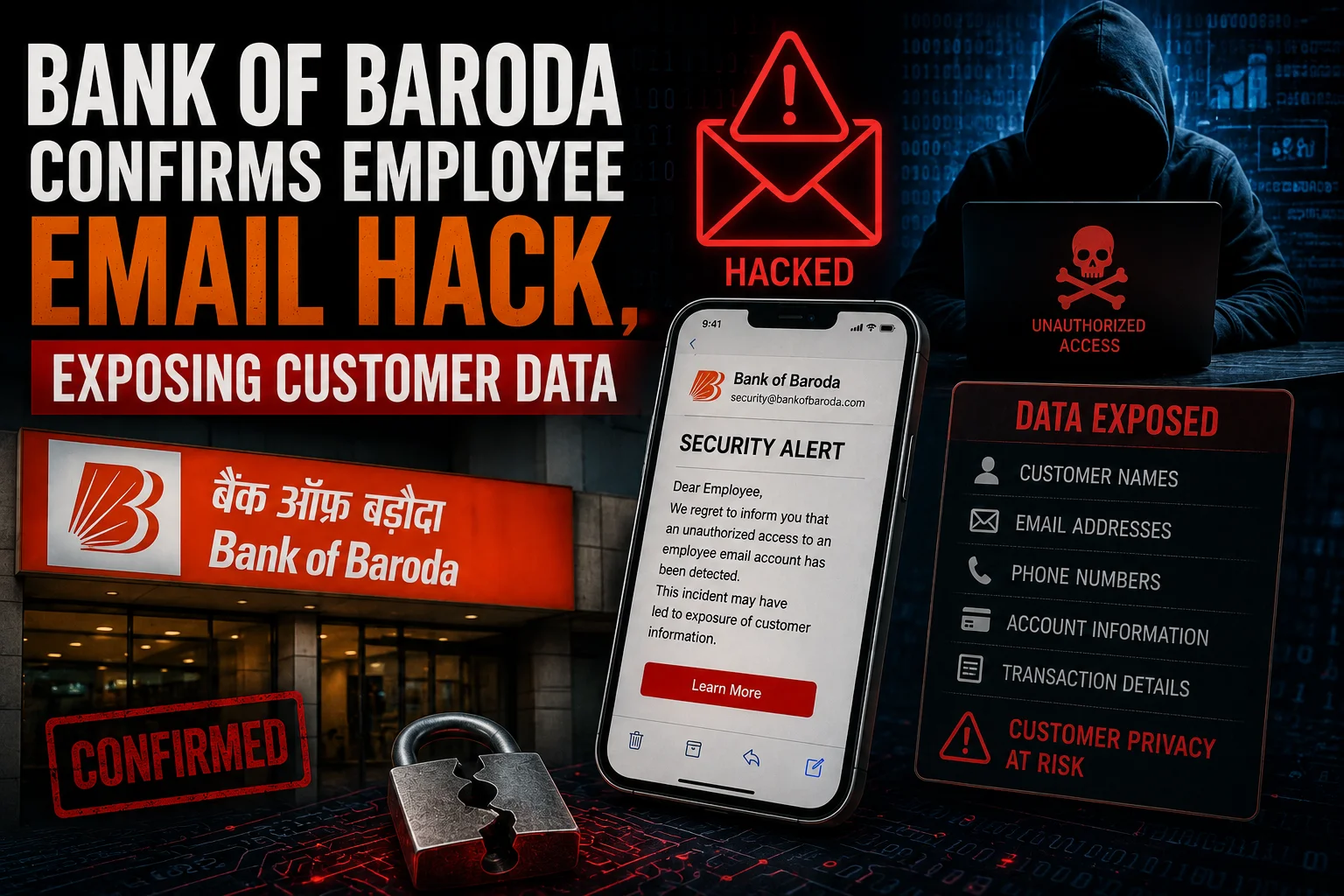
- Bank of Baroda (BoB) confirmed that a single employee email account was compromised by hackers.
- The breach has potentially exposed sensitive customer communication and internal data logs.
- The bank claims the core banking system (CBS) remains secure and no direct financial theft has occurred.
- Affected users are advised to change their mobile banking passwords and enable biometric locks immediately.
- This incident highlights the growing threat of 'Social Engineering' attacks on Indian public sector banks in 2026.
The Shocking Update from Bank of Baroda
In a year where we thought banking security had reached its peak with AI-driven defenses, a major player like Bank of Baroda (BoB) has hit the headlines for the wrong reasons. Today, on July 28, 2026, the bank officially confirmed that one of its internal systems was breached. Specifically, an employee's official email account was accessed by unauthorized individuals. Now, you might think, "It's just one email, what's the big deal?" But in the banking world, an employee's inbox is often a treasure trove of customer queries, account statements, and internal memos that can be used for much larger scams.
We at TamilTech have been tracking this since the first rumors surfaced on dark web forums earlier this week. While the bank was initially quiet, the confirmation today makes it clear that the threat is real. Hackers didn't just break in; they stayed inside long enough to potentially scrape data that could put thousands of Indian account holders at risk of sophisticated phishing attacks. If you have an account with BoB, this is the time to stop scrolling and pay close attention to your banking apps.
How Did This Happen? The Anatomy of the Hack
According to what we've gathered, this wasn't a massive brute-force attack on the bank's main servers. Instead, it was likely a targeted 'Spear Phishing' attack. In 2026, hackers are no longer just sending random links; they create highly convincing fake login pages that look exactly like the bank's internal portal. One wrong click by an employee, and the hackers have the keys to the kingdom. Once they gained access to the email account, they could see every attachment, every customer complaint, and every internal report sent or received by that specific staff member.
The bank has stated that they have isolated the affected account and launched a full-scale forensic audit. However, the cat is already out of the bag. When an email account is compromised, the data isn't just 'viewed'; it's usually exported. This means names, phone numbers, and possibly even partial account details are now in the hands of bad actors. The real danger here isn't that someone will withdraw money from your account tonight—it's that you will receive a very 'official' looking call or WhatsApp message tomorrow from someone claiming to be a BoB manager, knowing exactly when you last visited the branch.
What Data is at Risk?
Bank of Baroda is being very careful with their words, but here is what we think is likely compromised. Any customer who interacted with that specific department or employee in the last few months might have their details leaked. This includes PDF attachments of KYC documents, loan applications, and transaction disputes. While the bank's Core Banking System (the place where your actual money 'lives') is separate and reportedly safe, the metadata surrounding your account is now vulnerable.
In the current 2026 landscape, data is more valuable than cash. With your phone number and account history, scammers can bypass traditional security by tricking you into giving up an OTP or clicking a 're-verification' link. We've seen a massive surge in UPI-based frauds recently, and a breach like this provides the perfect fuel for those scammers. It’s not just about BoB; it’s about how this data can be cross-referenced with other leaked databases to create a full profile of your financial life.
India Impact: Why BoB Customers Should Be Alert
In India, Bank of Baroda is a massive entity with a huge rural and semi-urban customer base. Many of these users are not tech-savvy and are the primary targets for 'Vishing' (Voice Phishing). If you have parents or relatives using BoB, you need to call them right now. Explain to them that no bank official will ever ask for an OTP or ask them to download an app like AnyDesk or TeamViewer to 'fix' a security issue.
The timing is also critical. With the festive season approaching and many government subsidies being routed through public sector banks, any disruption or loss of trust in the banking system is a major blow. We've seen similar incidents with other Indian banks in late 2025, but the scale of BoB makes this particularly concerning. The bank has promised to notify affected individuals, but usually, these notifications come far too late. You need to be proactive.
Step-by-Step Security Checklist for You
Don't wait for a message from the bank. Follow these steps immediately to lock down your finances:
- Change Your Passwords: Log in to the BoB World app or Net Banking and change your login and transaction passwords. Do not use your birth year or '1234'.
- Enable Biometric Authentication: If your phone supports it, use fingerprint or Face ID for every transaction. It’s much harder to spoof than a PIN.
- Check Your Linked Devices: In the banking app settings, look for 'Logged in Devices'. If you see a phone you don't recognize, remove it instantly.
- Monitor Your SMS and Email: Look for any 'Password Reset' or 'OTP' messages that you didn't trigger. If you see one, it means someone is actively trying to get into your account.
- Set Transaction Limits: Lower your daily UPI and IMPS limits to a minimum. You can always increase them when you actually need to make a big payment.
TamilTech's Honest Take: Is it Time to Switch Banks?
Look, no bank is 100% unhackable. Even the biggest global banks have faced breaches. However, the recurring theme with Indian public sector banks is the human element—employees falling for basic scams. While BoB's technical infrastructure might be strong, the security culture needs a massive upgrade. We think you don't need to close your account in a panic, but you should definitely stop keeping all your life savings in a single basket.
We recommend moving a portion of your funds to a secondary account and using that for daily UPI transactions. Keep your main savings in an account that you don't use for scanning QR codes at local shops. In 2026, the best security isn't just a strong password; it's 'Digital Hygiene'. Stay alert, don't trust 'official' calls, and always verify everything through the official app. We'll keep you updated as the forensic report comes out. Stay safe!



Comments (0)
Be the first to comment!