


Key Takeaways
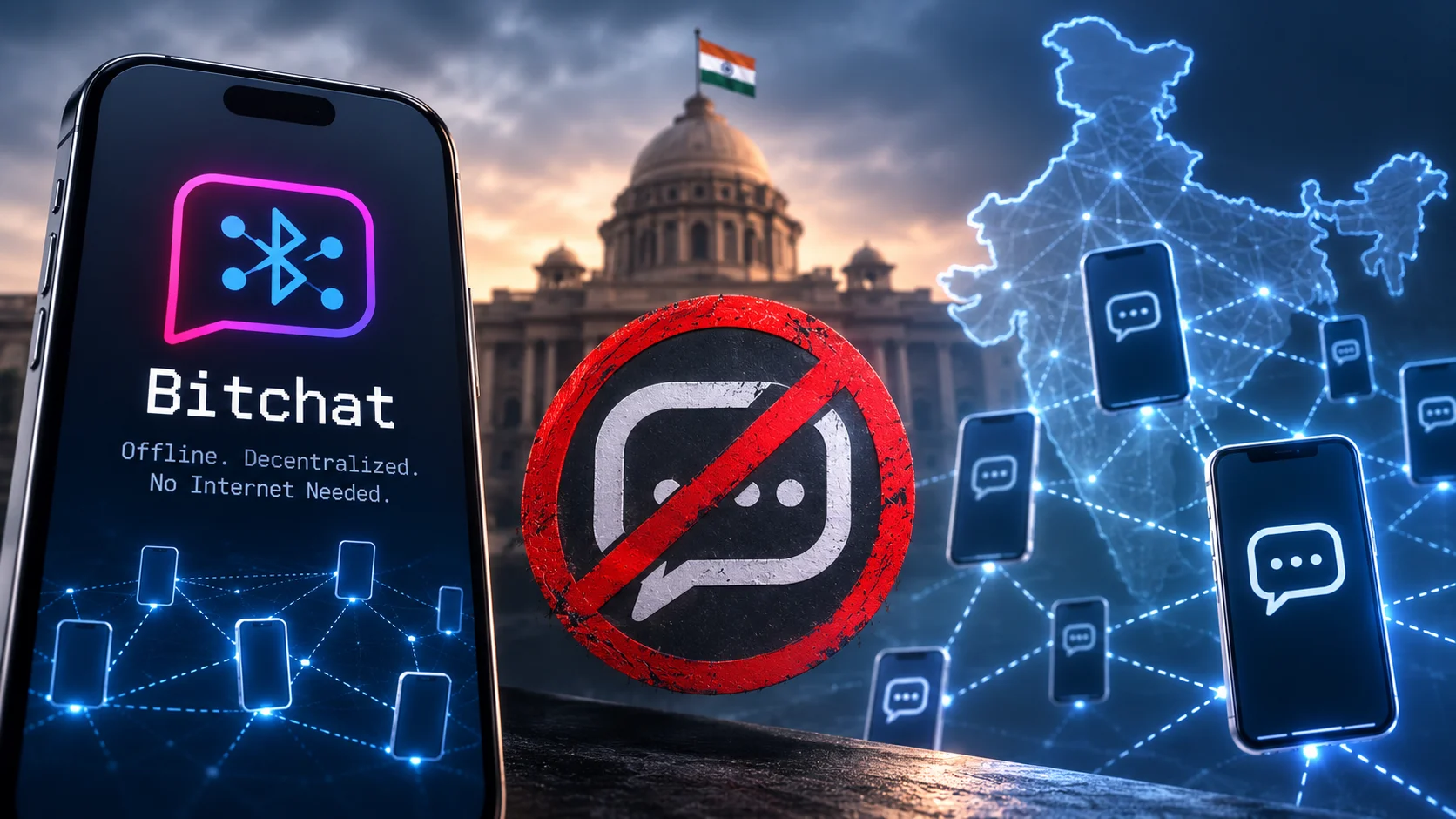
- Multiple mesh-messaging apps, including Bitchat and Briar, have been hit with government takedown notices in India as of July 2026.
- Mesh-messaging technology allows users to communicate via Bluetooth and Wi-Fi Direct without needing an active internet connection or central servers.
- The Indian government cites national security and the inability to monitor 'dark' peer-to-peer (P2P) networks as the primary reason for these bans.
- While these apps are vital for disaster recovery and areas with poor connectivity, they are also used in protests to bypass internet shutdowns.
- The bottom line: Decentralized communication is facing its biggest legal challenge yet in India, forcing users to look for alternative encrypted platforms.
The Unseen Crackdown of 2026
So, here is the thing. We all thought the Bitchat takedown was an isolated incident, a one-off move by the authorities to curb a specific platform. But as we dig deeper into what’s happening in July 2026, the picture is much bigger and, frankly, a bit more concerning for privacy advocates. It turns out Bitchat wasn't the only target. Several other mesh-messaging applications have quietly received similar takedown notices, effectively wiping them off the official app stores in India. If you haven't been following this closely, mesh-messaging is that 'secret sauce' tech that lets you chat even when the government flips the kill switch on the internet. And that is exactly why it’s in the crosshairs right now.
We have been tracking these developments for the past few weeks, and the pattern is clear. The government isn't just looking at what you say on WhatsApp or Telegram anymore; they are looking at how you are saying it. By targeting mesh networks, the authorities are trying to close a loophole that has existed for years—the ability to communicate completely off-grid. This isn't just about one app; it’s a systematic move against decentralized technology that doesn't rely on a central server that can be subpoenaed or monitored. For a tech-savvy country like India, this move has massive implications for how we handle digital rights and emergency communications.
What Exactly is Mesh-Messaging? Let’s Break It Down
Before we get into the legal drama, let's talk about what these apps actually do. Unlike WhatsApp, which sends your message to a server in the cloud before delivering it to your friend, mesh-messaging apps like Briar, Bridgefy, and Bitchat work differently. They use the hardware already in your phone—specifically Bluetooth and Wi-Fi Direct—to create a local network. Think of it like a chain: if Person A is near Person B, and Person B is near Person C, a message can jump from A to C through B, even if there is zero mobile data or Wi-Fi internet available. It’s a peer-to-peer (P2P) system that is incredibly resilient.
In 2026, this tech has become more sophisticated than ever. We aren't just talking about sending text anymore; modern mesh apps can handle small files and even voice snippets over short distances. Because there is no central server, there is no 'master switch' to turn it off. This makes it a nightmare for authorities who want to control the flow of information during sensitive times. Each phone acts as a mini-router, and the network grows stronger as more people join. It’s the ultimate tool for decentralization, but in the eyes of the law, it’s a 'dark' channel that bypasses the legal interception frameworks mandated for telecom companies.
The Legal Hammer: Section 69A and National Security
The legal basis for these takedowns usually falls under Section 69A of the IT Act. The government argues that these apps pose a threat to national security because they facilitate untraceable communication. In several official notices we've seen recently, the concern is that mesh networks can be used to coordinate activities during civil unrest or in border areas where internet shutdowns are frequently used as a tool for maintaining order. Since the government cannot 'see' into these P2P conversations—even with a warrant—they’ve decided that the easiest solution is to simply remove the tools from the public's reach.
But here is the catch: these same apps are literal lifesavers during natural disasters. We’ve seen this happen during the floods in South India and the cyclones on the coast. When the towers go down, mesh-messaging is the only way families stay connected and rescue teams coordinate. By banning these apps, the government is effectively taking away a vital emergency tool. It’s a classic case of security vs. utility. In 2026, the balance seems to be tilting heavily toward surveillance and control, leaving the average user caught in the middle of a digital tug-of-war.
India Impact: What This Means for Your Smartphone
If you are an Android or iPhone user in India, you might have already noticed that searching for these apps on the Play Store or App Store returns 'No results.' While the apps you already have installed might still work for now, they won't receive updates. In the tech world, an app without updates is a dead app. Security vulnerabilities won't be patched, and eventually, a new OS update will break the app's functionality. This is a 'soft ban' that effectively kills the ecosystem over time.
For the average Indian user, this means your options for private, off-grid communication are shrinking. While the government hasn't banned the use of the technology itself (which would be nearly impossible to enforce), they are making it extremely difficult for the non-technical public to access it. You might find APKs on third-party sites, but that opens up a whole different can of worms regarding malware and fake versions of the apps. The 'digital wall' is getting higher, and it's not just about social media anymore; it's about the very architecture of how our devices talk to each other.
TamilTech’s Honest Take: Is This the Right Move?
Look, we get it. National security is a serious business, and no government wants to be blind to potentially dangerous coordination. But at TamilTech, we think this blanket ban on mesh-messaging apps is a bit like banning hammers because someone might use one for the wrong reason. These tools are fundamental to the evolution of a decentralized internet. By blocking them, we are stifling innovation in P2P technology, an area where India could have been a global leader. We are essentially saying that if we can't watch it, you can't use it.
What’s next? Probably a rise in 'sideloading' and the use of decentralized App Stores. But for the general public, this is a clear signal that the era of 'untraceable' digital freedom is being heavily regulated. If you're someone who lives in an area with frequent connectivity issues, or if you're a trekker who relies on these apps in the mountains, you're the one who loses out. We expect to see more legal challenges in the courts regarding these notices, but for now, the message is clear: the government wants every bit and byte to pass through a gate they can control. Stay tuned, because this battle over mesh networks is just getting started in 2026.


Comments (0)
Be the first to comment!