


Key Takeaways
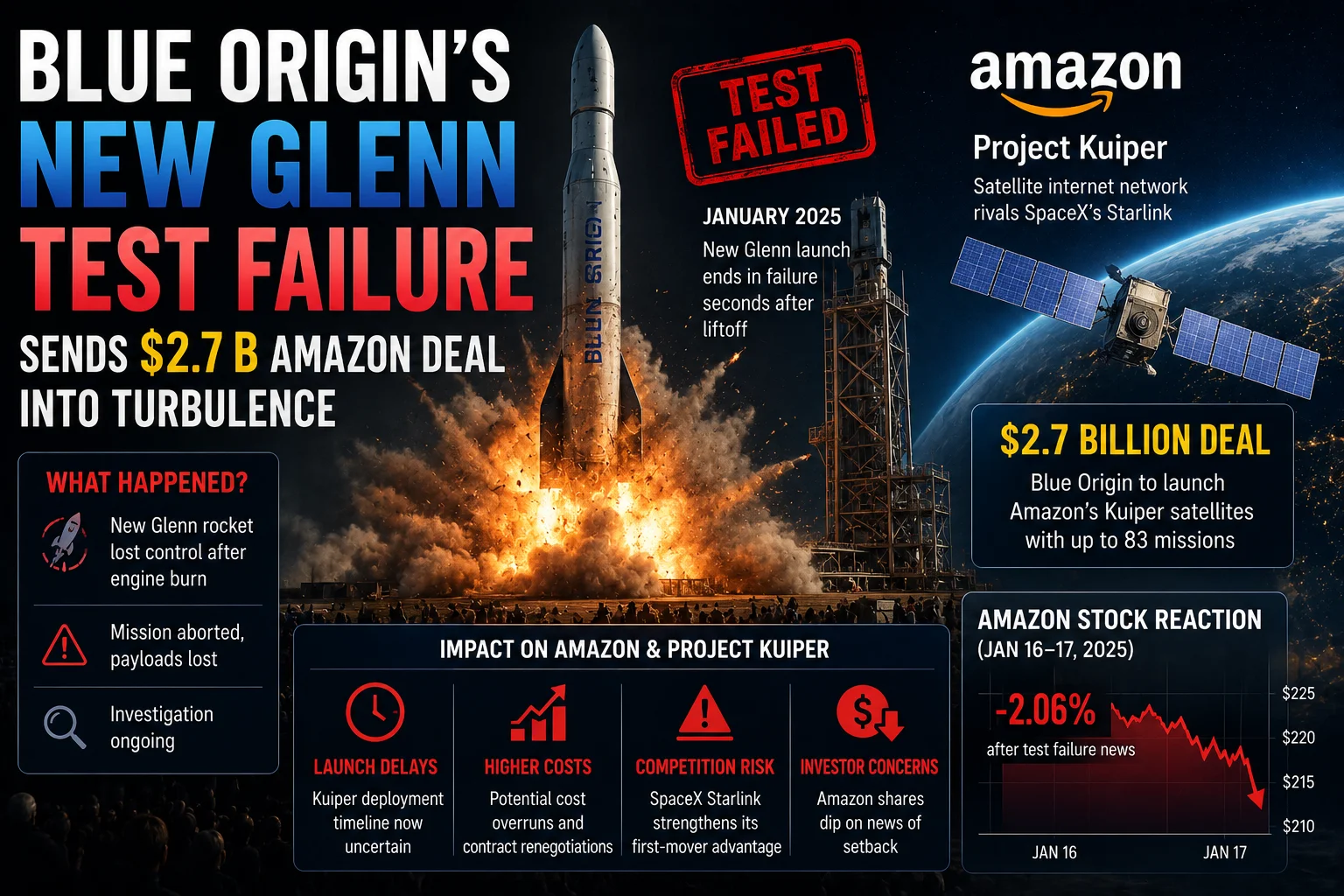
- New Glenn’s 2026 static‑fire test exploded, delaying the launch of 48 Amazon Leo satellites.
- Amazon has already paid Blue Origin $2.7 billion for the ride‑share, the largest single‑flight contract in the commercial sector.
- Indian satellite operators could see higher launch costs as the market loses a domestic heavy‑lift competitor.
- Watch for a revised launch window in early 2027 and possible insurance claim settlements.
Alright, let’s break down what happened on Thursday. Blue Origin was doing a static‑fire test of its New Glenn rocket at the Kennedy Space Center. Instead of a clean burn, the first stage ignited, lost control and exploded. The whole thing went up in flames in less than a minute.
Why does this matter to you? Because that same rocket was supposed to lift off on Monday carrying 48 Amazon Low‑Earth‑Orbit (Leo) satellites for the company’s Project Kuiper broadband constellation. Amazon already forked out a massive $2.7 billion for the slot – the biggest single‑flight contract ever signed for a commercial launch.
What’s the news?
Blue Origin announced the failure just after the blast, saying the engine’s thrust‑vector control system malfunctioned. The company is launching an internal investigation and will not attempt another flight until the root cause is nailed down. Amazon, meanwhile, confirmed the delay but said the contract remains in force.
Details you need to know
- New Glenn specs: 7‑stage, 2,800‑tonne lift‑off mass, 30‑meter tall, capable of delivering up to 45 tonnes to LEO.
- Test parameters: 90‑second static‑fire, full thrust of the BE‑4 engines (about 2.4 MN each).
- Explosion cause: Preliminary data points to a hydraulic valve failure in the thrust‑vector system, causing the nozzle to jam.
- Financial stakes: $2.7 billion from Amazon, plus a $150 million insurance policy held by AIG.
- Schedule impact: The Monday launch is scrapped; a new window is expected late 2026 or early 2027 after a full redesign.
India impact
India’s own launch market has been counting on the New Glenn to offer a cheaper heavy‑lift alternative to ISRO’s S‑S2 and upcoming LVM3 upgrades. With the setback, Indian startups that were eyeing a 2027 launch slot may now face higher prices from SpaceX’s Falcon Heavy or Arianespace’s Ariane 6.
For Indian satellite operators, this could mean:
- Higher launch fees – up to 20% more if they shift to Western providers.
- Longer wait times – the next heavy‑lift slot from ISRO is already booked through 2028.
- Increased insurance premiums – insurers will re‑price risk after a $2.7 billion contract gets delayed.
TamilTech’s take
We think Blue Origin’s ambition is still solid – they’re trying to build a reusable heavy‑lift system that could finally compete with SpaceX’s reusable rockets. But the explosion shows the engineering challenges are still huge. For Amazon, the $2.7 billion outlay is a sunk cost, but they’ll push for a quick fix because Kuiper’s broadband rollout in rural India is part of their long‑term plan.
Pros:
- If New Glenn recovers, it could bring launch costs down for Indian customers.
- Amazon’s commitment signals confidence in the market, which may attract more Indian investors.
Cons:
- Delay means Indian startups lose a near‑term launch window.
- Insurance claims could take months, affecting cash‑flow for satellite manufacturers.
What’s next?
Blue Origin will publish a full failure report by the end of Q3 2026. Expect a revised flight‑test schedule for early 2027. Amazon will likely file an insurance claim and renegotiate the launch timeline with the launch provider.
In the meantime, Indian companies should start lining up alternative launch slots and consider diversifying across multiple providers to hedge against such setbacks.






Comments (0)
Be the first to comment!