


Key Takeaways
- Circolife has raised $4.5 million, roughly ₹40.45 crore, in a Pre-Series A round led by a Polycab India joint venture, confirming that industrial backers see value in subscription cooling rather than flat-screen consumer electronics.
- The startup offers air-conditioning as a recurring subscription, replacing the traditional one-time purchase with a monthly tariff that covers hardware, installation, and maintenance in a single bundled charge.
- The round size is modest by Indian startup standards, but it follows the pattern of utility SaaS turning hardware into predictable monthly cashflows, much like how Jio and UPI transformed upfront payments into recurring plans.
- Polycab India’s participation gives Circolife immediate access to electrical distribution networks and B2B credibility, two advantages that pure-play software startups struggle to build from scratch.
- By owning the hardware lifecycle, the firm sidesteps the e-waste problem that plagues millions of discarded air-conditioners, while also enforcing uniform star-rated efficiency across a massive fleet.
What's the news
Air-conditioning in India has long been a product of choice: you walk into a retail store, pay a large sum, take home a box, and pray it survives beyond the festive season. But a section of Indian climate-tech startups is trying to change the script. Circolife, one such venture, has announced it has secured $4.5 million, approximately ₹40.45 crore, in a Pre-Series A funding round. The lead check came from a joint venture arrangement involving Polycab India’s strategic arm. That name matters. Polycab is not a venture capital firm chasing quick exits; it is a decades-old electrical infrastructure giant. Its involvement signals that the business model is grounded in hardware reality, not just slide-deck projections.
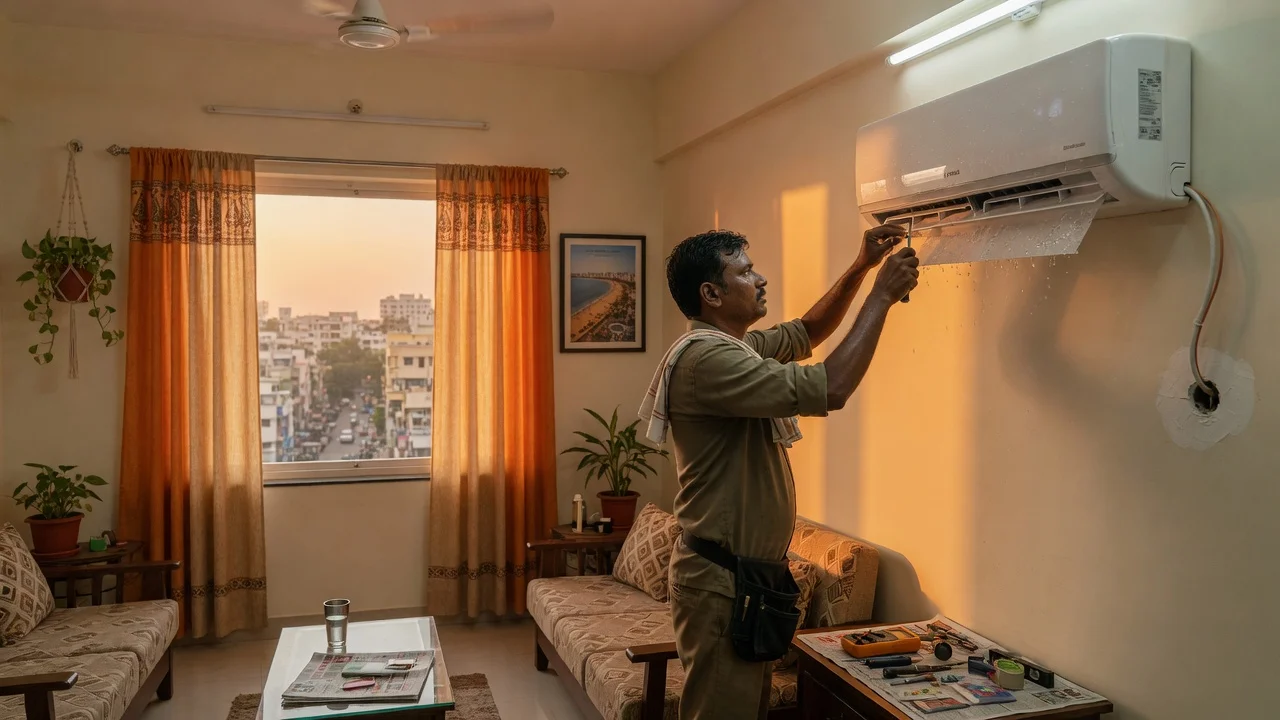
The Pre-Series A tag means the startup is past the idea stage but has not yet locked in commercial scale; it is now a play-for-performance round where investors are betting on execution. Circolife does not sell units. It runs a subscription service where the customer pays a monthly fee for cooling. The hardware stays on the startup’s balance sheet. When something breaks, or when the unit becomes energy inefficient, the company takes it back. This flips air-conditioning from a capital expense into an operating expense. For millions of Indian households and small offices, that psychological shift alone is worth studying.
In a country where AC penetration is climbing but service quality remains patchy, a subscription layer could normalize the relationship between user and hardware.
Details
At the core, this is detailed documentation for a common Indian appliance. The startup likely installs standard split or window ACs, but layers a tech platform on top. Sensors track compressor health, ambient temperature, and power draw. Users interact through a simple app to raise complaints or adjust temperature without touching the remote. Because the startup controls the hardware, it can enforce five-star BEE ratings from day one, unlike retail models where buyers often settle for two-star units because three-star or five-star models are out of stock.
The model works best in cities like Chennai, Delhi, and Lucknow, where temperatures cross forty degrees and humidity compounds every comfort equation. Polycab India’s backing is not just a headline grab. It gives Circolife distribution relationships with local electricians, authorised spare parts channels, and supply chain resilience. In the Indian service economy, trust travels through known names. A Polycab-adjacent label helps the startup pass the sniff test of cautious buyers who have been burned by unbranded inverter units that die within months. The $4.5 million ticket is enough to scale pilot operations across metros and magnify technician hiring, but it still keeps the company in the early-stage category rather than a mega-round unicorn.
This data advantage also helps predict cooling demand by locality, mirroring how delivery platforms anticipate restaurant queues.
India impact
India’s summers are no longer seasonal anomalies; they are routine generators of discomfort across the calendar. In 2026, air-conditioning is expected to cross every e-commerce festive sale in volume, driven by heat waves that have become calendar staples rather than exceptions. That surge creates a mass market that still relies on outdated ownership models. Subscribers like Circolife could change how Indians think about depreciating assets. A monthly cooling bill feels more manageable than an ₹80,000 front payment, especially when you factor in GST, installation charges, and annual service contracts that retail brands tack on later.
On the environmental front, the subscription model reduces e-waste directly. The startup owns the end-of-life recycling process, rather than leaving the machine to roadside scrap merchants. It also creates data-driven control over energy consumption. A fleet of devices can be optimized collectively on the grid, lowering peak loads. That is a benefit no single retail purchase can match.
Use cases
First, gated communities and compact residential societies. These pockets of the city already have maintenance staff and centralized electrical intakes. A subscription tier can charge per tower or per wing, making the open-air parking areas and lobbies cool without tenants buying individual units.
Second, small and medium enterprises. Kirana stores, coaching centres, and medical clinics treat electricity as a cost of doing business. A fixed monthly cooling cap makes forecasting easier.
Third, the rental economy. Young professionals living in sublet accommodation across cities like Bengaluru, Pune, and Hyderabad constantly move. Selling an AC in one city and reinstalling it in another is expensive. A pause-and-resume subscription removes that friction.
Fourth, tier-two and tier-three cities, where new housing projects are sprouting but authorized service networks are thin. A startup with a centralized repair logistics layer can outperform local vendors simply by dispatching a trained engineer in under twelve hours.
Honest take
Let me be blunt. A subscription air-conditioner sounds sensible until your AC unit is on fire at two in the morning and the quick response team is still catching up. Hardware reliability is the make-or-break variable in India, where voltage fluctuations and rough handling during transport can kill a compressor before six months. If Circolife can keep its service response time under twenty-four hours and enforce software-only diagnostics that catch failures early, the model scales cleanly.
The capital is lean. $4.5 million buys you a few thousand installations, but India has millions of rooms that need cooling. That gap means the startup must either move fast or partner. Polycab’s backing helps with distribution, but customer acquisition still requires convincing a skeptical buyer that a monthly bill beats owning a box. If Circolife nails the default-app experience and charges a bill that stays below the EMI of equivalent loans, it could quietly redefine winterless cooling across the sub-continent. If it falters on service, the model collapses back into a clueless appliance box.





Comments (0)
Be the first to comment!